|
Getting your Trinity Audio player ready...
|
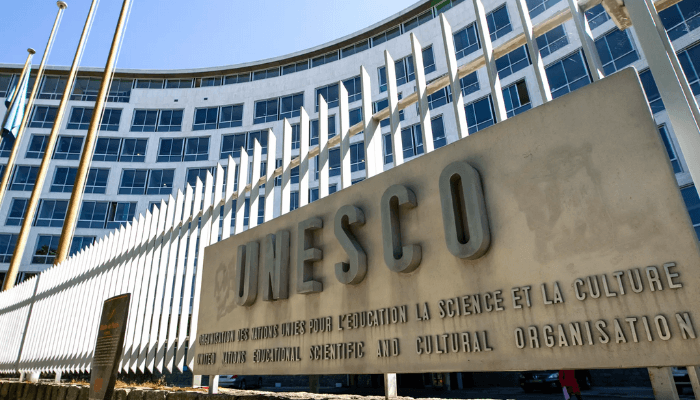
The United Nations Educational, Scientific and Cultural Organization (UNESCO), in partnership with the United Kingdom (UK) International Development and Results for Development (R4D) has inaugurated the Sankore project in West Africa.
The initiative, launched in Abuja, aims to promote economic diversification and sustainable development under the Strengthening UK-West Africa Science, Technology and Innovation Partnerships for Sustainable Development programme.
With a funding commitment of up to £1.9 million from the UK Foreign, Commonwealth & Development Office (FCDO), the project seeks to enhance innovation, research, and technological advancement in Nigeria and Ghana.
Uche Nnaji, Nigeria’s Minister of Science, Technology, and Innovation, emphasized that the project aligns with President Bola Tinubu’s eight-point agenda for economic growth.

He noted that Sankore would strengthen public service delivery and foster regional partnerships. A steering committee will be set up to provide strategic direction and ensure accountability in implementing the programme.
Susan Mshana, Deputy Director and Head of the Integrated Strategy and Delivery Unit at the British High Commission, explained that Sankore complements existing UK-funded initiatives such as Manufacturing Africa, the Global Innovation Fund, and British International Investment.
She stated that the project would play a key role in supporting Ghana’s and Nigeria’s National Research Funds, facilitating the commercialization of innovative solutions in priority sectors like agriculture and energy, and improving the technology policy and regulatory environment.
She further stressed that improving data accessibility and policy transparency would enhance productivity within the region’s innovation ecosystem.
Ibrahim Murtala, Ghana’s Minister of Environment, Science, and Technology,, highlighted the need for increased investment in Research and Development (R&D), citing that Africa’s R&D spending remains low at 0.42% of GDP, with Ghana investing just 0.3%.

He referenced the Lagos Declaration, which urged African nations to allocate at least 1% of GDP to R&D, but noted that patent filings and publications in emerging technologies such as Artificial Intelligence and Biotechnology remain low compared to global standards.
According to him, Sankore would catalyze making Ghana a hub for scientific advancement and technological innovation.
Kornelia Tzinova, Head of the Natural Sciences Sector at UNESCO’s Regional Office for West Africa, stated that the project would run until March 2026, strengthening Science, Technology, and Innovation (STI) systems in Nigeria and Ghana.
She added that both countries were selected to reinforce bilateral strategies between the UK, Nigeria, and Ghana in the field of science and technology.
Speaking earlier, Edmond Moukala, Head of the UNESCO Office in Ghana, noted that the project would assist both countries in achieving the Sustainable Development Goals (SDGs).
He recalled that UNESCO has been designated as the lead agency for the International Decade of Science for Sustainable Development (2024–2033), emphasizing that this period represents an opportunity to harness scientific innovation for the benefit of humanity and to address critical challenges facing West Africa.
He described Sankore as a key platform to drive progress in line with the decade’s objectives.
The project is being implemented by UNESCO and R4D, in collaboration with Ghana’s Ministry of Environment, Science, and Technology (MEST), Nigeria’s Federal Ministry of Innovation, Science, and Technology (FMIST), and other relevant stakeholders.