Observers have said that Nigeria’s parliament decision to back President Bola Ahmed Tinubu’s emergency rule in oil-rich Rivers State after months of political crisis was a political strategy, the ultimate goal of which is to cripple the opposition in the country ahead of the 2027 general election.
The successful foisting of the state of emergency in Rivers State by the current administration could further deepen divisions, sidelines opposition, and a political motive to favour the camp of those in the ruling party ahead of the next general election.
Many opposition politicians say the battle in Rivers State is all about the soul of the state towards 2027and also to have an unreserved access to the resources of the state; they argued that the President should have intervened with the strategies he used in resolving the imbroglio that happened in Lagos State House of Assembly.
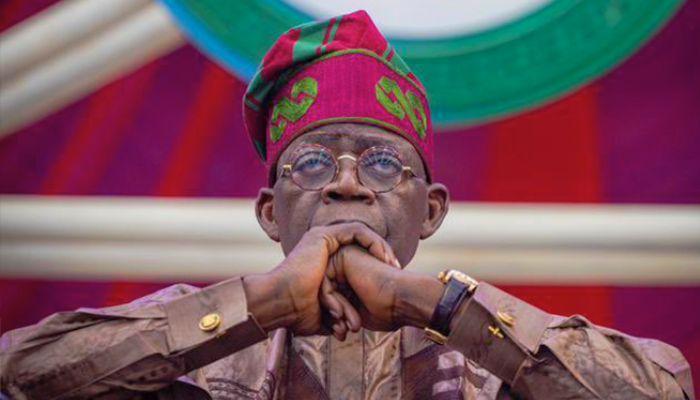
President Tinubu last Tuesday night suspended Governor Siminalayi Fubara, his deputy, Ngozi Odu, and all elected members of the Rivers State House of Assembly for six months.

Many Nigerians have been debating the constitutionality of President Tinubu’s action, with several lawyers including Femi Falana (SAN), saying the President’s decision cannot be justified under any of the provisions of the 320 sections of the Constitution of the Federal Republic of Nigeria, 1999, as amended.
While they acknowledged that Section 305 of the Constitution empowers the President to take extraordinary measures to restore law and order if there is an actual breakdown of public order and public safety.
Tinubu’s emergency decision in Rivers was backed by a voice vote in the two arms of Nigeria’s parliament despite the Constitutional provision which requires 2/3 majority votes to vote in support.
There is uproar across Nigeria over the manner parliament support was taken, with opposition leaders and many Nigeria questioning why there was no head-count of lawmakers, thereafter they would be allowed to vote and their votes counted considering the sensitive nature of the issue.
“The constitution is clear that this cannot be done through a voice vote but by calling individuals to answer ‘yes’ or ‘no.’ You cannot determine a two-thirds majority by a voice vote.

“While a two-thirds majority is crucial, it does not justify bypassing proper procedures and undermining the principles of transparency and accountability. The use of a voice vote in such a significant decision not only disregards constitutional requirements but also erodes public trust in the democratic process”, Peter Obi, former presidential candidate said.
Obi further stated that decisions of such magnitude must be made with integrity, following the letter and spirit of the law, noting that It’s disheartening that a decision as crucial as approving an emergency proclamation, one that could alter the course of the nation was handled with such casual disregard for constitutional standards.
A senior lawyer, Kunle Edun, (SAN) said the lawmakers can insist on a transparent process, considering the national importance of this issue, stressing that voice voting does not guarantee fairness and transparency as shown in previous sessions presided over by the Senate President particularly.
“If you want to show to the whole world the fairness of the entire process, voting must be done either electronically or physically and how each senator voted must be published for Nigerians to see”, he said.
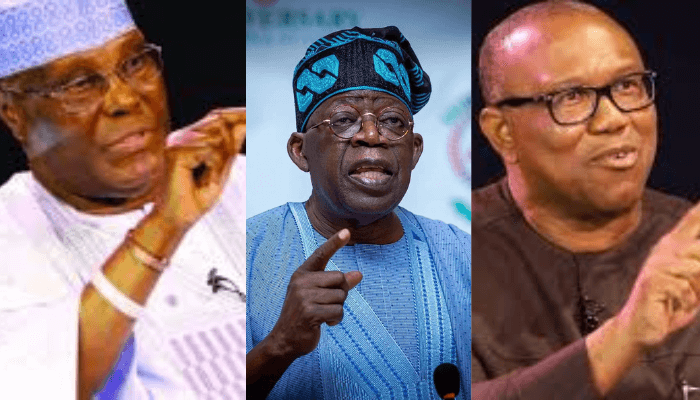
Ironically, the federal lawmakers decided to choose a different pact and still voted in support of the president’s action, despite rejection of the President’s decision, from many Nigerians including his main challengers in the 2023 presidential poll, Atiku Abubakar, of People’s Democratic Party (PDP) and Obi, of the Labour Party (LP).
Read also: State of emergency in Rivers means subverting will of people – Sowore
Rivers State targeted ahead 2027
Many political watchers who spoke to BusinessDay Sunday are of the opinion that it is obvious that the ruling All Progressives (APC) is keen on taking control of the oil-rich state knowing how significant and crucial the state is- resources wise and the voting population, which is the highest in the region.
They further noted that the current administration was worried about its waning influence and growing unpopularity in Northern Nigeria and perhaps see taken over Rivers as key if in its bid to win the 2027 general election and would rather back and empower the FCT Minister to wrestle the state from the PDP.
“Targeting Rivers is political and strategic. The goal is to cripple the opposition, and it’s a fantastic political move. I don’t see the opposition surviving. This is how Tinubu has ruled Lagos for 25 years,” argues activist and lawyer Deji Adeyanju,“told African Report.
There is the feeling in some quarters that the President’s rush to declare a state of emergency was an indictment that there may be other motives why Rivers state was targeted.
“It would seem so, the state is targeted or if it was not then one would assume that the President and the federal government would have done things in a constitutional manner,” Ladipo Johnson, National Publicity Secretary of the New Nigeria People’s Party (NNPP) told BusinessDay.
Some analysts’ say rather than declaring a state of emergency even if there was no crisis in any part of the state, the President should have tried more by calling Wike to order after his meeting with the duo and after the Supreme Court ruling whereby Fubara had started implementing the Court order.
“After the Supreme Court judgement, Fubara has started executing the declarations there by removing the duly elected local government officials, readiness to re-present the 2025 fiscal budget to the house of Assembly but the speaker was always bringing up one encumbrance or the other; without any interference by the President”, Dayo Kayode, public affairs commentator said.
Kayode added, “With all of the above, we can see that, all that we are experiencing in that state is nothing but a script acting out towards 2027 elections coupled with unfettered access to the state’s resources”.
Abiakwe- Tinubu’s actions contradict 1999 constitution
Constitutional lawyer, Cornelius Abiakwe told BusinessDay Sunday, that the declaration of a state of emergency in Rivers State and the suspension of the governor and other elected public officials are improper, noting that the actions contradict the provisions of the 1999 Constitution of the Federal Republic of Nigeria, as amended.
According to him, “Section 305(3) of the Constitution outlines the conditions under which the President can lawfully issue a proclamation of a state of emergency.
“In this case, there is no justification for such a proclamation. Nigeria is not at war, nor is there an imminent threat of invasion or involvement in a state of war.
“There has been no actual breakdown of public order or public safety in Rivers State, nor is there any occurrence or imminent danger warranting such extreme measures.
“Furthermore, Rivers State does not pose any threat to the existence of the Federation. I firmly maintain that there is no valid reason for the President’s actions regarding Rivers State”.
Fubara’s removal historic
It was third time an elected governor has been removed from office through emergency rule in the current fourth republic and the first in nineteen years, after former President, Olusegun Obasanjo sacked the then Plateau State Governor Joshua Dariye in office and accused him of failing to act to end the religious violence in his state 2004.
Similarly, the then Ekiti State Governor Ayodele Fayose, his deputy, Friday Aderemi, was removed from office in 2006 by the same President Obasanjo, over plot by the state House of Assembly to impeach him.
The governor and the State House of Assembly were suspended for 6 months over the political crisis.
He thereafter appointed a retired general to administer the affairs of the state and maintain security there for the six months.