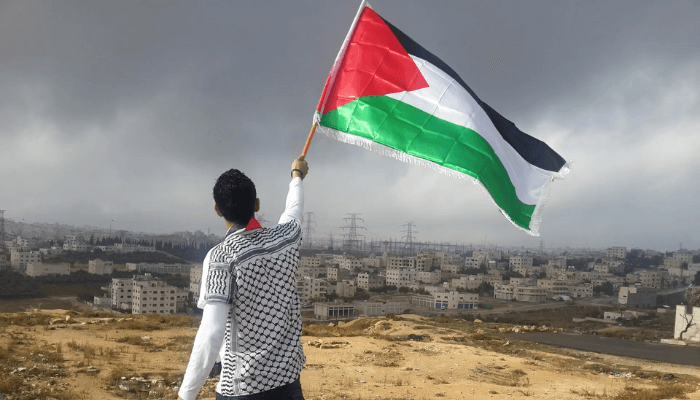
The world watches in silence as Gaza burns once again. Ballistic missiles rain down on densely populated areas, reducing entire neighbourhoods to rubble. Children buried under the remains of their homes, hospitals overflowing with the wounded, and entire families wiped out in a single blast – this is not just war. It is a systematic erasure of a people. It is genocide unfolding in real time, and yet those with the power to stop it choose inaction.
The crisis we see today did not start overnight. It is the result of over a century of forced displacement, occupation, and oppression. When the British issued the Balfour Declaration in 1917, promising to establish a Jewish homeland in Palestine without consulting its indigenous Arab population, the seeds of this conflict were planted. In 1948, Israel declared independence, and over 750,000 Palestinians were forcibly expelled from their homes in what became known as the Nakba (the catastrophe). Since then, every attempt at peace has been overshadowed by more land seizures, more military occupations, and more bloodshed.
From the Six-Day War of 1967, which saw Israel take control of Gaza, the West Bank, and East Jerusalem, to the repeated military assaults on Palestinian territories, history has been a cycle of oppression and resistance. Palestinians have fought back in every way they can, from peaceful protests to uprisings known as the Intifadas. But how does one fight against an enemy that controls the air, the land, and the sea? Gaza has been under blockade since 2007, cutting off access to food, medicine, and electricity. The people are trapped in what many call the world’s largest open-air prison, left to suffer while the world debates over diplomatic statements.
Read also: Israel’s surprise bombardment plunged Palestinians back into ‘hell’ – AP

And now, ballistic missiles. Why this level of destruction? Why weapons designed for large-scale warfare against a defenceless population? The international community once understood the dangers of unchecked military power, leading to treaties like SALT and START, which aimed to limit arms proliferation. Yet today, these agreements mean nothing. The unrestricted flow of advanced weaponry has turned conflicts into full-scale massacres. One of the reasons the world wars stopped at two was the realisation that without arms control, humanity would destroy itself. That lesson seems to have been forgotten.
The hypocrisy is staggering. The same global leaders who preach human rights continue funding the very weapons that fuel these atrocities. The United States provides billions of dollars in military aid to Israel each year, ensuring that the bombs never stop falling. The media distorts the truth, portraying Israel as defending itself while Palestinian deaths are reduced to mere statistics. Social media, once a tool for truth, is now a battlefield where Palestinian voices are silenced, their stories shadowbanned or erased.
Sun Tzu once said, “War is a means to an end.” But what end justifies this level of destruction? What purpose does the slaughter of innocent people serve? The world said “never again” after past atrocities, yet here we are, watching as other people are wiped out while the international community debates definitions. How many more must die before the world acts? How many more bodies must pile up before peace is not just a talking point but a reality?
World leaders must wake up. They must act not with empty resolutions but with real consequences for those who violate human rights and arms treaties. The blockade on Gaza must end. Israel must be held accountable for its war crimes. Arms sales to oppressive regimes must stop. The Palestinian right to self-determination must be recognised. The time for silence is over. This is beyond unfair. It is a crime against existence itself.
The struggle of Palestine is not just about land. It is about justice, dignity, and the fundamental right to exist. And until the world acts, history will continue to be written in the blood of the innocent.

Maryam Agbaje-Atoyebi is a leadership coach, historian and public speaker