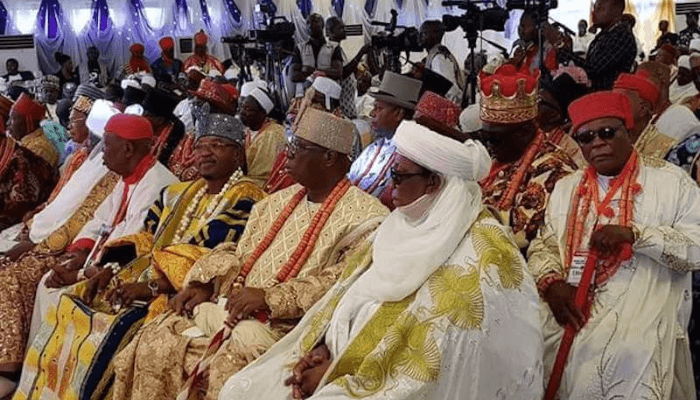
The Senate, on Thursday, passed for second reading a bill seeking to create the National Council for Traditional Rulers, a move aimed at officially integrating monarchs and community leaders into governance.
The proposed legislation, sponsored by Senator Simon Lalong (Plateau South), generated significant debate when it was first introduced, as lawmakers deliberated on its potential impact, particularly regarding the roles of traditional rulers in relation to elected officials at the local government level.
Lalong, a former governor of Plateau State, defended the bill, emphasizing that modern traditional rulers are well-educated and capable of offering valuable insights, especially on security and national issues. According to him, their contributions could help the government better address citizens’ concerns.
Read also: Chad Basin Commission may establish traditional rulers forum to tackle insecurity

He further stated, “When there are crises and killings, the first thing people say is ‘let’s hold the traditional ruler responsible.
“It is true in their communities, they know everybody, including the criminals. But we expect them to be the ones running up and down.”
He added, “We need to charge them with responsibilities where they will be committed. But for now, you can’t hold them responsible. As the director-general of the campaign for Asiwaju and Kashim, we went around having some meetings with these traditional rulers.
“Every time we want them to participate, they ask to be given a role. So, it was also part of our (electioneering) campaign. So, I don’t see how we can jettison that when we are struggling for a constitutional amendment with respect to security. If we don’t have security, every other thing we are doing is rubbish.”
Despite his reassurances, some senators voiced concerns about possible conflicts of authority. They underscored the need for the bill to distinctly define the responsibilities of traditional rulers to prevent jurisdictional overlaps with government officials.

Senate President Godswill Akpabio, in his remarks, stressed the importance of clearly outlining the functions of traditional rulers within the proposed legislation. He also recommended a public hearing to gather further input before the bill progresses to the third reading.
Read also: Women farmers, journalists, traditional rulers push for sustainable agriculture
Acknowledging the significance of traditional rulers in governance, Akpabio noted that their advisory role could be beneficial in addressing various national challenges.
The bill has been forwarded to the Senate Committee on Establishment, ane expected to report back to the Senate in four weeks.