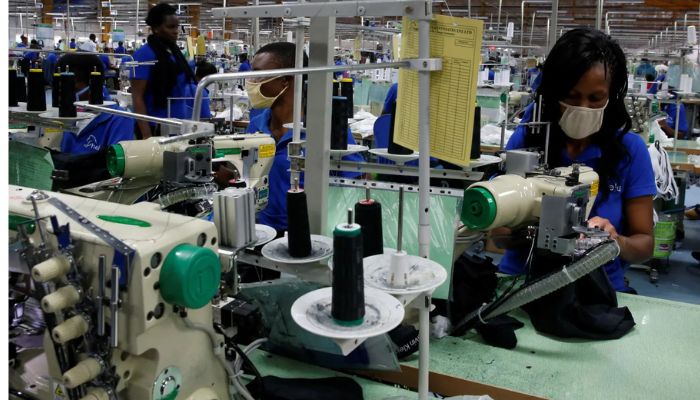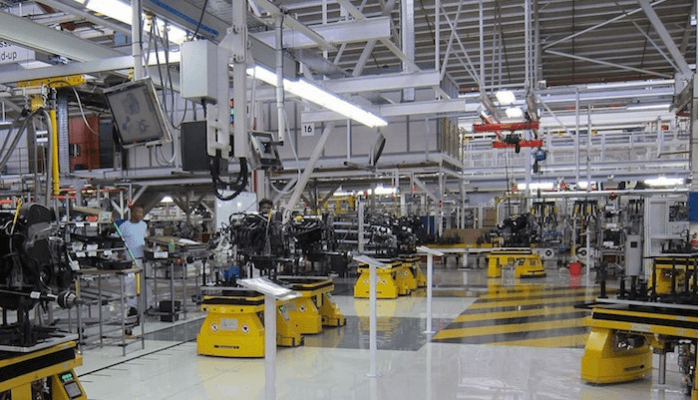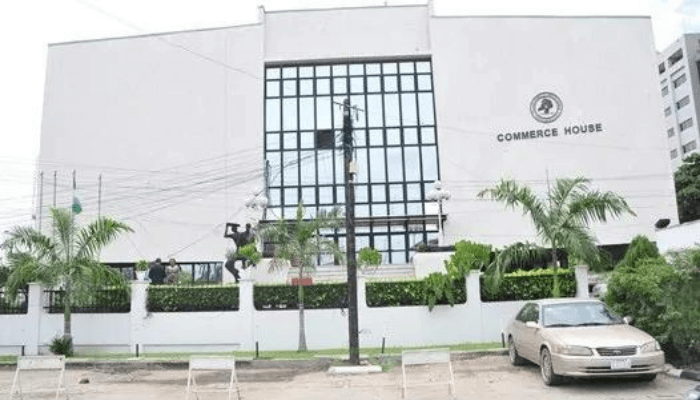
The Lagos Chamber of Commerce and Industry (LCCI) has urged the federal government to address structural bottlenecks hindering productivity across manufaturing sectors in Nigeria to achieve sustainable and inclusive growth.
The LCCI stated that economic growth driven largely by trade and finance must be complemented by robust industrial and agricultural expansion to create quality jobs, enhance value addition, and ensure food security.
Speaking on the recent GDP report, Chinyere Almona, LCCI director general said that while the GDP growth figures indicate a positive trajectory, they raise critical concerns regarding real productivity and economic stability.
“While the Q4 2024 GDP report signals progress, sustaining and accelerating growth will require bold and strategic policy interventions.

“The disproportionate reliance on the services sector, with declining contributions from agriculture and manufacturing, poses sustainability risks,” Almona said.
She noted that a comprehensive industrialisation strategy should be developed to boost local manufacturing capacity.
“The government should implement policies that incentivise domestic production, enhance the ease of doing business, and facilitate access to finance for small and medium enterprises (SMEs),” Almona said.
She added that the government should prioritise addressing Nigeria’s infrastructure deficit, particularly in power, roads, and ports, noting that it’s crucial to reducing production costs and enhancing competitiveness.
“Public-private partnerships (PPPs) should be expanded to bridge financing gaps in critical infrastructure projects.

Given the agricultural sector’s critical role in employment and food security, the LCCI said that increased investment in mechanisation, irrigation, and improved seed varieties is essential.
Almona also stated that the proposed tax reforms should be well communicated and with a definite implementation strategy to support economic expansion without overburdening businesses.
“We need a transparent and equitable tax regime that promotes investment and encourages compliance,” she said
While noting that exchange rate stability is vital for investor confidence and economic planning, the LCCI stated that the Central Bank of Nigeria (CBN) should continue to adopt policies that facilitate liquidity, stabilise the naira, and encourage capital inflows.
The LCCI also stated that addressing insecurity, particularly in agrarian regions, is critical for sustained growth.
“The government should intensify efforts to curb banditry, kidnapping, and other threats that deter investments in agriculture and industry including the constitutional amendment to enable multilevel policing,” the LCCI noted.
Almona further said that the government’s commitment to economic diversification, fiscal discipline, and business-friendly policies will be key to achieving the ambitious goal of a $1 trillion economy.
She highlighted that the decline in the rebased inflation to 24.48 percent in January 2025 from 28.92 percent in December 2024, must not be taken as real evidence that we are succeeding in curbing rising prices.
She however said that the government must remain focused on fighting the factors pushing prices upwards.
“Upward review of port charges that can make imports more expensive should be reconsidered in these fragile times.
“We reiterate our call for a phased implementation of additional charges like the 4 perecent Customs Import Charge, the 15 percent NPA levy, and even the latest intention to raise the Value-Added tax (VAT) from 7.5 percent to 15 percent, all happening almost at the same time when we are also looking to launch an all-embracing tax reform,” Almona said.