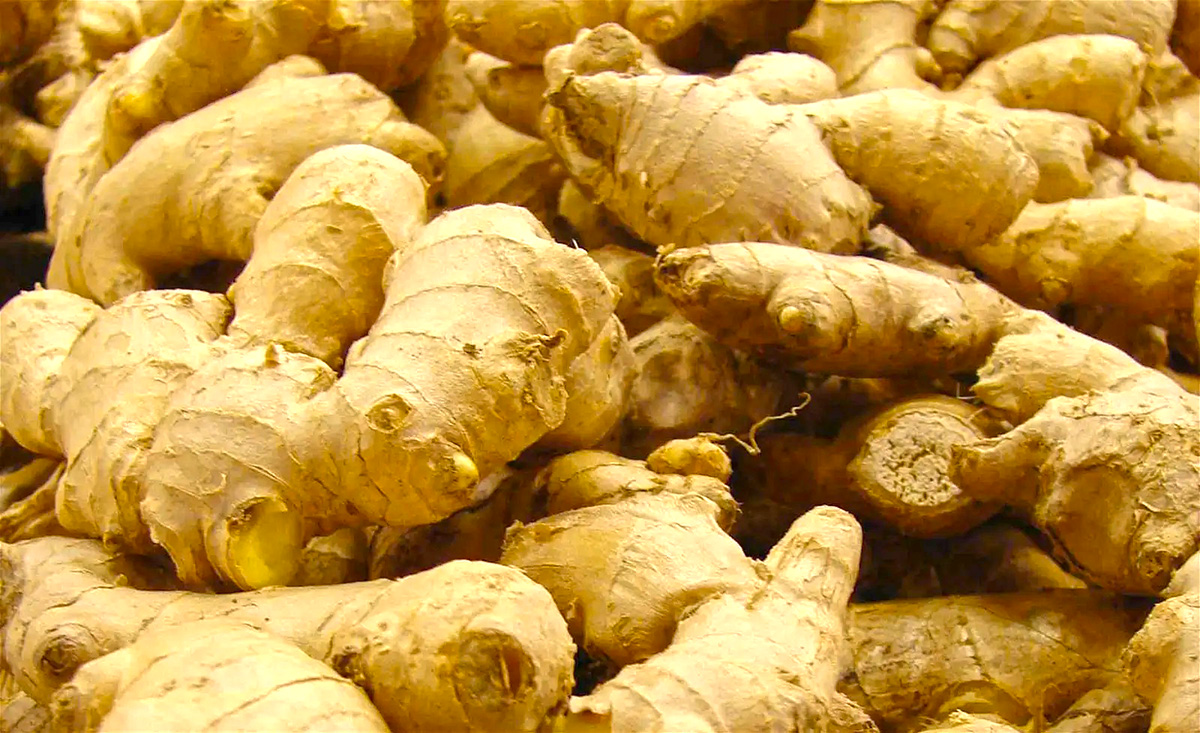
With ginger priced between N4.5 million and N5 million per ton and an annual production ranging from 522,000 to 555,000 tons, the nation’s favourable climatic conditions and the organic quality of its ginger products make it an appealing investment opportunity.
According to Meshach Baba, national public relations Officer of the National Ginger Association of Nigeria (NGAN), Nigeria’s ginger industry holds significant potential to attract foreign investors, particularly from China and India.
The key to making the most of ginger however lies in value-addition, analysts say.
Read also: 200 Imo farmers to undergo training on green farming, crops production

Kelvin Emmanuel, CEO of Diary Hills, said Nigeria could generate up to 35 times more revenue by processing ginger into oil. He explained that while European countries purchase a ton of ginger for $2,000 to $2,500, processed ginger oil can be sold for as much as $70,000 per metric tonne, noting that only 25 metric tonnes of ginger is needed to make one metric ton of ginger oil.
Baba highlighted that Nigeria’s ginger is highly sought-after globally, thanks to its unique pungency and high oleo-resin oil content.
As Africa’s largest ginger producer and the third largest worldwide, following India and China, Nigeria’s ginger industry plays a pivotal role on the global stage, according to the Food and Agriculture Organization (FAO).
The main ginger-producing state in Nigeria is Kaduna State, followed by Nasarawa, Niger, Gombe, Bauchi, and Benue. Sun-dried split ginger is the most commonly exported variety, with the Nigerian Export Promotion Council (NEPC) reporting that 90 percent of the nation’s total ginger production is exported.
Ginger exports

Latest data by the National Bureau of Statistics (NBS) reveal that the country’s ginger export revenue surged by 17 percent to reach N10 billion in the second quarter (Q2) of 2023, up from N4.6 billion during the same period in 2022.
The growing global demand for Nigerian ginger highlights its immense untapped potential, presenting a promising opportunity for investors. Additionally, emerging markets offer even greater prospects for further expansion in Nigeria’s ginger industry.
Read also: Global food prices drops for key crops WorldBank reports
Global market and Nigeria’s ginger deficit
The global ginger market is projected to grow from $4.41 billion in 2024 to $7.50 billion by 2033, reflecting a compound annual growth rate (CAGR) of 6.07 percent from 2025 to 2033, according to Market and Research, a US-based business research firm.
In Nigeria, with a current production potential of 31 million metric tonnes (MT) and a demand of 65 million MT, a supply-demand gap of 34 million MT exists, as reported by the Raw Materials Research and Development Council of Nigeria (RMRDC).
This supply deficit presents a significant opportunity for investors and stakeholders to capitalise on untapped potential by engaging in the production, processing, and export value chain.
‘Gold mine’ for investors
Paul Kato, a prominent ginger farmer with over 114 hectares of ginger farm based in Kaduna, told BusinessDay that the ginger industry represents a significant investment opportunity, describing it as a ‘gold mine.’
However, he pointed out that the sector is currently unable to meet the growing market demand, highlighting the need for more investors to step in.
Kato outlined several lucrative areas for investment, particularly in the production, processing, warehousing, and export segments of the value chain.
He encouraged potential investors to collaborate with large-scale farmers, either by sourcing ginger locally or helping to facilitate exports.
With Nigeria’s favorable climate conditions, the crop is easy to cultivate, making it an attractive opportunity for investment.
Additionally, Kato noted that there is potential for investors to focus on ginger seedling storage, as the farming season runs from May to November before the harvest period begins.
He also highlighted a dramatic rise in the price of ginger seedlings, with a 10 kg basin once sold for N5,000 now fetching N120,000, a staggering 2300 percent increase. This price surge could continue, further as planting season commences presenting more profits for investors.
Read also: Top 5 profitable crops for farmers to invest in 2025
Challenges facing industry
Ginger blight, a ginger disease outbreak ravaged the industry in 2023 and 2024, leading to about 70 percent losses for farmers and key players. Baba noted that this has led to the surge in prices from N50,000 per 40kg bag of split dry ginger to N550,000, a 900 percent increase.
Other challenges facing the industry include: poor funding, hoarding of crops and lack of access to disease and pest-resistant seeds, Baba added.
Kato, earlier quoted, noted that his 114 hectares of ginger farm have also been impacted by farm theft, a situation he intends to address using drone technology.
Jerry Tobi, CEO of De’more Foods, noted that the ginger business in Nigeria is on the verge of collapse due to widespread fungal infections, limited access to disease-resistant seed varieties, and rising production costs.
He also highlighted that ginger farming has become increasingly unsustainable due to severe outbreaks of blight, including rhizome rot and bacterial wilt, which have decimated yields across the country. Tobi further explained that over 100,000 ginger farmers were impacted in 2024, with many losing their entire investments.
What’s the way out in 2025?
Baba opined that more funds should be made accessible to farmers while commending the FG’s N1.6 billion intervention for ginger farmers. Emmanuel also highlighted that improving the quality of the crop and processing are critical, adding that the NEPC should encourage more exports of processed ginger products (particularly ginger oil) to boost profits.