…As Trump rejigs USAID
…Nigeria may experience higher maternal, child mortality rates – Owasanoye
…FG urged to prepare $200m to cushion effect of sudden aid cut
The suspension of the activities of the United States Agency for International Development (USAID) may have a telling effect on the programmes of some Nigerian organisations working in the areas of advocacy in family planning, girl-child intervention, among others.

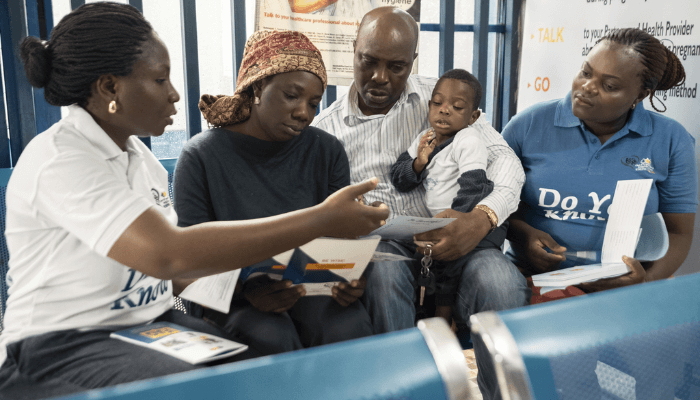
USAID is known to champion campaigns for the provision of education of vulnerable women and girls in the areas of sanitary, family planning, AIDS/HIV. The organisation is known to provide sanitary pads, among others to girls in hard-to-reach areas of Nigeria, and some other developing countries.
The U.S. government on January 20, 2025, announced a 90-day suspension of foreign aid, disrupting humanitarian programs that provide education, protection and mental health support for millions of children in conflict zones across the world.
Over the years, the U.S. has long been a leader in humanitarian aid, contributing more than any other country and serving as a key funder for major intervention by UN agencies.
However, the Trump administration through an executive order decided to bring a pause to a global funding channel, which further exposes millions of children and vulnerable groups to danger.
The U.S. government’s decision to pause foreign aid for 90 days has already had dire consequences across the world. This is so because millions of children from war-torn countries depend on this support for basic essentials, education and mental health support. All of this and more is now at risk.

The Trump administration accused USAID’s programs of being wasteful and promoting a liberal agenda.
“There are ongoing family planning programmes. So, with the cuts in reduction of all this USAID, it makes it too challenging to maintain its current level of support. So, I think this is a big hydra-headed monster problem which we have to look for how to resolve,” Olufunso Owasanoye, executive director of Human Development Initiatives (HDI) Foundation, told BusinessDay.
According to her, Nigeria could witness an increase in unintended pregnancies as a result of aid cuts from USAID, and that family planning intervention programmes in Nigeria can take a severe hit.
“Also, it will reduce access to family planning services and contraceptives, and this can lead to the rise in unintended pregnancies.”
Owasanoye said that Nigeria may experience higher maternal and child mortality rates and decreasing access to prenatal care, delivery services, and postnatal care as a result of the aid cut.
“All these ones need funding. And another triple effect is that it will hinder Nigeria’s development, because large family sizes constrain resources and also limit economic opportunities,” she said.
However, Euriel Momah, founder/team lead, Smiles for Orphans and Vulnerable Children Initiative (SOVCI), sees the aid cut as a blessing in disguise.
According to him, there is a need for the government to pay serious attention to develop other sectors of the economy that can significantly boost the country’s economy.
He said that aid cuts are a clarion call on developing nations to also cut down on their excesses, starting with the government and down to the people.
“I believe it’s about time our leaders took serious responsibility for the welfare of her citizens. There are more than enough funds in the country that we do not need to go cap-in-hand begging for aid and thereby, surrendering our sovereignty to foreign donors,” he said.
Momah also said that the Nigerian government was already beginning to take measures to mitigate the effects.
According to him, the concerns are that this suspension would pose serious setbacks in areas where aids are purportedly being channelled.
“Given the high corruption rate noticeable in the country, there is no doubt that if the girl child has been receiving any support at all, it would certainly have been a poor percentage of the budgeted fund,” he said.
Johnson Ibidapo, Social Psychologist and Development Consultant, Caleb University, Lagos, told BusinessDay that the biggest impact of the cut in USAID funds will be felt in their direct intervention programmes, especially the support for family planning and contraceptives for rural women.
“The fact remains that there are multiple areas within the Nigerian economy where the implications of this cut in funds will be felt. The Nigerian government herself had to brace up for this disruption by preparing at least $200 million to cushion the effect of the sudden cut and withdrawal,” he said.
According to Ibidapo, the freezing and cutting of USAID grant funds and aids will affect the civic space with overarching impact in multiple areas of impact such as: capacity building and training; civic engagement, community sensitisation, advocacy among others.
“USAID is a significant global support agency player not just in global politics but in promoting global freedom, civil rights, liberty and the civic space. Funding through USAID is applied for different projects in over a hundred countries, the world over.
“USAID funding supports wide ranging projects in different locations around the world including girl child interventions such as: fighting FGM, child marriage, child trafficking, organ harvesting and a host of other campaigns. Family planning interventions have also been at the core of several campaigns funded by USAID in Nigeria for over 20 years,” Ibidapo said.
Read also: How USAID shutdown will impact Nigeria
When protective sex becomes luxury
With the proposed aid cut from USAID, safe sex may go out of reach for some classes of Nigerians; especially those who earn below $1 per day.
Ordinarily, practising safe sex should not be a luxury reserved for the affluent. It is a fundamental right that everyone deserves.
For many individuals, especially in low-income communities, accessing protective measures has become a luxury they cannot afford.
Condoms, an essential item in safe sex practices, have become unaffordable for many.
In some instances, a packet of condoms can cost up to 50 percent of a person’s daily income.
For instance, a local who earns about N1600 ($1) might find it difficult to buy a pack of condoms at N700; let alone a foreign brand twice that amount.
The implication of this is that more and more people have to choose between safe sex and feeding.
In addition to the financial constraints, limited access to healthcare facilities and education on safe sex practices exacerbates the issue.
Many individuals, particularly in rural areas, are believed to lack access to clinics and healthcare delivery. This is also connected to the traditional and religious belief that makes it difficult for people in rural areas to access condoms, contraceptives, let alone receive comprehensive sex education.
“We have more than what we need to make every single Nigerian live a comfortable life. The welfare of our girl child is our responsibility and not that of the US or any other country. Let’s look inwards and take care of our own,” Momah said.
Bolanle Dare, programme officer, HDI, told BusinessDay that aid cut will exacerbate the vulnerability of marginalised communities, including women, young girls, and key populations at higher risk of HIV infection.
“These consequences will have far-reaching and devastating effects on Nigeria’s healthcare system and vulnerable populations.”
USAID beneficiaries
While the effect on the USAID aid cut is expected to affect vulnerable people in developing countries, recent data from a recent report by the Associated Press (AP) indicated that Americans are directly impacted by the cut.
According to USAID Stop-Work, a group tracking the impact of the aid suspension, USAID contractors have reported that about 13,000 American workers have been laid off. The group estimates that the actual total is more than four times what is currently being reported.
Similarly, the AP report indicated that the USAID and the State Department oversee over $60 billion in foreign assistance. While DevelopmentAid, an aid data company said that over 80 percent of companies that have contracts with USAID are Americans.
Read also: Senate summons NSA, DSS, others over alleged USAID funding of Boko Haram
USAID controversy in Nigeria
Last week, Scott Perry, a Republican congressman, alleged that the USAID funded terror groups, including Boko Haram, with taxpayer money.
He stated this in support of Trump’s decision to shut down the agency.
USAID has been involved in humanitarian aid, and support for displaced persons in the country, especially in the North east and hard-hit conflict areas.
Perry’s claims sparked debate across the country, with some Nigerians arguing for and against US involvement in the over decade long conflict.
However, the US embassy in Nigeria denied the allegations, saying that mechanisms were in place to ensure aid reached its intended recipients.
Richard Mills, the U.S. ambassador to Nigeria, said that there was no evidence that the USAID was funding Boko Haram or any terrorist group in Nigeria.
Speaking to journalists late Wednesday night in Abuja after meeting Ambassador
Mills, who met with the 36 state governors under the aegis of Nigeria Governors Forum (NGF), told journalists that no nation condemns Boko Haram’s violence more strongly than the US.
Similarly, the house of representatives has resolved to probe the activities of non-governmental organisations (NGOs) in the country.
The House of Representatives constituted an A-hoc Committee to conduct a thorough investigation into the allegations made by Congressman Scott Perry on USAID sponsoring Boko Haram in Nigeria.
The investigation aims to uncover the “real identities, sources of funding and what NGOs operating in the country spend their money on”.
The green chamber passed the resolution during plenary on Thursday following the adoption of a motion calling for the probe of the allegations that the USAID provided funding to Boko Haram.