Nigeria risks losing another decade to policy missteps and political interference if ongoing economic reforms are not sustained and properly executed.
The consequences of inaction are clear: sluggish growth, struggling industries, and millions facing worsening living conditions.
But the future doesn’t have to mirror the present. With bold, decisive action, Nigeria can break free from stagnation. Experts point to five key areas that could pull the nation back from the brink and unlock its full potential.
Fix institutions and end policy flips

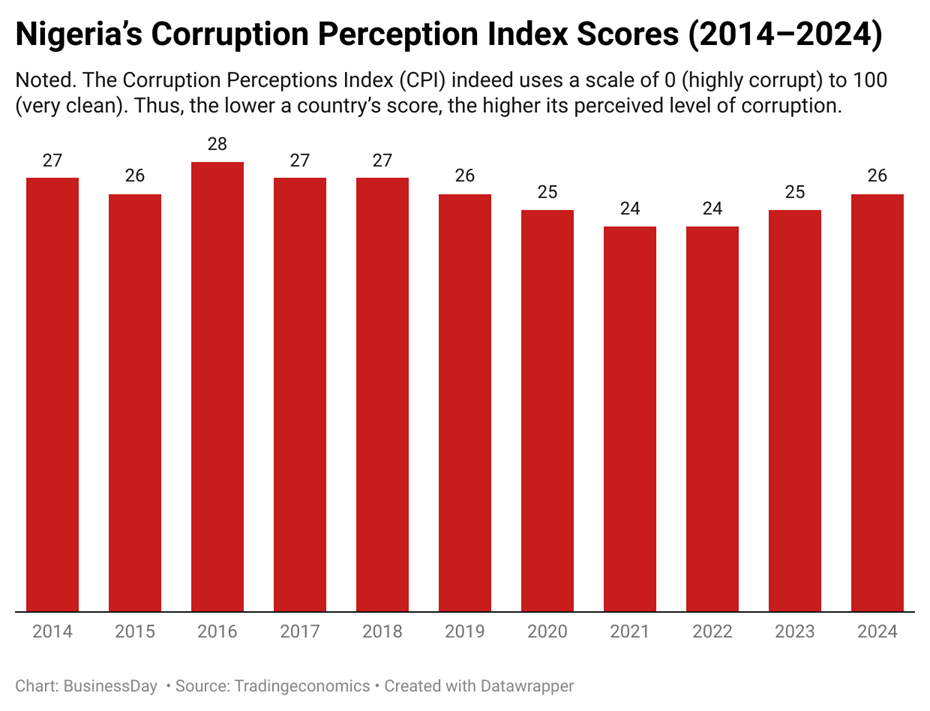
Nigeria’s economic uncertainty stems from constant policy changes and weak institutions. Investors are reluctant, businesses are faltering, and plans fall apart. Faruk Umar, an economist, notes that poor governance and corruption exacerbate the problem.
For Nigeria to succeed, Tayo Aduloju, CEO of the Nigerian Economic Summit Group (NESG), calls for greater transparency, stronger anti-corruption measures, and simpler, stable regulations.
Countries like Rwanda and Ghana have demonstrated that consistent policies and tackling corruption can attract much-needed investment. Nigeria must adopt similar strategies.
Tame inflation and stabilise the naira
Inflation jumped from 8.05 percent in 2014 to 34.8 percent in 2024, slashing purchasing power. Though rebasing in 2025 temporarily eased it to 24.48 percent, currency depreciation remains a bigger threat to business confidence.

The naira also depreciated by 40.9 percent in 2024 before stabilizing at ₦1,500 per dollar now, but the damage lingers—higher import costs, shrinking household budgets, and weaker business confidence.
“Unpredictable exchange rates make pricing difficult and slow economic growth,” says Oyekan Idris, a capital market analyst.
Easing import bans, boosting local food production, and increasing remittances could strengthen the naira. A more transparent Central Bank can also curb speculation and improve stability, allowing businesses to plan ahead.
Invest in agriculture, manufacturing, and technology
Nigeria’s overreliance on oil makes it vulnerable to global shocks. The NESG advocates a shift to agriculture, manufacturing, and technology to drive long-term growth.
Despite 91 million hectares of arable land, Nigeria remains a major food importer. Modern farming techniques, efficient irrigation, and better supply chains could cut reliance on imports and reduce inflationary pressure.
Similarly, Nigeria spends billions importing manufactured goods that could be produced locally. Lowering tariffs on machinery, improving power supply, and offering tax incentives can boost local factories.
Technology is a bright spot. Investing in broadband infrastructure, fintech, and e-commerce could integrate Nigeria more deeply into global trade, attracting foreign capital and positioning the country as Africa’s digital powerhouse.
Support businesses and attract investment
High interest rates, regulatory complexity, and policy instability are suffocating Nigerian businesses. Many small and medium-sized enterprises (SMEs) struggle to access loans, while foreign investors hesitate. To foster growth, NESG calls for lower borrowing costs, streamlined regulations, and policies that encourage investment.
Public-Private Partnerships (PPPs) can help fund essential infrastructure projects like roads, power plants, and transport systems. India’s “Make in India” initiative succeeded by simplifying regulations and promoting local production—Nigeria must pursue a similar strategy to boost industrial growth and job creation.
Prepare for future economic shocks
Nigeria remains vulnerable to oil price crashes, global recessions, and climate change. Unless proactive steps are taken, the economy will continue to face repeated crises.
NESG recommends diversifying Nigeria’s economy by expanding non-oil exports—especially in agriculture, minerals, and fintech. A Sovereign Wealth Fund, similar to Norway’s, could allow Nigeria to save surplus oil revenue for future challenges.
Additionally, climate-smart farming and renewable energy are crucial to mitigating the effects of climate change. Following the example of the UAE, which reinvested oil wealth into tourism and logistics, Nigeria must diversify to secure a resilient future.
Time to act: A defining decade for Nigeria
For decades, Nigeria has been stuck in the “preconditions for takeoff” phase of economic growth—laying groundwork but failing to sustain progress. Policy instability, weak infrastructure, and corruption have kept the country in a cycle of missed opportunities.
Brief economic booms, like the oil windfall of the 1970s, provided openings for transformation, but inconsistent policies and governance failures squandered them, experts say.
Today, promising sectors like fintech, telecommunications, and agriculture remain hamstrung by regulatory unpredictability.
The next decade will define Nigeria’s economic fate. The time for half-measures is over—will leaders finally break the cycle and push Nigeria forward?