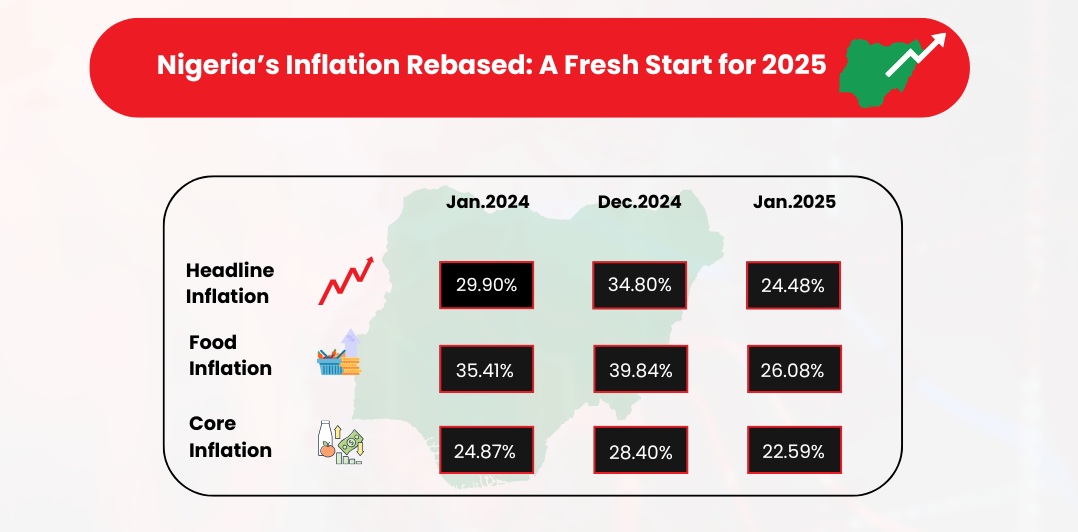
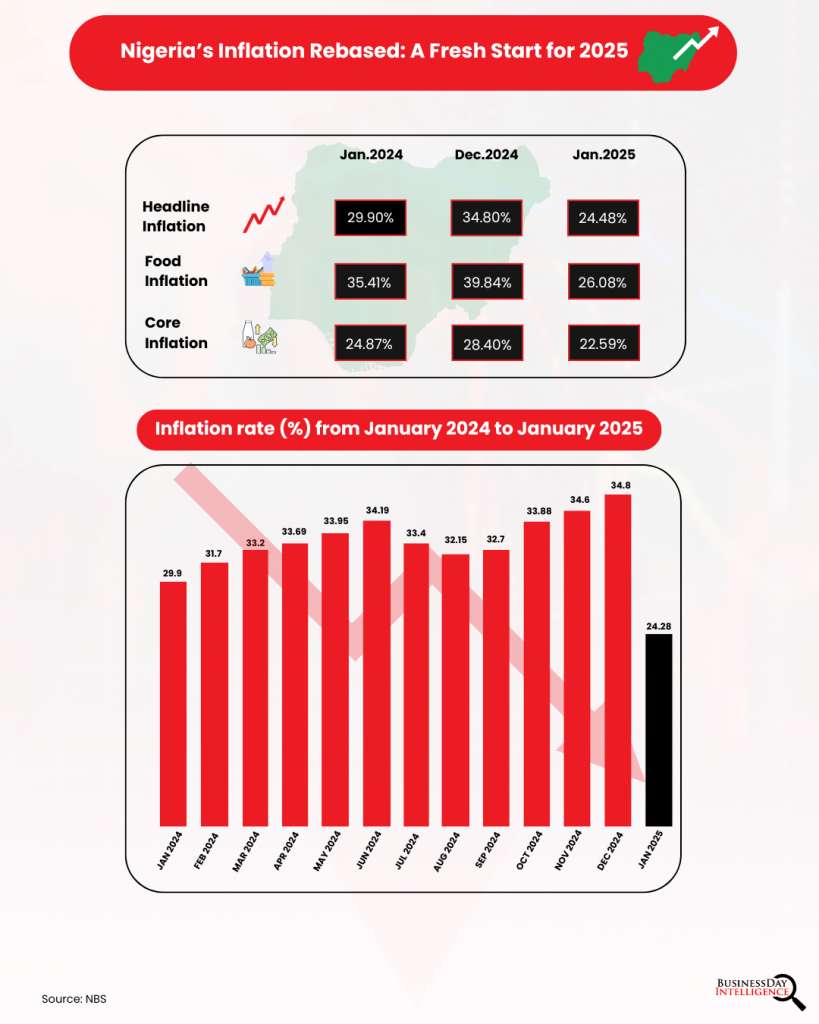
The National Bureau of Statistics (NBS) recently adjusted how inflation is measured by rebasing the Consumer Price Index (CPI) to better reflect current spending habits. As a result, Nigeria’s official inflation figures saw a sharp deceleration, with headline inflation falling from 34.80% in December 2024 to 24.48% in January 2025, while food inflation declined from 39.84% to 26.08%. Core inflation also dropped from 28.40% in December 2024 to 22.59% in January 2025.
While this adjustment offers a clearer picture of the economy, it doesn’t mean that everyday prices have suddenly gone down—many Nigerians are still struggling with the high cost of living. The monthly inflation trend from January 2024 to December 2024 shows a steady rise, with inflation peaking at 34.8% in December 2024 before the rebase-adjusted drop to 24.28% in January 2025.
This rebasing isn’t a solution to inflation but rather a change in how it’s reported. The cost of essential goods remains high, and families continue to feel the strain of rising expenses. However, the updated figures provide a more accurate look at inflation trends, which can help policymakers and businesses make better economic and investment decisions. Moving forward, the real test will be whether the government can stabilise the naira, improve sectoral productivity, and implement policies that bring long-term relief to consumers.