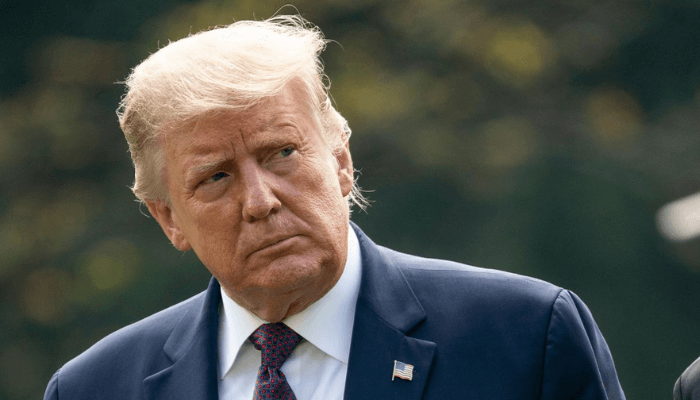
In his inauguration speech last week, President Buhari listed “Boko Haram, the Niger Delta situation, the power shortages and unemployment” as “the immediate challenges” which he intends to tackle. He relegated “improv[ing] the standards of our education” to “the longer term.”
Wrong.
Revamping our educational system and improving its standards ought to be one of the immediate tasks of the Buhari administration.
Education and security and employment are tied inextricably together. How could it be otherwise? Without security of life and property; without productive enterprises to engage the energies and provide decent wages for our teeming millions; without the understanding of self and the modern world, underwired by intellectual and technical skills acquired through a soundly conceived and variegated scheme of education and training—without these, Nigeria is going nowhere at all!

Everything depends on this three-cornered, inter-dependent and inseparable foundational base: security, jobs, and education. The planning and consistent execution of policies regarding security, job creation and education must go hand in hand always.
Just look at the most successful economies/societies of the world and you will see that it is so.
The definitive principle of Nigerian education ought to be: that primary and secondary education must be universal, compulsory, and free.
Universal means that every child in every corner of the federation must go to school.
Compulsory means that it would be illegal (a punishable offence) for parents to withhold or prevent their children from going to school, or for children to be found anywhere except in school during school hours.

Free means there can be no acceptable excuse (such as lack of money to pay school fees) for keeping any of our children out of school.
The first implication of this proposition is that child labour must be abolished. Regardless of the family’s means of livelihood—whether farming, cattle rearing, fishing or trading—children may assist their families NEVER during school hours but only on weekends and school holidays, and occasionally on week-days when after-school sports and class homework assignments have been completed.
Children’s school education must be recognized as the full-time enterprise it is. The entire family economy may have to be reorganized to accommodate school education for the children.
For instance, children must not be kept out of school and used as domestic servants. Families needing house-help must employ and pay for ADULT servants.
By the same token, the centuries-old nomadic system of cattle rearing will have to be replaced by the modern “sedentary” system which is the global norm, enabling children to stay put and go to school in one location all year round.
School attendance should be strictly monitored. Between the hours of 8 am and 3 pm on any school day, students found loitering, traveling, hawking goods, minding babies, tending shops or market stalls, begging or leading blind beggars or herding cows should be arrested and punished and their parents/guardians held to account. All children below age 18 must be in school or in supervised apprenticeship, internship or “industrial attachment.”
Once these physical and mind-set adjustments are made, a compliance school attendance rate of 95% is quite achievable. But then, what about the money?
Let’s consider the idea of free. The bottom line is that every Nigerian child must go to school. Families that can afford to pay should pay; those that absolutely cannot should get it free. Those in-between should pay what they reasonably can, depending on their verifiable income.
Government has the responsibility to verify/certify the incomes of every individual, family and business. After all, taxation, which must always be equitable and fair, has to be based on such verification.
Primary and secondary schools should be day schools. Tuition, textbooks, accessories, breakfast and lunch should be offered free, subsidized or fully paid depending on verifiable income. Families choosing private day or boarding schools will pay their own costs.
Instruction in nursery and primary school should begin in the mother tongue, then expand into English and then into other Nigerian languages as well as French (to facilitate communication with our French-speaking neighbours). According to experts, young children can master five or six languages concurrently, so this may be the opportunity of a lifetime.
The last major effort to reform Nigerian education was the inauguration of the 6-3-3-4 system in 1981. The concept was basically sound: 6 years of primary school; 3 years of junior and 3 of senior secondary school; 4 years of tertiary education.
The junior years would provide basic secondary subjects; but the real innovation was in the senior years which provided two optional tracks: industrial (technical/vocational) skills acquisition in a variety of specialties on the one hand, or conventional academic “grammar school” subjects in the sciences and arts on the other.
However, the system was faulty in that it made nursery school optional instead of compulsory and free. Two years of compulsory free nursery school would narrow the gap between children of the poor, who cannot afford nursery school at all, and children of the wealthier classes who usually have 2+ years of nursery school behind them.
But even as it was, the 6-3-3-4 system was never fully implemented. Its lofty goals of industrial education and skills acquisition were nullified by insufficiencies of trained, skilled teachers, of classroom and workshop space, of equipment.
Now the system should be reconfigured as 2-6-3-3-4 and fully implemented.
Onwuchekwa Jemie
NEXT WEEK: Technical/vocational education