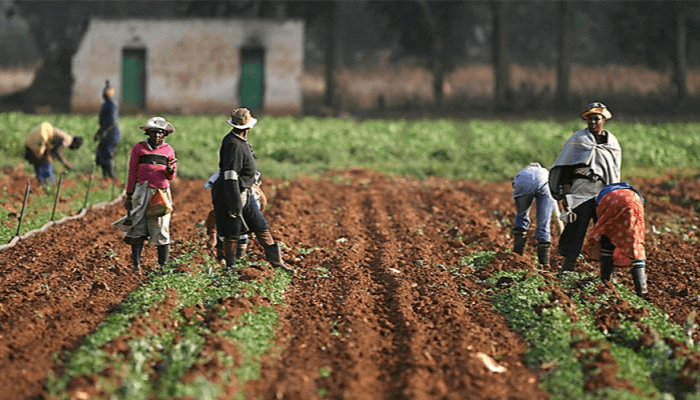
The African Union (AU) has launched a 10-year strategy to drive agricultural transformation across the continent.
This was unveiled during the summit in Kampala, Uganda. The new Comprehensive Africa Agriculture Development Programme (CAADP) Strategy and Action Plan (2026-2035) promises to tackle persistent challenges while adapting to emerging threats like climate change and economic shocks.
Speaking at the summit of the joint meeting of Ministers of Agriculture and Ministers of Foreign Affairs, Jessica Alupo, vice president of Uganda, emphasised agriculture’s central role in Africa’s development.
Read also: Nigeria’s agriculture needs private boost to attain food sustainability, says Adefeko

“Agriculture remains the backbone of most, if not all, economies on the African continent,” she said, urging leaders to adopt a value-chain-based approach and address bottlenecks such as limited investment, inadequate infrastructure, and reliance on outdated methods.
Alupo identified key bottlenecks undermining agricultural growth on the continent, including limited public sector investment, reliance on nature amidst climate change, and the unavailability and high cost of quality agricultural inputs such as fertilisers and seeds.
“We must also address the underutilisation of land and the low involvement of youth in agriculture,” she added, noting that inadequate infrastructure, such as roads and cold-chain facilities, continues to impede the sector’s growth.
One of the major challenges highlighted during the summit was Africa’s staggering $100 billion annual food import bill. “This sends a very bad image,” Alupo said.
“As a continent, we have yet to face the challenges our friends in other regions are confronting. We still have the capacity to produce, even with limited adoption of catalysts like irrigation and fertilisers, because we have unutilised land and favourable weather patterns.”

Estherine Fotabong, director for Agriculture, Food Security, and Environmental Sustainability at AUDA-NEPAD, provided an overview of the new strategy, describing it as a result of a consultative and Africa-led process.
“We have a comprehensive 10-year CAADP strategy that will guide our continent in tackling the pressing challenges we face in building sustainable and inclusive food systems,” she said.
Reflecting on 20 years of CAADP implementation, Fotabong acknowledged significant progress since the Maputo Declaration of 2003 but noted that the Malabo Declaration targets remain unmet.
Read also: How We’re innovating agriculture, empowering communities through Fresh County ~ Amaka Emmanuel
“The four Biennial Reports confirm that we are not on track to achieving the targets we set ourselves through the Malabo declaration,” she stated.
The strategy emphasises a food systems approach to address Africa’s complex agricultural needs, focusing on agro-processing, post-production, and resilience against climate shocks.