Businesses and consumers in Nigeria have been on the receiving end of spiraling inflation which peaked at 34.6 percent, a 28-year high, in November.
The federal government expects inflation rate to cool to 15 percent in 2025 but some economists consider the target over ambitious.
Basil Abia, an economic analyst and co-founder of VerivAfrica, said that without effectively addressing key inflation drivers such as high food prices, exchange rates, and excess liquidity,there won’t be sufficient conditions for a substantial decline in inflation.
According to Abia, he has greater confidence in the 31 percent inflation forecast made by VerivAfrica using the vector autoregressive (VAR) prediction model, noting that it seems more realistic given the nation’s current economic challenges.

Elevated inflation raises the prospect that the Central Bank of Nigeria will continue its monetary tightening policy, which has seen the benchmark interest rate climb from 18.75% at the end of 2023 to 27.5% this year. Last month, Governor Olayemi Cardoso said the Monetary Policy Committee expects inflation to start easing in 2025 because of these measures.
Yvonne Mhango, Africa economist at Bloomberg Economics, said that she sees a path to reduced inflation next year.
“After the higher-than-expected rise in Nigeria’s inflation, we now expect price gains to moderate from January – rather than December – at a slow pace. Rate hikes will persist until the Central Bank of Nigeria achieves its goal of restoring positive real rates – likely in the third quarter of 2025. Falling inflation will give scope for policy to become less restrictive in 4Q25.”
Several experts have predicted Nigeria’s inflation rate for 2025 using different prediction models. For instance 20.7 percent was predicted by the African Development Bank while the IMF predicted 23 percent.

Lessons for Nigeria from Turkey and other Nations
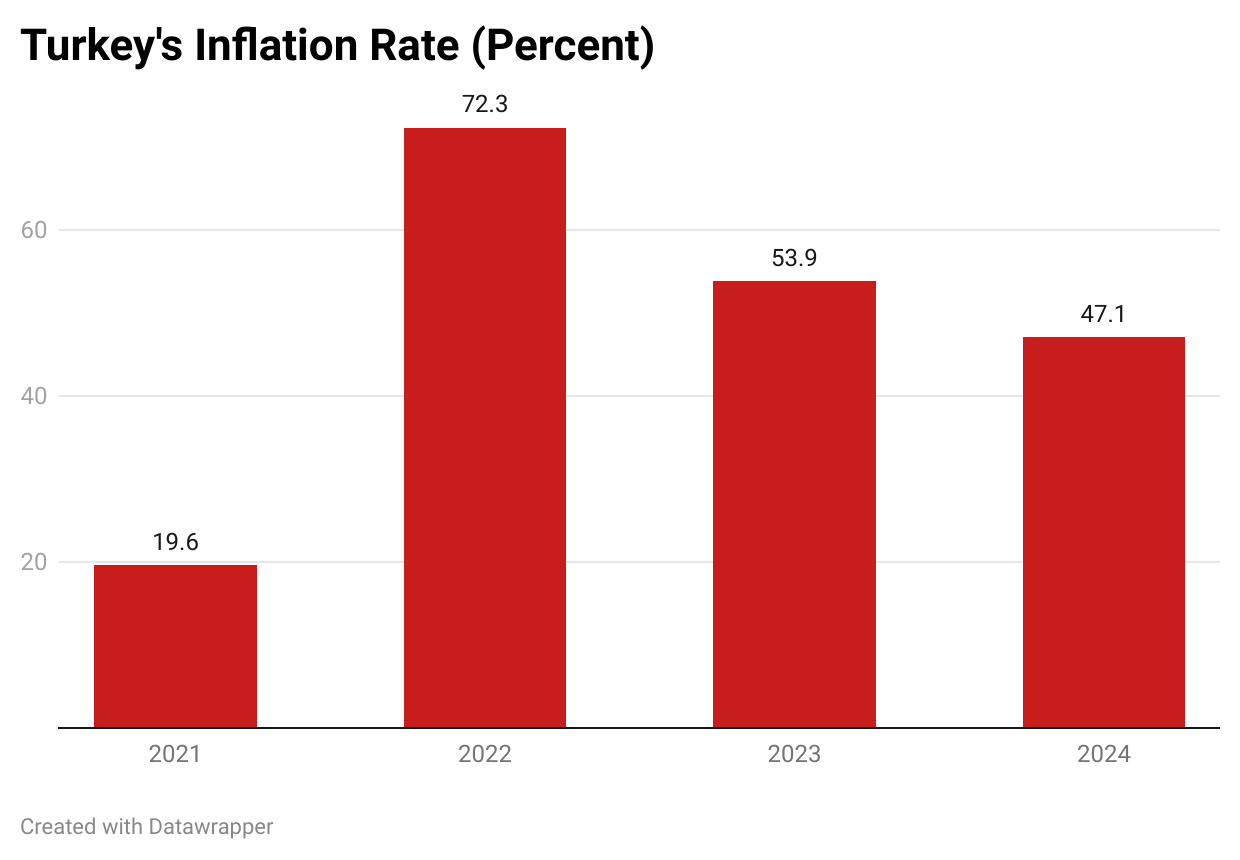
Turkey, the 17th largest economy in the world, has a nominal GDP of one trillion USD and a GDP per capita of 11,938 USD. However, this nation of 85 million people faced severe inflation, hitting 86 percent in October 2022 and 53.86 percent in 2023.
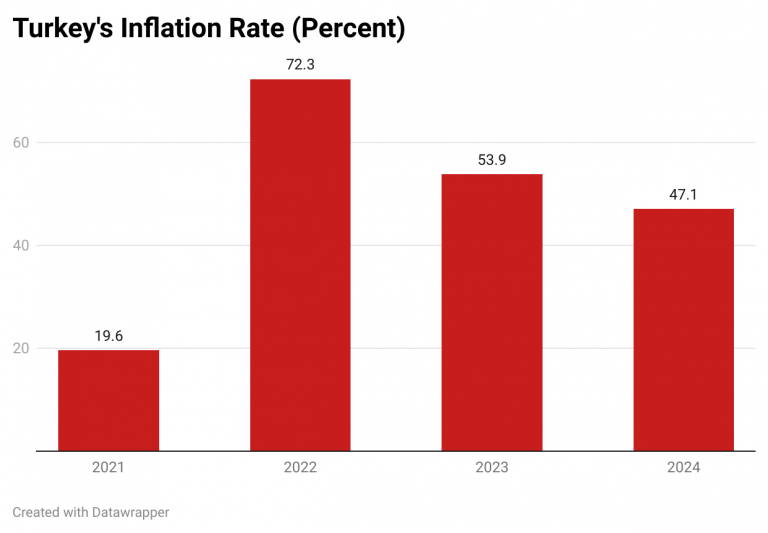
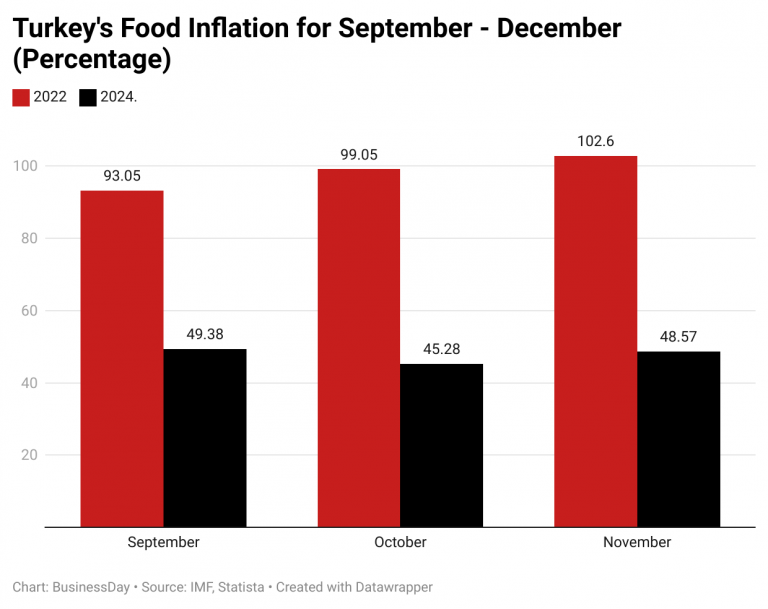
Turkey’s high inflation rates were driven by a combination of factors, including geopolitical tensions, supply chain disruptions, high borrowing costs, foreign-currency denominated debt, and President Recep Tayyip Erdogan’s policy of slashing interest rates. Additionally, the Turkish lira lost 60 percent of its value between September 2021 and May 2024, further exacerbating inflation.
Despite challenging conditions, Turkey successfully reduced inflation by nearly 50 percent, dropping from 83 percent in 2022 to 47.1 percent in 2024.
This was accomplished through a series of measures, including tightening monetary policies with interest rates raised from 8.5 percent to 50 percent, boosting productivity, cutting public spending by $3.1 billion, reducing capital expenditure by 10 percent, and lowering investments by 15 percent.
In contrast, Nigeria could benefit from Turkey’s approach of cutting public spending, boosting productivity, reducing capital expenditure, and tightening monetary policies to curb excessive borrowing and uncontrolled spending.
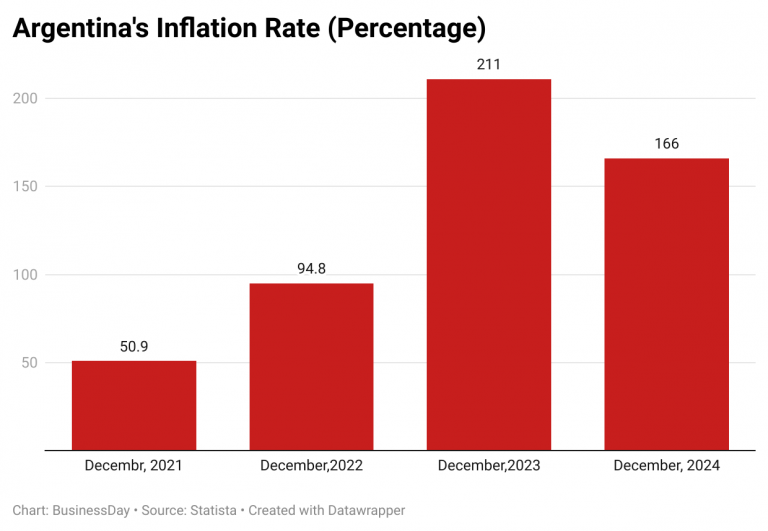
Argentina has faced persistent inflationary challenges, which President Javier Milei pledged to address upon taking office. Inflation soared from single-digit figures in 2004 to over 200 percent in 2023.
Milei’s strategy of cutting government spending to achieve a balanced budget, reducing public debt, and limiting the money supply played a key role in alleviating inflation and stabilizing Argentina’s currency.
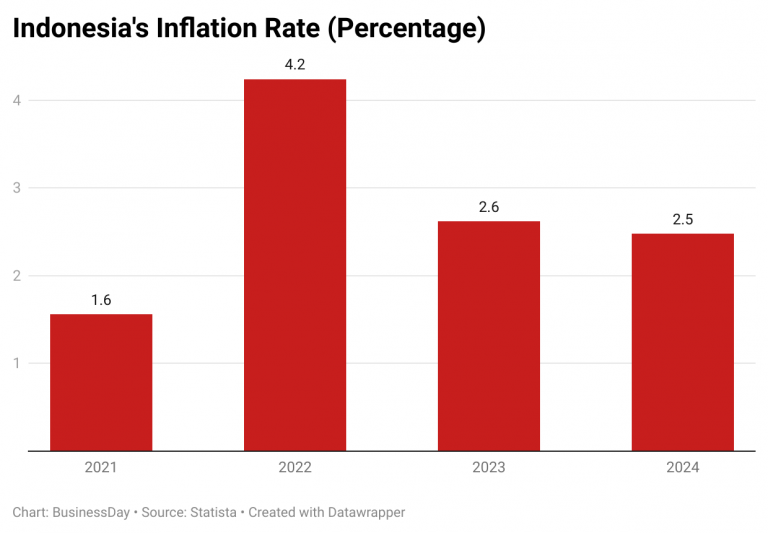
Indonesia, the world’s fourth most populous country (280 million people), has demonstrated resilience in managing inflation and stabilizing its currency, according to the World Bank.
Earlier this year, Indonesia’s Minister of Economic Affairs, Airlangga Hartarto, pointed out that the ongoing Russia-Ukraine conflict had pushed the country’s inflation rate to 5.95 percent.
However, Hartarto assured that measures have been implemented to control inflation, aiming to keep it at 2.5 percent through price regulation, steady supply chains, adequate stock levels, and effective communication.
What’s the way forward?
Nigeria can effectively combat inflation by learning from the strategic approaches of Turkey, Indonesia, and Argentina. By adopting prudent monetary policies, enhancing foreign exchange reserves, diversifying its economy, and strengthening institutional frameworks, Nigeria can stabilize its economy and foster sustainable growth. While each country’s context is unique, the key lies in building economic resilience, enhancing transparency, and curbing excessive reliance on imports. As the renowned economist Milton Friedman once said, “Inflation is taxation without legislation.” Nigeria must act decisively to control inflation, ensuring it doesn’t become a silent tax on its citizens’ livelihoods.