At the 13th convocation lecture of Veritas University on November 8, 2024, Governor Soludo argued that Nigeria was undergoing a fundamental and disruptive resetting, subsequent to the removal of the fuel subsidy. While Nigeria navigates this macroeconomic reset, individuals are enduring a more immediate reset at the micro level. About a week after Soludo’s hypothesis, Dr. Toriola of Hallmark University categorised people’s responses to the skyrocketing fuel prices into seven strategies: cutting down unnecessary trips, avoiding all non-work-related travel, carpooling, opting for public transportation, abandoning family and relocating closer to work (for those who can afford it), and quitting work altogether.
Between November 5 and 12, I spent ₦107,000 fueling my car at an NNPC station—just to commute to school and back. After sharing this distressing experience with a colleague, they asked, “Oga Muo, can we continue like this?” I had no answer. But something had to give. After a thorough personal SWOT analysis, I decided to embrace Toriola’s fourth level of socioeconomic resetting: going to work using public transportation. While I can still afford to fuel my car for now, I know this is unsustainable.
Read also: Transport ministry spent public funds without following due process Auditor-General
I am not new to public transport. Occasionally, when my car broke down without warning, I relied on it. But making this a regular feature is a significant adjustment. Driving three days a week to school—a concession generously granted by my institution—has become a luxury I can no longer justify, especially as I don’t receive any “constituency project allowance.”

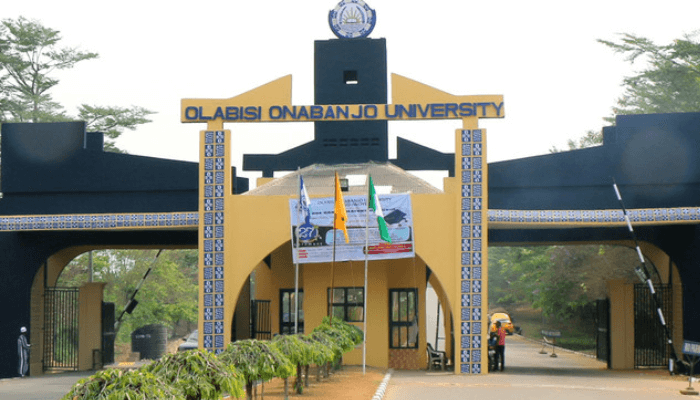
I had learnt of vehicles that ply directly from Ijebu-Ode to Olabisi Onabanjo University (OOU), departing around 7 a.m. However, since I am not the cleaner, leaving home at 6 a.m. and arriving at school before 8 a.m. felt unnecessary. On Wednesday, November 27, 2024, I opted for the multiple-drop model, which allowed me to leave whenever I wanted.
I left home at 8 a.m. instead of my usual 9 a.m., arrived at the park, and skipped the loading car because it required pairing with someone in the front seat (despite the presence of FRSC officials on the route). I chose the next car in the queue and secured a seat in the back, which accommodated the standard three passengers.
Upon reaching Ago-Iwoye, I transferred to another vehicle bound for OOU. After settling in and waiting for three more passengers, a group of four students arrived. The driver, seeing an opportunity to fill his vehicle more quickly, attempted to offload me. I protested, questioning why one passenger (myself) should be displaced for four. In typical motor-park logic, which defies common sense, no one supported me, and the students showed no concern about displacing a grey-haired elder.
Eventually, the driver apologised profusely, even prostrating, and I moved to another bus, which fortunately filled up quickly. However, mid-journey, the driver stopped abruptly to recount the passengers’ money, suspecting a shortfall. This took over five minutes and was done without explanation or apology. Finally, I arrived at school, trekked the one-kilometre distance to my office, rested briefly, and went to class. A journey that usually takes me 30 minutes has stretched to nearly two hours.
On my way back, I reached the school park around 3 p.m. and boarded a car. This time, the vehicle seated four passengers (instead of the standard three) in the second row, creating an uncomfortable squeeze, especially as two of the passengers were rather “bodacious.” I disembarked at Molipa Roundabout in Ijebu-Ode, retrieved my laptop from the trunk, and was promptly greeted by a heavy knock from the trunk lid—a fitting initiation into the world of public transport.

Read also: Green Line: A fresh push to redefine public transportation in Lagos
As the Igbo proverb goes, the okwa (a type of bird) must learn to survive on roots when the farmer harvests the yam. The farmer, in this case, is the government, which cares little for the okwa. As I adjust to life with my “legedizbenz” (on foot) and learn to navigate public transport with the masses, my car has begun to learn how to “stay at home.” Last week, it made two trips to school; this first week of December 2024, it will only make one.
This adjustment is one of the ironies of our current reality—a so-called dividend of the “BATified reforms.” That a man preparing for retirement must now learn the new skill of struggling for buses with students speaks volumes. As Zebrudaya would say, “What can a man do?”