Adewale Williams always dreamed big for his family. In the buzzing city of Lagos, he once envisioned owning a small, comfortable home with enough space for his two children.
But in the last two years, these dreams have begun to fade under the weight of Nigeria’s relentless cost-of-living crisis.
For most of his life, William’s job as a mid-level accountant meant stability, not luxury. He never expected riches, but he valued the comfort he could afford: the ability to save, occasional treats for his family, and the hope of creating a secure future.
But as prices began to rise—first, slowly, then with brutal speed—William’s pay check stretched thinner and thinner.

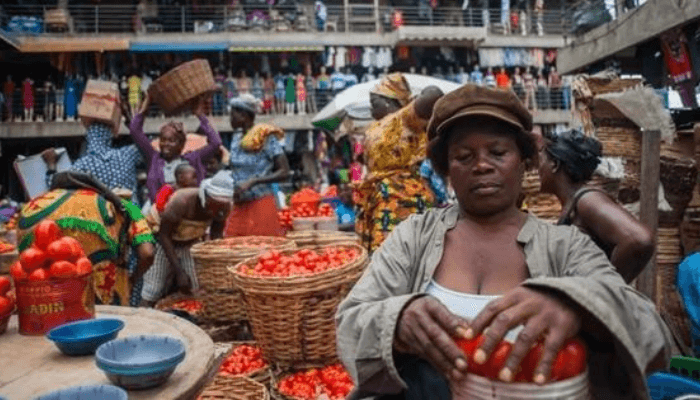
The 38-year-old still remembers one shopping trip that truly hit home. He’d taken his son, Tunji, along to pick up a bag of rice, cooking oil, and other essentials at the market. The same list that used to cost him about N50,000 a little over a year ago has now almost tripled. Tunji, watching his father’s reaction, asked innocently, “Daddy, why don’t we buy what we used to?”
Williams had no words, just a quick smile and a nod. But inside, he felt a surge of guilt and worry. If the basics were this hard to afford, what about the bigger dreams he had for his family?
The Invisible Battle
Williams isn’t alone. Across Nigeria, the middle class is feeling the squeeze as the prices of everyday items—bread, rice, cooking oil—soar.
Over the last year, Nigeria’s inflation has climbed, surging to 32.7 percent in September 2024. Food prices are climbing faster still, now hitting levels that force people to make difficult choices every day.

For Titi Oyelaran, a schoolteacher in Ibadan, these choices are beginning to weigh heavily. She remembers how, just last year, she could afford an extra lesson for her son and put a little money aside each month. Now, those plans are on hold. “I feel like I’m slipping backward,” she said.
“I used to give my children small treats, like ice cream on weekends, but now that’s a luxury. My son thinks he did something wrong because we had to stop.”
As the University of Ibadan Economics graduate spoke, she recalled her mother’s stories of economic hardships in the past. But this crisis, she said, felt different. “It feels like we’ve done everything right—studied, worked hard, saved—and still, it’s not enough.”
The Domino Impact of Fuel Subsidy Removal
The removal of Nigeria’s unsustainable petrol subsidy in 2023 was a tipping point for many like Williams and Oyelaran. When the price of fuel nearly tripled overnight, it set off a domino effect that reached every corner of the economy.
Transportation costs surged, which meant more expensive food, higher costs for basic goods, and a steep rise in rent as landlords scrambled to offset their own expenses.
Kemi Ajayi, a single mother who works at a printing press in a Lagos suburb, said her daily commute has become her biggest monthly expense.
Each morning, she now wakes up an hour earlier to catch a cheaper, overcrowded bus. The savings, though modest, help her buy a bit more food. But her daughter is the one who notices the change. “She keeps asking why I look so tired,” Ajayi said, with a half-smile. “I tell her it’s just work, but she knows things have changed.”
Dreams, Hopes Dashed
For many, homeownership—once a central part of Nigeria’s middle-class dream—now feels like a far-off fantasy. The cost of buying or building a home is climbing fast, with mortgage rates pushing many would-be buyers to abandon the idea entirely.
Landlords, feeling the pinch themselves, are raising rents, adding even more pressure on families who were barely getting by.
Chike Michael recently shared his frustrations on X, formerly known as Twitter. His plan had been to buy land and build a small home for his family in the next three years.
Now, the medical practitioner is not sure he’ll ever manage it. “I feel like we’re just existing now, not building anything,” he lamented. “Every time I look at my bank account, it’s like the future I want for my family is getting smaller.”
A Widening Divide
Economists warn that the erosion of Nigeria’s middle class could deepen the country’s economic divide. “Middle-class is the engine of growth in any country, without which an economy will collapse,” said Adeola Adenikinju, president of the Nigerian Economic Society.
The University of Ibadan Economics professor said various policies initiated by the government are not conducive for those in the median class who are supposed to ensure productivity and growth.
“The middle class is essential for economic stability and growth,” explained Chioma Okeke, an economist at a Nigerian think tank. “Without a stable middle class, we lose the bridge between the wealthy elite and those in poverty, and that kind of economic polarisation has lasting consequences.”
Despite these warnings, Williams and others like him continue to press on, holding onto what they can, even as they feel opportunities slipping away.
Some, like Oyelaran, have started looking outward, considering migration to countries where they believe a better life might be possible. “It’s hard to think of leaving,” she said. “But it’s harder to stay and watch your dreams get smaller every day.”
In this harsh reality, the middle class in Nigeria finds itself at a crossroads—struggling to hold on to a lifestyle they once took pride in, even as the pressures of daily life continue to push them further from the future they envisioned.
For Williams, Oyelaran, and countless others, the question lingers: How much more can they bear before they have to let go of the dreams they’ve fought so hard to achieve?