.4G emerges dominant network
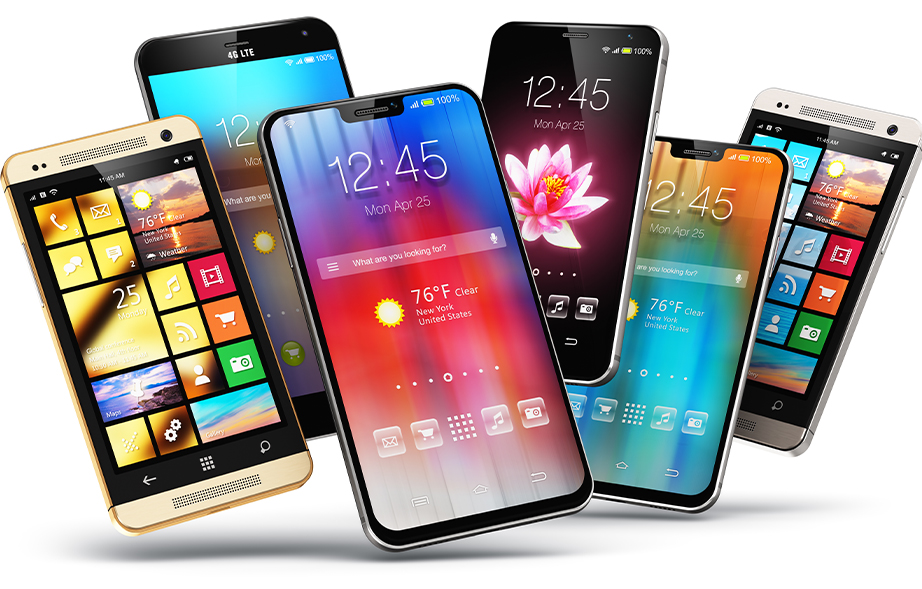
Smartphone adoption in Nigeria surpassed feature phone penetration for the first time in September 2024, according to new data from the Nigerian Communications Commission (NCC).
This coincides with a surge in data usage, which grew by 30.16 percent year-on-year to 850,249.09 terabytes (TB) during the month.

Active mobile subscriptions decreased by 30.14 percent year on year to 154.63 million in September 2024, and a breakdown of the market share revealed that subscriptions on 2G fell to 43.53 percent from 60.08 percent in September 2023.
For the first time, 56.47 percent of connections were on 3G, 4G, and 5G, and 43.53 percent were on 2G. Based on this, 87.32 million of Nigeria’s 154.63 million mobile subscriptions are on smartphones, while 67.31 million are on feature phones.
Feature phones are devices that are not internet-enabled and drove the first wave of mobile penetration in Nigeria.
Most (69.52 million) of Nigeria’s smartphone subscriptions are on 4G, now the country’s dominant network. Ericsson recently noted that 4G network would become dominant in Nigeria and some other Sub-Saharan African countries.
“The 4G will be the primary driver for new subscriptions up to the year 2028. By the end of 2029, 4G subscriptions are forecast to account for half of all mobile subscriptions,” NCC said.

Data vs Voice
The growing consumption of data services has translated to higher data revenues for telcos. For instance, MTN made 20.25 percent more from data (N1.14 trillion) than voice (N949.43 billion) in the nine months ended September 2024, and Airtel Nigeria’s data revenue ($229 million) outgrew voice ($209 million) by 9.57 percent.
In its nine-month report, MTNN recorded that the demand for digital services, social media, and streaming content has been crucial in driving data consumption. As a result, its average data usage per customer increased by 31.2 percent to 11.2 GB, while the overall data traffic grew by 42.1 percent.
In its six-month result, MTNN reported that smartphone penetration grew by 55.9 percent, and its 4G network population coverage was up 82 percent.
Airtel Africa’s six-month report for the period ended June noted an increasing number of smartphones on its network. The NCC said that data revenue grew by 44.4 percent in constant currency in Nigeria, with data usage per customer growing by 36.0 percent to 8.1 GB per month (from 5.9 GB in the prior period).
Smartphone penetration on its Nigerian network grew by 6.2 percent to 48.5 percent, and smartphone data usage per customer reached 10.9 GB per month compared to 8.6 GB per month in the prior period.
According to GSMA, smartphone penetration in urban Nigeria was 59 percent and 26 percent in rural areas in 2023. The Alliance for Affordable Internet (A4AI) pegged the country’s smartphone penetration at 44 percent in 2021.
Declining feature phones
This fall in feature phone market penetration coincides with a general fall in feature phone shipment on the continent. The International Data Corporation (IDC), in its first quarter (Q1) 2024 Quarterly Global Mobile Phone Tracker, showed that feature phone shipments declined 15.9 percent over the same period to 18.8 million units in Africa, signifying a transition toward smartphones across the region.
“Africa remains a market with a high share of feature phones, although they are expected to gradually decline as the transition to smartphones gains momentum,” said Akash Balachandran, a research manager at IDC. “This shift, coupled with rising demand, will be the key driver of overall growth in the smartphone market. Persistent inflationary pressures and escalating macroeconomic uncertainties may cause short-term fluctuations but will not impede the long-term transition.”
Smartphones have fuelled Nigeria’s digital economy over the past decade. “Smartphones have become the computer for many Nigerians today,” according to Adia Sowho, former chief marketing officer of MTN Nigeria.
However, affordability is a key issue in deciding what phone to own. Adeolu Ogunbanjo, president of the National Association of Telecoms Subscribers (NATCOMS), stated, “Many people, particularly those on the lower ladder of the economy, use feature phones. And they form the majority. Poor people can only afford 2G phones.”
Why smartphone usage is rising
This rise in smartphone penetration has been fuelled by entry-level Chinese phones. Arnold Ponela, a senior research analyst at IDC, said, “Nigeria saw robust growth fuelled by the success of Transsion brands and Xiaomi, particularly in the entry-level segment, which significantly boosted shipments.”
According to the International Trade Center (ITC), Nigerians have spent $3.82 billion on telephones, including smartphone imports, since 2019, with $2.83 billion (74.09 percent) coming from China.
Manish Pravinkumar, senior consultant for Middle East and Africa (MEA) at Canalys, noted, “Chinese phones stand out in the Nigerian market due to their affordability, features, and targeted marketing strategies.”
High cost of smartphones, a barrier
Despite this growth, Nigeria continues to have a high usage gap. In a new report, GSMA, the global body for telcos, revealed that 120 million Nigerians do not have access to mobile internet, largely because it is not affordable. Karl Toriola, chief executive officer of MTNN, recently noted that while many people are shifting their consumption from traditional voice services to data services, the biggest barrier to this migration is the high cost of smartphones.
Gideon Ajayi, who owns a phone store, stated, “Phone prices are now 30 percent higher than last year, and most people can’t afford them.”
This high cost of smartphones has been tied to rising economic hardship in the country. Ogunbanjo of NATCOMS stated, “What is happening now (high cost of things) isn’t peculiar to ICT. But mobile phones are a need.”
Pravinkumar at Canalys noted the rising cost of living, driven by high inflation of more than 30 percent, has weakened the purchasing power of many Nigerians and increased demand for entry-level smartphones. “In the second half of 2024, rising component costs and local currency depreciation will likely lead to higher retail prices,” he said.
However, he predicted the Nigerian smartphone market would grow by 5 percent by the end of 2024. According to experts in the space, the country’s young population and growing consumption of digital services will continue to fuel its smartphone penetration.