Summary: As Nigeria prepares for its GDP and CPI rebasing in November 2024, the economy is expected to see a significant statistical boost, particularly from sectors like fintech, entertainment, and digital services. While rebasing offers a more accurate picture of economic output, its impact on the average Nigerian may be minimal.
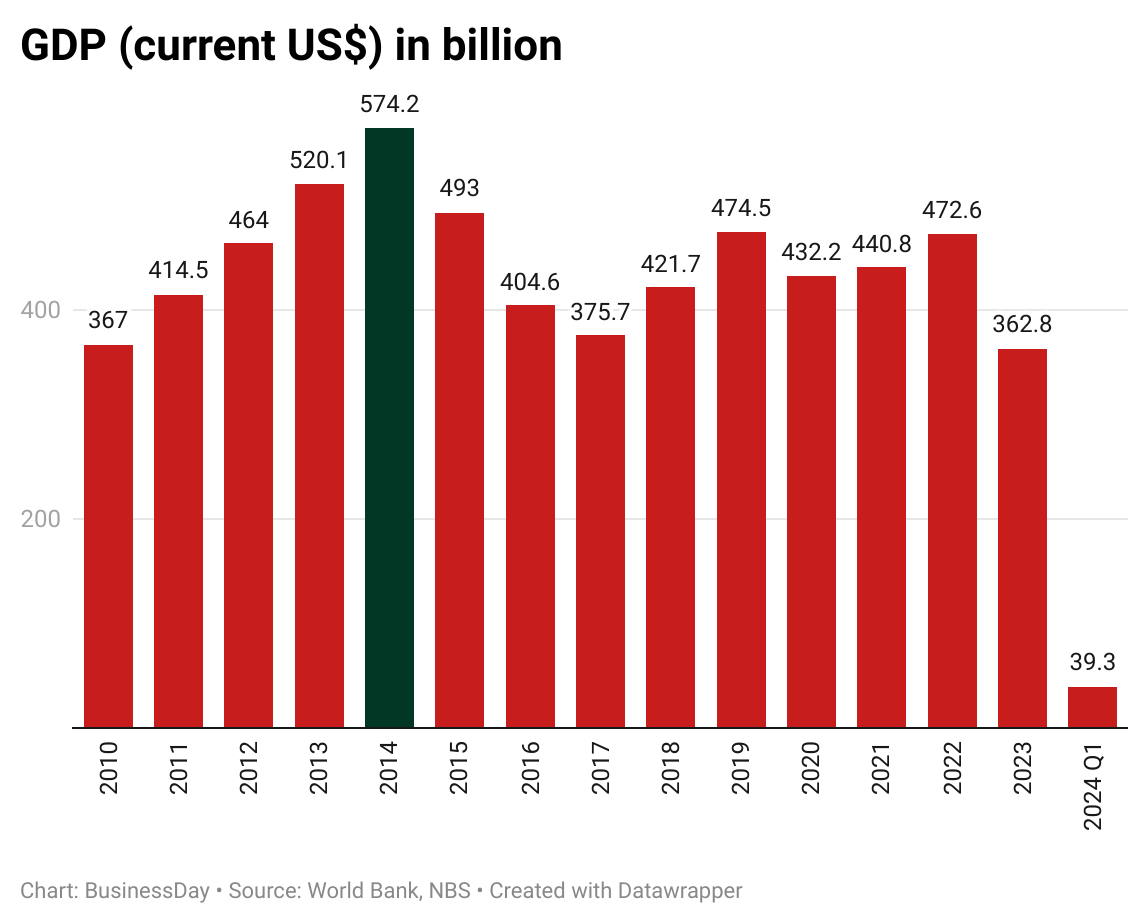
In 2014, Nigeria made global headlines when its economy was declared the largest in Africa, with GDP surging by 89 percent to $510 billion. This transformation was the result of rebasing — the process of updating the base year used to calculate a country’s GDP.
As The Economist remarked on 12th April 2014, “As if by magic, Nigeria has declared itself the biggest economy in Africa… Nothing has changed in Nigeria’s real economy, except the way it is measured. Yet the magic matters.”
What caused this dramatic shift? New sectors like e-commerce, telecommunications, music, and Nollywood were included in the GDP calculation for the first time, revealing the true scale of Nigeria’s diverse economic activities.

Now, as the National Bureau of Statistics (NBS) prepares to rebase Nigeria’s Gross Domestic Product (GDP) and Consumer Price Index (CPI) in November 2024, many are once again anticipating the outcome.
Will Nigeria’s GDP rise significantly? How will inflation measurements change? Here’s what to expect based on historical trends and economic patterns.
Why rebasing matters
Rebasing is a routine statistical exercise designed to provide a more accurate and current snapshot of an economy. It reflects structural changes, accounts for inflation, and incorporates emerging sectors.

Although the UN Statistical Commission recommends that countries rebase every five years, Nigeria last did so in 2014, and before that in 1990. Given this long gap, the 2024 rebasing could reveal significant shifts in Nigeria’s economy.
Anticipated Outcomes from the 2024 Rebasing
1. Updated GDP Figures
Given the precedent set in 2014, when Nigeria’s GDP rose by 89%, it’s highly likely that the 2024 rebasing will result in another notable increase. New sectors such as fintech, digital services, and e-commerce, which have seen explosive growth in recent years, will likely contribute to this upward revision.
As one economist pointed out, “Since ICT has grown substantially since the last rebasing, we could see a significant boost in the ICT sector’s contribution to GDP. Similarly, entertainment, maritime, and solid minerals are evolving industries that may further bolster GDP.”
2. Shifts in Economic Indicators
A larger GDP will likely result in a lower debt-to-GDP ratio, offering more fiscal space for the government to manage its debt. This could enhance Nigeria’s credit profile, making the economy more attractive to foreign investors.
Additionally, per capita income could rise, providing a more optimistic view of living standards and economic development. However, this will be more reflective of statistical adjustments than actual improvements in everyday living conditions.
3. Revised CPI and Inflation Measurements
Rebasing the Consumer Price Index (CPI) will ensure that Nigeria’s inflation rate better reflects current consumption patterns. New goods and services, such as digital and tech products, might be included, while outdated items may be removed from the inflation basket.
This update will result in more accurate inflation data, potentially altering Nigeria’s inflation outlook compared to previous measures.
The Reality Check: What Will This Mean for the Average Nigerian?
While the rebasing of GDP and CPI is crucial for accurate economic measurement, its impact on the average Nigerian may be minimal. As Bismarck Rewane, CEO of Financial Derivatives Company, bluntly put it in 2014: “Is the money in your bank account more on Sunday than it was on Saturday? If you had no job yesterday, are you going to have a job today? If the answer is ‘no’, then this is an exercise in vanity.”
The rebasing exercise will no doubt raise Nigeria’s economic profile, but with over 129 million Nigerians living below the national poverty line, the effects will be felt more in statistics than in everyday life. As Goodluck Jonathan, former President said in 2014, he wouldn’t celebrate Nigeria’s status as the largest African economy because “too many of our citizens are living in poverty.”
A Necessary but Incomplete Picture
GDP rebasing is not a fraudulent exercise; it’s a necessary recalibration of how we measure economic output. However, the figures released by the NBS will not change the fundamental challenges Nigeria faces.
Real progress requires deeper reforms, investments in human capital, and targeted policies that uplift the millions living in poverty. While the rebasing may show an expanded economy, Nigeria’s real success lies in ensuring that growth benefits all its people.