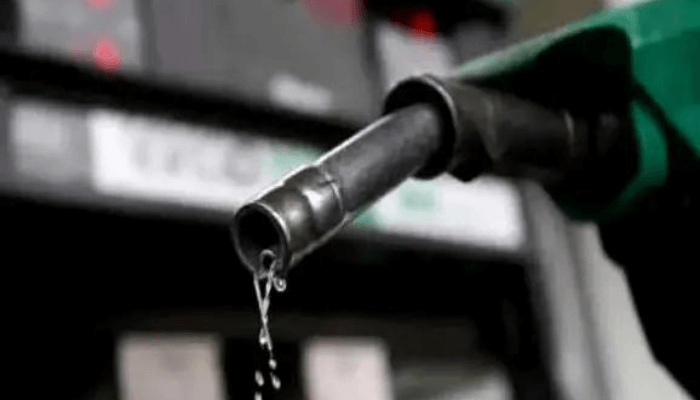
…Black marketers thrive
…Normalcy expected in 10 days
As Nigeria braces for a potential nationwide protest against the rising cost of living, the country is grappling with an intensifying petrol scarcity that threatens to exacerbate public discontent.
Long queues at fuel stations, soaring prices and widespread frustration have become the norm in the lead-up to the planned demonstrations. The petrol shortage has forced many Nigerians to resort to panic buying, leading to long queues across fuel stations.

According to reports, long queues and dry pumps have become the norm in states like Lagos, Ogun, and some parts of the Federal Capital Territory (FCT).
The scarcity, which progressively worsened over the weekend, saw petrol prices skyrocket, further straining the finances of everyday Nigerians.
Many vehicles now spend hours in fuel queues, while public transportation services are becoming increasingly unreliable due to fuel shortages.
Read also: Petrol scarcity lingers as landing cost hits N978/per litre
Adewale Bakare, an Uber driver, shared his frustration at a filling station in Lagos.

“I have been here since 10 a.m., and it’s now 3 p.m. No fuel means no work, no money to feed my family,” he said.
The official price of petrol at the pump ranges from N568 to N800 per litre, depending on the location. However, with the current crisis, the ‘black market rate’ has surged to N1,300 -N1,600 per litre, leaving many unable to afford the fuel they need.
Reports have indicated that some fuel attendants demand as much as N2,000 before attending to their customers, turning the crisis into a lucrative business.
“It’s outrageous, but what choice do we have? If I don’t get the fuel, my boss won’t be able to get to work,” said Chinedu Eze, a private driver, who described how he had to part with N5,000 to get 20 litres of fuel (excluding petrol cost).
Supply challenges fuelling petrol scarcity
In an interview with BusinessDay, Zarma Mustapha, deputy national president of the Independent Petroleum Marketers Association of Nigeria (IPMAN), said the ongoing scarcity is due to supply challenges.
He said there is currently no product to be taken by IPMAN members.
Meanwhile, the Nigerian National Petroleum Company (NNPC) Limited has attributed the fuel supply and distribution challenges to issues in the discharge operations of several vessels.
According to a release by the state-owned oil company, the tightness in fuel supply and distribution witnessed in some parts of Lagos and the FCT is a result of a hitch in the discharge operations of a couple of vessels.
“The Company further states that it is working round the clock with all stakeholders to resolve the situation and restore normalcy in the operations,” the release signed by Olufemi Soneye, chief corporate communications officer of the NNPC, read.
Read also: NNPC, marketers blame logistics as petrol scarcity disrupts businesses
Petrol scarcity hits hard
However, the situation on the ground remains dire as Nigerians are left grappling with the harsh realities of the fuel crisis, where getting petrol often comes at a steep and unofficial price.
Douglas Stephen, a businessman, said that he had to leave home early this morning to get fuel. Despite his early start, he still spent an hour waiting to fill up his tank.
BusinessDay found that the landing cost of petrol stood above N1,000 on Monday, indicating that the Federal Government is subsidising the product.
Mustapha of IPMAN revealed that the landing cost of petrol stands at over N1000, exceeding the current pump prices in Nigeria, which range from N660 to N800 per litre, depending on the location.
“So, you cannot buy the product from the refinery at the international price and then sell it at the prevailing price at the retail outlets. If you do, you are going to lose a huge amount of money, which is a difference of between N400 and N500/litre,” Mustapha said.
Worsening fuel scarcity in Abuja
BusinessDay on Monday observed the long queues in some filling stations that have the product to sell in Abuja. Some filling stations were shut down.
Black marketers leveraged the rush to sell petrol at a higher price of N12,000 per litre.
“I have not seen it like this before. I know during fuel scarcity we often see queues here, but we are seeing the entire road closed because of fuel queues. Something is definitely wrong,” Mr Tobi, a taxi driver, said in a chat with BusinessDay.
Read also: Households, businesses count losses as petrol scarcity enters third week
Residents queuing to buy fuel at the NNPC retail outlet and AP filling station, covered the entire six lanes of Wuse Zone 1, leading to the popular GSM Village.
BusinessDay also observed the long queues at Conoil and Total filling stations opposite NNPC Towers in the Central Business District.
“This protest is really causing tension everywhere. People are scared of the likely outcome. I pray all this is over soon though,” Blessing Okafor, a lab scientist, said.