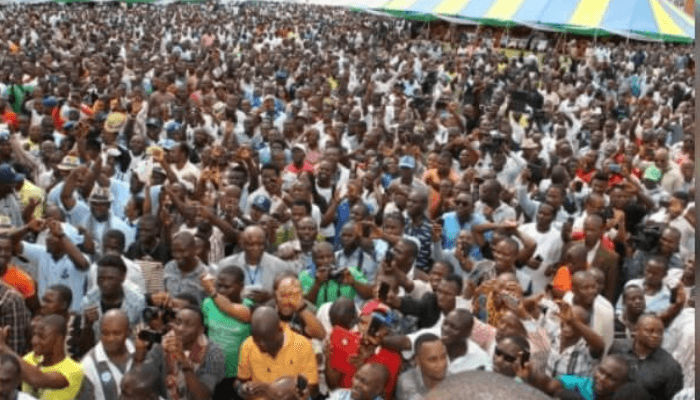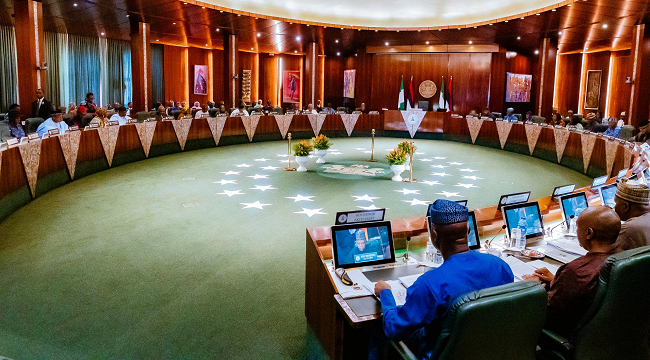
The whole world had waited with baited breathe. One wrong move could have landed us in the jaws of catastrophe. We rose to the moment when it mattered most. And the world has let off a big sigh of relief. The investors who had scrummed, will be hurrying to our doorsteps once again. As a sign of the new dawn, the stock exchange registered a staggering increase of more than 800 billion naira. The naira is rebounding against the dollar. The people have spoken,ad Jeganum. And the voice of the people, as the well-worn expression goes, is the voice of God. The recent presidential elections were peaceful despite the unprecedented tensions that accompanied them. I join many others in solemnly proclaiming it as a victory for Nigeria and for our great Nigerian people.
Credit must go to all Nigerians, the leading contestants and the INEC Chairman and his team. Professor Jega upscaled his image as a national icon by his unflappable poise and measured response in the face of the rather melodramatic outburst by PDP agent and former minister Elder Godsday Orubebe during the actual counting of the votes; carrying himself with the decorum and grace worthy of a statesman.
This is not to say there were no issues. Vladimir Ilyich Lenin, the early twentieth century Russian communist revolutionary leader, was deeply pessimistic about democracy. Far from seeing it in the classic Lincolnian definition as “the government of the people by the people for the people”, Lenin described democracy as the government by the man who counts the votes. Beyond the gaggle professorial returning officers, a detailed post-mortem of the elections will reveal that there were several anomalies. There is anecdotal evidence that millions of voters were disenfranchised through the technicalities of the card reader and the voter accreditation process. The pre-election demonstrations by MASSOB in the East and by OPC in Lagos were not without foundation. As it turns out, the gap between registered and accredited voters in Lagos stood at more than 3,000,000. I know for sure that the bulk of my own people in Sanga Local Government of Kaduna State did not have an opportunity to fully exercise their electoral franchise.
The near-perfect symmetry between registered and accredited voters in most parts of the core North as contrasted with the rest of the country, would have raised many statistical eyebrows. The North, with the lowest literacy rates, could not claim to have a higher level of political mobilisation than the rest of the country. The spectacle of the long queues of children voting in the North, as they did in Plateau in 2011, was simply disgraceful. There was a lot that was extremely fishy about the elections.

In addition, there were raging rumours of massive weapons that had been smuggled into the country. The cloven hoofs of history were apparently waiting to sweep across our glorious land with their swords, leaving fire on their trail.
The Jewish refusenik intellectual Natan Sharansky famously differentiated between democracies and fear societies. Democracies are governed by the ideals of freedom, ethics and justice. Fear societies are governed by the precepts of tyranny. Clearly, ours is not yet a democracy; it is a society governed by fear. When President Goodluck Jonathan put all these things together, he sombrely declared that his personal ambition was not worth the blood of innocent Nigerians. By conceding defeat and congratulating General Muhammadu Buhari, he will go down in history as one of our greatest statesmen.
This, of course,is no defence for the PDP. As a political machine, the party has been a disaster. The last remnants of the northern PDP Governors – Niger, Jigawa, Zamfara, and Bauchi — had already become de facto members of the opposition. Some even allege that the Chairman of the party was spiritually with the opposition APC. The Emperor was to realise too late that his principal officers and trusted lieutenants were secretly working against him. Throughout the elections their faces were hardly ever seen and their voices were barely heard, if at all.Femi Fani-Kayode, like John Baptist, was a lone voice crying in the wilderness.
The tragedy of Goodluck Jonathan was that he became a prisoner of his own minders who encircled him with a mountain of lies while preventing him from engaging with the real people of this country. Beyond brief forays into Sokoto, Katsina and Bauchi where he was pelted with stones, Goodluck Jonathan did not have a real campaign in the North, for whom the elections had become a matter of religion, faith and destiny. Across the wide expanse of the North, nobody dared drive around with a PDP campaign vehicle. The first person that tried it in Zaria was instantly killed. Politics as a form of warfare by other means.
Lest I am misunderstood: I am persuaded that the PDP juggernaut deserved to lose the elections. Drunk and surfeited with power and its accoutrements, they had become alienated from the people. They became insufferably conceited – victims of hubris and the arrogance of power. They no longer hungered for success while the fire in their belly had long been extinguished.

Their campaign was a total disaster. Beyond the rhetoric of “transformation”, they had not much on offer. Humungous amounts of money were being sprayed around while there’s hunger and anger in the land. This time around, the Nigerian people could not be bribed. The party stalwarts took the dosh and went and hid it under their mattresses. A good number donated it to the opposition cause. For a party that had amassed such a staggering war chest, it was a catastrophic defeat.
Goodluck Jonathan has had his innings, as the cricket-loving English would say. At 57, he can look forward to a long and well-deserved retirement at his ancestral home village of Otuoke. Sic transit gloria mundi!
Let me use the privilege of my voice as a columnist to congratulate General Muhammadu Buhari for winning the elections and for his overwhelming endorsement by the Nigerian people. He has been magnanimous in victory even as President Jonathan has been gracious in defeat. We expect that their two teams will work closely to ensure a seamless transition come May 29th.
Although I have praised Buhari’s anti-corruption credentials in this column, I did also express some misgivings about his approach to statecraft. I am instinctively an intellectual sceptic wherever mass followership becomes something of a cult as Buhari’s has become in the North (Sai Buhari). I also concede that it is patently unfair to judge a democratically elected leader today by his record as a ruler during the military era of the 1980s. I have always insisted that despite their foibles, Buhari and Idiagbon were genuine patriots who loved Nigeria and sought its common good. Buhari has fought a good fight. When he lost in 2011 he publicly wept. For a full general to weep in public was an extraordinary spectacle. A man who remained undaunted in the face of serial defeat deserves our respect. He has paid his dues.
The strains of the elections have taken their toll on him visibly. He will need to look after his health and not allow the burdens of office to overwhelm him.
Winning is the easy part. The real business of governing will prove to be the most difficult task of all. His first duty will be to heal the wounds of the recent past and to bring back the Nigerian people together. This year’s elections have been the most polarising in the history of our country. In the best of times we are a divided people. In these elections, we became alien communities that stare at each other warily across a wide and unbridgeable chasm. Our ethnic and religious divisions have grown frighteningly deeper than ever before. With the APC’s 15.4 million votes as against the PDP’s 12.8 million, the differential between the winner and the runner-up is only 2.6 million. The PDP remains a worthy opponent deserving of respect. In addition, if the Niger Delta want to be vengeful they would simply close off the oil pipelines and go back to the creeks as has been their wont in times past. We must therefore pursue the task of nation building with great sensitivity and care, avoiding a winner-takes-all mentality that could further alienate many of our aggrieved groups.
In his victory speech, Buhari made the right noises in saying he plans to be a leader and father to all our people. He has to be able to show that he means what he says in spirit and in truth.
The national security challenge is one that needs urgent attention. As a retired general who once served as GOC in the north east and once even gave a hot pursuit on Chadian soldiers right into their own territory in defiance of the orders of President Shehu Shagari, we believe President Buhari understands the terrain and the issues. He must take bold steps to strengthen the military as they win the war against the insurgency. Although our northern elites do not want to accept the fact, Boko Haram is a Frankenstein’s Monster that was hatched by them in their express bid to make the country “ungovernable”. To a great extent, they have succeeded. Sadly, Boko Haram has virtually destroyed the northern economy and brought so much havoc to our country. While the South has flourished, the North has been reduced to penury through the sheer wickedness of its own elites. Until very late in the day, Goodluck Jonathan’s weakness as a leader did not help matters.
Buhari’s own Fulani kinsmen have also been maiming and killing defenceless women and children throughout the Middle Belt. Every week, dozens and sometimes hundreds, are slaughtered in the primeval savannah. It is a genocidal war that has been ignored by the whole world in what amounts to a conspiracy of silence. In the comfort of their air-conditioned offices in Lagos, the APC stalwarts have never talked about it. Buhari himself has mentioned it only in muted tunes. In December last year my own beloved father died of illness deriving from shock, when, in his grand old age, he had to be fleeing at dawn for the umpteenth time from Fulani marauders. A very saintly man and a pacifist and believer in nonviolence, Baba as community leader refused our youths to ever bear arms against a people that would think nothing of slaughtering innocent women and children. Buhari must frontally tackle these issues if he is to win the trust of our people.
As a social scientist, I am appreciative of the fact that these are complex issues rooted not only in issues of water and land scarcity but also climate change, demographics and rural-agrarian togethersocio-economics. Linked to this is the question of small-arms proliferation. Ours has become a criminogenic society in which gun violence has become common place. Most of our people go to bed each night with only one eye closed. How he tackles these issues will define his Presidency and the moral legitimacy of his government in the coming years.
The success of the incoming president will be predicated on his ability to choose his cabinet wisely. While our constitution requires that the cabinet reflects the diversity of our federal system, I do not think that the president is bound to select his cabinet team from those nominated by their State Governors. In many cases, the latter have prided themselves in choosing weak candidates as ministers so that they would not outshine politically. It is a pernicious system that has ensured that second-rate people have filled the cabinet to the detriment of people of talent and ability.
President Buhari has to also take time to put together a strong economic team comprising of technocrats of high ability and integrity. His presidency will rise or fall according to the strength and capacity of his economic team. They have to be people who understand both the imperatives of national competitiveness as well as the demands of our twenty-first century digital industrial civilisation. The fewer we have of those Washington technocrats who pander to the global interest of those who want to keep our continent in the permanent status of a non-industrial backwater, the better. We need first-rate people who not only are capable of original thinking but who also love Nigeria and understand the economics as well as geopolitics of the African renaissance.
A new economic blueprint has to be designed based on the need to reengineer our common prosperity, building upon what has already been achieved by the previous administration. Balancing the public finances in these times of austerity must be a major priority, in addition to massive industrialisation, infrastructures development, employment creation and diversification of the economy away from dependence on oil.
General Buhari has ridden to power under the platform of an anti-corruption crusade. During his first incarnation as military ruler, it was a simple matter of locking up a few scoundrels and putting a few wayward youths under firing squad. These are dramatic solutions with little or no long-term sustainable effect. The real issue of corruption derives from how ministers and the accounting officers in the bureaucracy manipulate government procurement processes. There is no system of monitoring of revenues and spending. Project evaluation is virtually non-existent in our public affairs. The accounting processes within the NNPC and the oil industry remain opaque. The starting point is the President himself leading by example, which I believe Buhari will do.
Equally important is strengthening the institutions, including the Supreme Audit institution, the Office of the Auditor-General of the Federation; and the merger of ICPC and EFCC into one powerful integrated institution that will speedily arrest, investigate, prosecute and sentence without fear or favour. The drama and symbolism of celebrated arrests will not be of much effect unless real change takes place at the level of institutions and their effectiveness.
A major pitfall of Nigerian public policy centres on policy implementation. We are not short on brilliant ideas. The devil has always been with respect to the nitty-gritty of implementation. Within the Presidency, it is vital that the administration sets up a Strategy Office that oversees policy implementation and can advise the President without fear or favour. The Goodluck Jonathan administration met their Waterloo because they had no coherent strategy to speak of and a lot of the achievements were on paper and had nothing remotely to do with what was on ground. And the scale of corruption was unprecedented in the annals of our federal republic.
One of the things that worked well for the outgoing president, however, was the excellent working relationship between himself and his Vice-President, Namadi Asambo, although the latter was a political liability rather than an asset. Obasanjo and Atiku, you would recall, had become totally alienated from each other especially during their second term. As Vice-President, Goodluck Jonathan himself was treated rather appallingly by the cabal that surrounded late President Umaru Musa Yar’Adua during his last days. A relationship of mutual trust between Buhari and Yemi Osinbajo is crucial to building the team spirit necessary for success and effective governance. Buhari should act the role of statesman while his deputy should serve as Prime Minister overseeing key departments, strategies and policy implementation.
Rare does history provide statesmen with a golden opportunity to begin anew. Buhari failed in his first incarnation as Head of State, having be shoved off by military underlings in August 1985 who understood that he was a man without a plan and without any ideas. Nigerians have offered him a second chance to redeem his image and to leave his mark on history. If Buhari and Osinbajo can rise to the call of destiny, the promise of greatness that has eluded our country for so long may become more than just a dream. We wish them well.