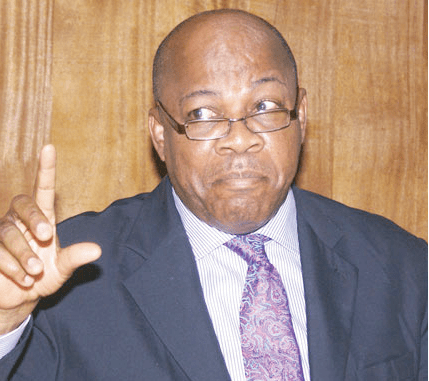
 Olisa Agbakoba, a former national president of the Nigerian Bar Association (NBA) and active champion of human rights, democracy and the rule of law, has urged the incoming government of Muhammadu Buhari to take as priority the rebuilding and strengthening of Nigeria’s institutions to achieve the desired progress.
Agbakoba, who spoke with journalists on the outcome of the election, said: “One of the urgent steps incoming administration should take is to reform the civil service and to ensure that people who want political posts not for the purpose of serving the country but to enrich themselves are not given the opportunity from day one.
“For instance, if people are going to the National Assembly with the hope of earning huge allowances or that they will earn N60 million for representing me when millions of Nigerians are hungry and roaming the streets without work, Buhari should make it clear from day one that such a thing is no longer possible. Again, the civil service is over-bloated and need to be cut down. The Oronsaye report needs to be revisited. I want to see a government that will be hard on corruption.”
Agbakoba said there was the need to strengthen all anti-corruption agencies and ensure that they work. He called for establishment of “counter-corruption programme” to fight the monster. “Let the message be made clear that there will be response from government if the civil service is corrupt”, he said.

“We need strong anti-corruption institution. The ones we have now have not worked. They have caught nobody. EFCC for instance has no independence. It is ineffective. Let the message be clear that there will be response from government and that corruption will be severely punished,”
“We must identify those institutions that deepen democracy. The National Assembly should identify such institutions and directly manage them by determining who should head them and determine their budgets; this way, the president will not have direct control over them; that’s what happens in South Africa. It will take an angel to make a good president in Nigeria. The culture of impunity from Babangida era needs to be reversed. The Nigerian president is very powerful and if things must be done right, there must be checks and balances,” he said.
Agbakoba also said that President Goodluck Jonathan was his number one hero; Attahiru Jega number two, Nigerians number three, while the institutionalized opposition came fourth.
“My hero number one is President Jonathan. He did not make the mistake that IBB made. When he saw that MKO Abiola was coasting home to victory, IBB was biting his fingers in Minna. I believe Jonathan must have asked himself some questions and came to the conclusion that it was more honourable to take the step he took. Jonathan allowed the democratic space to open. He allowed multiparty democracy and he allowed free and fair elections,” he said.
According to him, “I saw he was tremendously relieved. As a skilled legal psychologist, I can tell moods and swings. That is not to say President Jonathan didn’t want to win but having lost the election, he didn’t want to make a mistake. He is not a dictator; a dictator does not give space to his opponent; a dictator crushes the opposition. The fact that the APC which is the fourth hero for me was allowed to grow is because he refused to decapitate the opposition. Jonathan had choices; he could have insisted on staying there, after all, people are doing it elsewhere in Africa; opponents are being muzzled; Mugabe has been doing it.”

“The second hero is what I find difficult to determine whether it is Nigerians or Jega, but I give it to Jega. You see, if what happened at the collation centre where Orubebe went dramatic was not handled maturely, it could have set off some other things that would have not been pleasant. The coolness, calmness and the serenity with which Jega handled the matter is astounding. Again, Nigerians are the next heroes. Institutionalised opponents made up of sharp minds such as Fashola, Dele Alake and Wale Edun. These are the thinkers.”
Agbakoba described the North West and South East as villains because of the pattern of voting, arguing that Nigeria cannot move forward with the pattern of voting that came from the two geo-political zones.
“The villains are the leaders of PDP in the South-East that did not understand that balanced equation is critical in election. So also are the leaders of APC in the North West that failed to see the need for balanced voting. I don’t accept that the South-East where I come from should vote over 90 percent for one party without spread. Again, I want to see a tougher INEC, a tougher regulator that will ensure that our electoral process will be better than what we have now. That’s not to say that we should not give it to Professor Jega. On April 11, we want to see a balanced voting pattern that will reflect the unity and oneness of the country,” he said.
The senior advocate of Nigeria (SAN) also believed that a tougher regulator would check some of the excesses of political parties and politicians who are not transparent in their dealings contrary to the provisions in the electoral law of the country.
Reacting to the issue of some parties whose names and those of their candidates still appeared on the ballot papers even after they had publicly announced that they had withdrawn from the race, Agbakoba said only INEC could solve the problem.
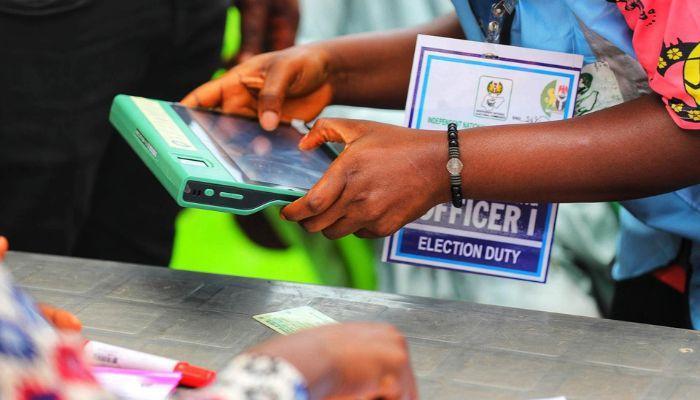
Describing the last presidential election as the best, he said the evaluation of the process was emotional.
According to him, “Not because it was best-organised or there were no flaws, but the dramatisation of the process, the emotional attachment and the way it ended peacefully with Jonathan conceding in a fantastic way, all these combined to make it the best.”
The senior counsel of the Human Rights Law Service explained that the cause of unbalanced voting was ethnicity, advising that the new government should look at the recommendations of the National Conference with a view to finding a common ground that all Nigerians can live in peace and harmony.
“The challenge for APC is now to begin to deal with the problem of ethnicity, rebuilding the country. The in-coming government must ensure that it sees every part of the country as one because the time of playing politics ended at the polling units and at the point when the results were declared. Now what should happen is good governance that will reflect in all parts of the country,” he said.
On the calibre of those who should be found in Buhari’s government, Agbakoba said: “I f I were Buhari, I would put the best hands no matter where they are found so far as it conform with the Constitution of the country.”
Agbakoba, who said that President Jonathan took the shine off Buhari by his quick acceptance of the outcome of the election and congratulatory message to his rival hours before the results were declared, explained that by so doing the out-going president has written his name in gold.
According to him, those who are trying to drag him into election petition to contest the result may just be wasting their time.
“I will attribute to President Jonathan the wisdom of Solomon. He has nothing to lose. He has said he is not interested in going to court; he has conceded; you can’t win all the time. God has blessed Jonathan that he has been in government for so long; there’s nothing else that he wants. So the party cannot drag the country back since the person concerned has accepted the results as announced. We want peace and we want to move forward without anybody dragging us back to election tribunal. President Jonathan, three years down the line will no longer feel anything,” he said.
Responding to report that Asari Dokubo, a former leader of a militant group in the Niger Delta and President Jonathan’s ally, had threatened to resume hostilities in the creeks against oil exploitation in the region with the aim to hurt the nation’s economy, Agbakoba said it is left to Buhari’s government to deal with such threats.
“He can’t try it. He will go to jail if he does. Anybody, any miscreant that wants to make trouble, it is the duty of the president to use our collective force to deal with that person. What is he going back to the creeks for? He will die there if he does that. The principal said he was satisfied with the outcome of the election; you can’t weep more than the bereaved. What we want is peace and anybody that would want to disrupt that peace must be dealt with,” he said.