President Goodluck Jonathan, on Sunday, assured Nigerians that the forthcoming general elections rescheduled for March 28 and April 11 respectively will not be postponed. This may have laid to rest speculations in some quarters that the Presidency was seeking further shift in the elections date.
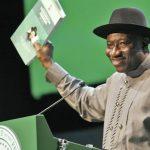
Attahiru Jega, the chairman of Independent National Election Commission (INEC), had during an interactive session with civil society organisations last week, ruled out further postponement of the elections. Speaking at the 2015 Presidential Debate organised by the Nigerian Elections Debate Group (NEDG) in Abuja, Jonathan who is also the presidential candidate of the Peoples Democratic Party (PDP), insisted that the elections would go on as scheduled.
“Let me use this unique opportunity to thank Nigerians for showing so much interest in the electoral process and to reassure Nigerians that elections will be conducted as scheduled by INEC. “Presidential and National Assembly elections on the 28th of this month and governorship and states houses of assembly election on the 11th of next month”, he said. He attributed the successes recorded so far in the fight against insurgency in the North East to the fact that drones were currently being used against the insurgents.
However, presidential candidate of the All Progressives Congress (APC), Muhammadu Buhari was absent at the debate. In all, 12 presidential standard bearers participated in the debate. Other candidates included Tunde Anifowose-Kelani of Action Alliance (AA); Ganiyu Galadima, Allied Congress Party of Nigeria (ACPN); Rafiu Salau, Alliance for Democracy (AD); Mani Ibrahim Ahmad, African Democratic Congress (ADC) and Ayeni Muda Adebayo, African Peoples Alliance (APA).

Others are: Sam Eke, Citizens Popular Party (CPP); Ambrose Owuru, Hope Democratic Party (HDP); Comfort Oluerimi Shonaiya, KOWA Party; Martin Onovo, National Conference Party (NCP); Godson Okoye, United Democratic Party (UDP); and Chekwas Okorie, United Progressive Party (UDP). The candidates were asked questions on their economic blueprints; tackling corruption, crude oil bunkering, erratic power supply, security; diversification of the economy as well as challenges in the education sector.