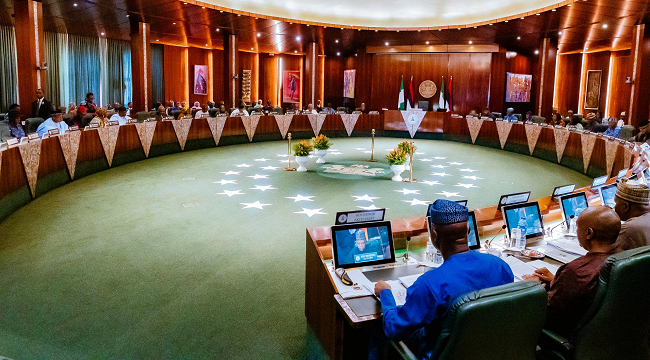
Our hunt for fiscal positives begins with the passage by the two houses of the National Assembly of harmonized 2015 budget proposals on 11 March. They adopted an oil price threshold of US$53/b, which compares with US$65/b in the FGN’s own proposals submitted to the assembly in mid-December before another downward leg in the international crude market. This would leave a little flexibility on the spending side, barring the most negative scenario for UK Brent/Bonny Light. By way of reference, we projected an average for the year of US$58/b in early January, and see no grounds for revising our forecast. (A more savage cut was made by the Angolan authorities, which reduced their threshold to US$40/b for the current year.)
The assembly’s proposals mark a new realism on the part of the legislators. We could talk less charitably of an acceptance of the inevitable but prefer to stress the acknowledgement that the jam jar of yesterday is finite. Statutory allocations by the FGN were trimmed from N412bn to N368bn including a reduction in the assembly’s own share from N150bn to N120bn.
We find additional positives in ongoing savings programmes which pre-date the extended election campaign. The director-general of the Bureau for Public Procurement said earlier this month that its scrutiny of contracts submitted to ministries, departments and agencies (MDAs) had saved N95bn in 2014. He added that two-thirds of the states had already signed the appropriate procurement bill into law. Then we should mention the use of technology to identify ghost workers and pensioners. The CME told a conference in late February that a further N2bn had been saved from the pension bill over the previous 12 months.
Nor is the FGN inactive on the very low take from non-oil taxes. The work of external consultants (McKinsey) at the Federal Inland Revenue Service (FIRS) is making an impact. The service was set a target of generating N75bn above its initial target for 2014 by the federal finance ministry and may have achieved as much as N110bn. For the current year the FGN’s proposals are looking for N160bn above the 2014 target and could be raised again. Separately, new luxury taxes on goods and services ranging from yachts to champagne and mansions have been proposed to raise N23bn over a full year. We do have concerns about compliance.

READ ALSO: Making sense of continuous closure of Nigeria-Benin border
There have been fiscal initiatives in the election campaign, our favourite being the announcement two weeks ago that the salaries of political officeholders would be reduced by 20 percent to 30 percent. It subsequently emerged that such a measure had to be approved by an official commission. We would not pontificate about the use of policy by an incumbent in pursuit of electoral advantages and do not have to look far for examples elsewhere. The UK is holding elections on 07 May, and last week its coalition government launched its 2015/16 budget with a few sweeteners such a cut in the duty on beer and an increase in the tax-free threshold for the vast majority of the working population.
The assembly has shown a new realism and the FGN has a number of ongoing fiscal initiatives for revenue and expenditure, as well as proposals in place. New ideas abound. One commentator has argued for a lottery tax, tolls on new roads and a rise in capital gains tax. The standard 5 percent rate for VAT remains below the harmonized level agreed with fellow members of ECOWAS, although the CME has argued against a rise on grounds of political expediency.
We agree that new tax initiatives should not fall disproportionately on low-income Nigerians. We also hope that they are internally consistent, do not create duplication between collection agencies and are not framed to gather revenue from the easiest targets.
Leaving our fruitful hunt for the fiscal positives, we find that the many steps in place and those proposed by the FGN are not sufficient. We assume that there is to be no rapid recovery in the oil price and that the FGN will not allow a significant increase in its deficit. The CME’s budget overview in December estimated that the reduction in the oil price threshold from US$78/b in an earlier version to US$65/b could be translated into a loss of N142bn in FGN budget revenue. This loss has since widened. The losses for state governments, all but four of which generated less than 20 percent of their revenue internally in 2013, are still more painful.

The logical place to cover the residual gap (after the measures taken) is the FGN’s personnel costs, which it projected at N1.84trn for 2015. This includes allowances, which are the subject of separate proposals. The broader point, on which we have touched previously in this column, is that the slide in the oil price has created a once-in-a-generation opportunity for a radical overhaul of the public finances. The FGN, like any other, would like to develop social programmes and hard infrastructure. It also wants to build solid fiscal buffers. It can meet these objectives by extending non-oil taxation, making savings in recurrent expenditure and pushing through a petroleum industry bill which attracts new investment and creates an autonomous, stand-alone NNPC. It would be reversing the legacy of several decades, and would have to work incrementally.
Gregory Kronsten