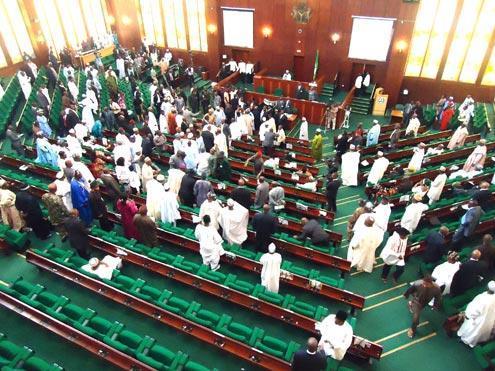
The House of Representatives’ ad hoc committee on Petroleum Industry Bill (PIB) has recommended the complete removal of discretionary power of the president to grant petroleum licences and lease. Instead, it recommended competitive biddings for the award of such licences and leases. This is contained in the recommendations of the committee chaired by Mohammed Bawa which on Thursday finally laid the report before the House, two years after it was referred to the committee by the leadership of the House. PIB seeks to provide for the “establishment of a legal, fiscal and regulatory framework for the petroleum industry in Nigeria and for other related matters”.
While the committee resolved to retain the conventional powers of the minister under section 6 of the bill, it, however, observed that the powers conferred on the minister to control the newly established agencies in the petroleum industry appear to be enormous and capable of undermining the independence of the regulatory agencies. The agencies to be created are National Oil Company, Upstream Inspectorate Agency, Downstream Petroleum Regulatory Agency, Asset Management Company and any other corporate entity established by the Act.
It observed that the removal of the minister’s power to either serve as chairman or to recommend to the president the appointment of chairmen of the board of agencies was aimed at ensuring smooth running of the agencies without undue influence and guarantee independence of the agencies in line with current global practice. While the committee retained the three conventional licensing systems namely Petroleum Exploration Licence (PEL), five years for Petroleum Prospecting Licence (PPL) and Petroleum Mining Leases (PML), it, however, reviewed the duration of the licensing regimes. According to the executive summary of the report, the ad hoc committee in sections 225 – 229, recommended three years duration for the Petroleum Exploration Licence (PEL), five years for Petroleum Prospecting Licence (PPL) for onshore and shallow waters, consisting of initial period of three years and renewal period of two years with the possibility of further extension as well as five years initial period for deep waters and frontier acreages with further renewal period of three years with the possibility of further extension.
It also proposed that Nigerian Stock Exchange should sell 30% of NNPC shares and 49% of Nigerian Gas Company shares to the general public as contained in sections 174 and 185 of the new bill. In section 209, the ad hoc committee proposed that the Frontier Oil Service is to be funded through taxes from oil production operations as well as national budgetary allocations in a dual funding strategy aimed at strengthening the agency and its operations so as to broaden government’s revenue base.

READ ALSO: Tambuwal tasks African lawyers to fight arbitrariness in governance
The committee upheld the sanctity of the petroleum contracts in section 414 of the new bill, with the view to “allay the fears of the investors both foreign and local who feel threatened that a new petroleum law will terminate existing contracts for oil exploration and production.