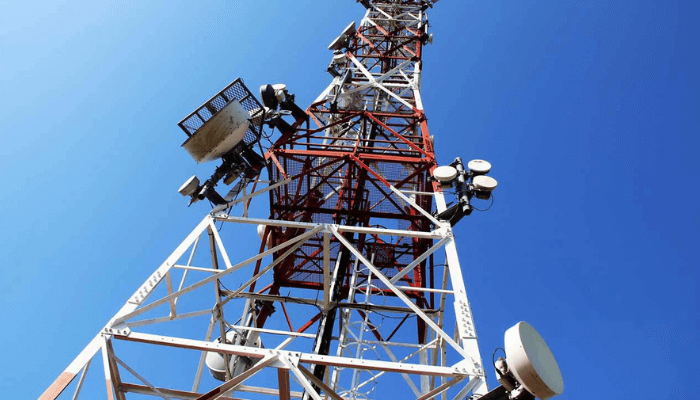
The Federal Government says telecommunications companies, in the next 30 years, are expected to invest an estimated $300 billion on network rollout initiatives, in order to fulfil the nation’s broadband vision, according to the National Integrated Infrastructure Master Plan (NIIMP). Mobile operators are required to spend $5 billion per annum on Information Communications Technology (ICT) over the next ten years, mostly on rollout of more base station and expansion of fibre networks. The document states, “for the period 2024-33, Nigeria is required to invest $10 billion per annum, driven again by the increase in base stations and fibre, and $15 billion per annum from 2033-43, with an increasing share of maintenance spend and upgrade.” In view of this, telcos are demanding that government should also prioritise the creation of a conducive operating environment to sustain such investments.
With most of this spend on infrastructure deployement set to be funded by the private sector, market observers are of the view that telcos’ ability to sustain investments in network expansion initiatives is largely dependent on the removal of prevailing operational bottlenecks hindering rollout. Some of which are: infrastructure vandalism, multiple taxation and regulation, power inadequacy, as well as the prohibitive costs of doing business. The document however drafted by the National Planning Commission (NPC), states that internal rate of return (IRR) needs to sustain large-scale private investments by considerable exceeding the prevalent hurdle rated for prospective investors. Dubem Arah, a market analyst, who works for the Financial Deriavatives Company, said that the current state of security for telecoms infrastructure and equipment is not encouraging for any potential investor.
“Vandalism of telecoms infrastructure occasionally occurs in error, during excavation, but for the most part, it is perpetrated through acts of sabotage and theft of equipment”, Arah said in a recent note. Market observers are worried that that investment inflows in the industry is being threatened by delays in the passage of the Critical National Infrastructure (CNI) Bill by the National Assembly. The telecoms industry has so far attracted over N6.4 trillion ($40 billion) in investments, 13 years after its liberalisation, says the Bureau of Public Enterprises (BPE). The bill, when passed into law, is expected to criminalise any act of vandalism against ICT hinfrastructures, since they would then be classified as CNI. Delay in the passage of the CNI bill is particularly worrisome, considering that the country still requires additional investments to accelerate broadband infrastructure deployment nationwide.
In consonance with the National Broadband Plan (NBP), Nigeria has set the target of a five-fold increase in broadband penetration by 2018. Nigeria currently has 25, 000 base stations, microwave radios covering 169, 000 km and 35, 000 km of fibre optic cables. This is significantly less than the infrastructure stock of other comparable countries even in the emerging markets. South Africa, for example, has four times as many base stations as the Africa’s largest economy by GDP does and 12 times more base stations per million people. India has 20 times more km of fibre optic cables and 7 times more per square kilometre. Telecoms operators are quite appreciative of government’s resolve to ensure the provision of universal access and delivery of quality service through nationwide rollout of ICT infrastructure. But, mobile operators have urged the federal government not to get ahead of themselves.
Heavy taxes imposed on telcos at the federal, state and local government levels have placed major obstacles, which slows down network expansion. The list of taxes, from states and local governments include but not limited to planning permit fee, Tenement Rate, Business Premises Registration fee, Effluent Discharge Fee, Environmental Impact Assessment Fee, Advert Rate, Site Analysis Report Fee, etc. All of these taxes are often pursued, through the illegitimate use of law enforcement agencies, shutting down and occasionally vandalising sensitive equipment. This huge tax burden, experts say, is taking away a lot of value from the industry. “Addressing issues related to multiple taxation and regulation will also ease the way for important infrastructural roll out especially the critical ‘last mile’ required to deploy broadband across the country”, said Funmi Onajide, general manager at MTN.
Ben Uzor