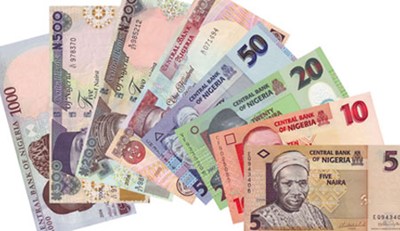
There are indications that the foreign exchange policy of the Central Bank of Nigeria (CBN) is beginning to have positive impact on exchange rate as the nation’s currency, the naira, for the past three days firmed up against the US dollar. Naira on Wednesday gained N0.24k/$ or 0.1 percent against the dollar at the inter-bank foreign exchange market. Consequently, after trading on Wednesday, the local currency closed at N199.62k/$ compared to N199.86k/$ the previous day, according to data obtained from Financial Markets Dealers Quotations (FMDQ).
The local currency remained stable at the parallel market and bureau de change segment, closing at N226.50k/$ and N225/$, respectively.
On Tuesday, naira firmed up against the US dollar at all segments of the foreign exchange market as a result of special intervention by the CBN at the inter-bank market. Also on Monday, naira firmed significantly across all markets segment after two oil companies sold dol¬lar at the foreign exchange market. The latest of the CBN’s foreign exchange policy was the closure of the Retail Dutch Auction System (RDAS) window and channeling of all dollar demand to inter-bank. In an effort to bring sanity into the foreign exchange market as well as save the depleting foreign reserves, the CBN last month closed the official forex window and channeled all FX demand to inter-bank foreign exchange market.
Consequently, naira has been trading around N199 and N200 showing some level of stability, analyst admit. Ayodejo Ebo, head of Investment Research at Afrinvest, had told BusinessDay on phone that in terms of pricing, there is some level of stability as the naira trades between N199 and N200. He said in the interim, the policy of the CBN is having positive impact on the foreign exchange. Ebo admitted that the apex bank’s devaluation of the naira reflects the fair value of the local currency. The naira is already the worst performer among 24 African currencies over the past three months and is trading near a record-low. The continent’s largest economy has been hit by the halving in Brent crude prices since the middle of last year and attacks in the North of the country by Boko Haram militants. The postponement of presidential elections scheduled for this month further dented investor confidence,Bloomberg reports.

HOPE MOSES-ASHIKE
READ ALSO: Fashola mulls job creation, 8% GDP through housing maintenance