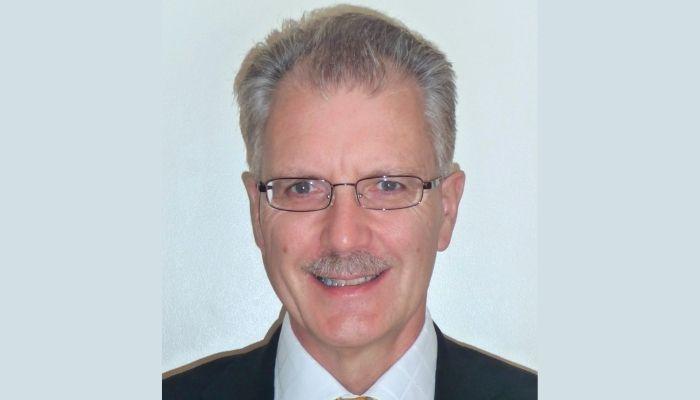
David Hennah, head, trade and supply chain finance, Misys (a software firm), in this interview with OLUSEGUN ABISOYE, speaks on the emerging trends in trade finance and how his firm provides solutions for banks across the world and in emerging markets. Excerpt:
As banks transit to the use of electronic forms of letters of credit and other trade instruments, there is also the issue of cyber threat; what is Misys doing to help clients prevent or counter this threat?
Well, we perform the standard compliance. But beyond that, we also have our strategic partnership with another company called FircoSoft. FircoSoft specialises in KYC as well as AML. So, we have interfaces built into their applications that enables those compliance checks to be performed.
There are lots of concerns around, for example, what you call Due Purpose Goods. You may have a goods description and it might say ‘chemicals’. Well, chemicals could be quite innocent or it could be quite lethal. So the devil is always in the details.

But the FircoSoft software will perform checks that will validate whether something is at the compliance level with the appropriate legislation and this prevents, and at times, limits the risks attached with those particular individual transactions.
In what areas do your applications give Nigerian banks the advantage?
I always argue that technology is not necessarily differentiated. Technology is an enabler. I don’t know how many banks in Nigeria use our software; its not just one bank. There are many banks in Nigeria that use our software.
Then the question then comes sometimes – ‘we’re all using the same system, how do we differentiate?’ Well, my response to that is that you don’t differentiate yourself by the use of software applications. The way in which you differentiate yourself is through your people and your products, and the way in which you deploy that software.
Read also: A new horizon at MUSON

You might have the same underlining technology, but that technology can be tailored to deliver a particular service in a particular way. So its bound to the kind of image and the quality of service that individual bank can deliver. Obviously, in order to be competitive in today’s market, you do need technology; arguably you need the best technology there is. And we do believe that we do have the best technology there is.
We have comprehensive product coverage in software solutions; we deliver trade and supply chain solutions off the same platform, front to back; we can back it up with interfaces to other applications that complement what we do; FircoSoft is an example of that; interfaces, as I mentioned in the session, into other applications to support the loan participation or trade securitisation; whatever a bank wants to do, risk management. We have solutions in all of those areas.
So, we can provide a comprehensive technological solution or framework to support all of the needs of banks.
What are the areas of collaboration, innovation you see for emerging markets like Nigeria?
We discussed at length the constraints on capitals specifically. They apply to banks as a result of regulations and its one of the unintended consequences of Basel III for example, to increase the burden of capital allocations on financial institutions and therefore it pushes up cost as well as restricts the availability of capital to support businesses.
So, there is an underlining need therefore for banks to have an outlet whereby they can distribute risks. That does require collaboration to some extent between financial institutions in different geographies.
I also mentioned these bank payment obligations which can be used to as an instrument to support that risk distribution. And if you don’t have the capability to take on particular risks in particular markets, there may be an opportunity to distribute that risk to another market and potentially to another part of your own group or to another financial institution by spreading the obligation.
More and more as we go forward, the capacity of an individual bank to take on an entire portfolio of risks, say for a large corporate, will be restricted. In fact, we are already seeing evidence of that being restricted.
That is why even top tier banks that I talk to don’t only want the capability to take on and manage risks, they also want the ability or the option to distribute risks in some way. They need to have that outlet to partner potentially with a lot of financial institutions, group of financial institutions who can somehow participate through that risk.
So, that’s where I see primarily, collaboration helping, particularly in emerging markets. But then again, the necessary instrument haven’t yet surfaced as a solution; its brewing under the surface. Some banks have adopted it, some banks have recognised the benefits of it.
But at the moment its only being made available, I would say, to a select number of corporates who are members of the club. I think that more and more lower tier banks located in emerging markets need to take advantage, the potential advantage of the BPO to help them, not only with the distribution of financing but with the distribution of risks.
Is the use of BPO the area where Misys wants to concentrate?
Misys doesn’t make that kind of decision. As I said, it is my job to observe the trends in the market, to interpret the impact of those trends on the market and to deliver results in response to those trends. It is not the responsibility of a software house to determine what those priorities should be. I interpret from my dealings with banks at all levels, in all geographies; I have a global role.
I talk to banks everywhere, I travel a lot to all regions of the world. I talk to those banks and I try to put my own interpretation on things that are challenging to them. And then I try to design a solution that enables them to respond to those challenges. And BPO is certainly on the agenda, particularly for banks in Asia, and increasingly for banks in Europe.
I think we’ll be able to see that phenomenon make traction in Africa. And it may require additional legislation to be passed locally in support of the uniform rules. But there is a framework there and there is no reason why BPO should not have a significant impact on all markets in all geographies. But you know, in some countries, that extra step still needs to be taken to ensure its adoption.
Do you see that happening in emerging markets like Nigeria any time soon?
It is a very difficult question to answer. But I think that panel was about education. And one thing that’s missing in our industry is education; the most challenging thing is education, education, education.
So, I welcome the opportunity to sit on a panel like that. At least, I had the chance to talk about BPO and perhaps open up people’s minds to the possibility. The things happening in Asia and what is beginning to happen in Europe, is that you just need one or two institutions to take that chance, to adopt it, to bring it to market as a case study to send out a message to the rest of the market, and gradually, you will see the snowball effect and then eventually it can explode into something quite big.
I’m not saying that is going to happen today or tomorrow, I think we are still three to five years at least, away from a critical mass. But I do think that there is a growing recognition. Having European banks adopt it, having Asian banks adopt it is not enough.
If European banks were to adopt it on a widespread basis, that would be absolutely crucial and I think from there it would escalate. It definitely has the potential, whether it would get there or not, I don’t know, I don’t have a crystal ball; it depends on people’s willingness, people’s open-mindedness that there is a way of doing something different.
And I think trade finance is a very traditional business; its still within the banks, its still populated by very traditionally-minded people who are kind of locked into this mindset that I must do something in this way because I have always done it that way.
At least, we have to get over that; that mindset, that barrier that there is actually a different way, another way to do this. And then if we can get there, if we can get that nucleus of people who agree that there is an opportunity, there is benefit and there is a different way of doing things, the the sky is the limit.
As head of trade and supply chain finance for Misys, tell us about your role and functions.
Misys as a whole has solutions across the whole of banking. We have solutions in retail banking, corporate banking, transaction banking, and in treasury and capital markets; we have all of that. So that’s one advantage from my perspective because it means I can give a holistic view to the needs of my customers.
My specific responsibility is within transaction banking and I have a product management role towards two applications, one of which is called trade innovation and it is deployed by a bank internally to manage its own operations for trade and supply chains.
The other application is a front office application for corporate channels, which is the channel for the corporates to communicate their needs, their requirements to the bank and vice versa; so its external between the bank and the corporates.