African countries losing about $90 billion in illicit financial flows annually, in addition to other losses through illicit resource flows and resource theft, fiscal policy disincentives, and excessive dependence on commodity exports for foreign exchange earnings? This is one of the stories that break the heart. Added to the volatility of global market prices and highly vulnerable supply chains, the dire economic situation of African countries comes to full glare.
A graduation ceremony for the first cohort of the African Development Bank’s Public Financial Management Executive Training Series under its Public Finance Management Academy for Africa (PFMA rounded off the recent workshop on “Enhancing Accountability, Transparency and Curbing Corruption and Illicit Financial Flows in Africa” in Abuja
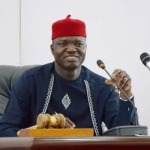
Dr. Tope Fasua, the Special Adviser to the President on Economic Affairs in the Office of the Vice President, did not fail to beat our drum as a nation on the occasion. “As the largest economy and most populous country in Africa, Nigeria occupies a very strategic place in the economic development ecosystem of the continent,” he said.
He added: “Public financial and debt management remains on the front burners of the government’s Renewed Hope Agenda for economic growth and shared prosperity for all citizens. Key economic policy objectives of the government include optimization of revenue mobilisation and tax reforms, blocking of leakages in public finances, improving public procurement and spending efficiency, and supporting the business environment for private sector investments and job creation.”

In essence, he was reminding Nigerian officials who have benefited from the training about their responsibility to lead the rest of Africa in delivering on the expectations of the Public Finance Management Academy for Africa that has been providing the 18-month structured executive training on public financial and debt management to over 145 participants from across all the regional member countries of the Bank.
It is reassuring that institutional partners are volunteering their resources – both in human and financial capital – to co-design and co-deliver the capacity development programs under the PFMA. Among those who received honourable mention at the graduation were the following: International Monetary Fund (IMF), World Bank, Africa Finance Corporation (AFC), African Tax Administration Forum (ATAF), Collaborative Africa Budget Reform Initiative (CABRI), African Organization of English-Speaking Supreme Audit Institutions (AFROSAI-E), Inter-Governmental Action Group against Money Laundering in West Africa (GIABA), Commonwealth Secretariat (COMSEC), and others.
AfDB has launched a program to produce a Public Service Delivery Index (PSDI) to provide an independent and standardised system for assessing the delivery of public services by Public Servants. The goal is to work with Partners to establish a prize to incentivize improvements in the management of public resources and deliver improved quality of public services to countries.
It has also developed Country Diagnostics in addition to technical assistance to countries, peer-to-peer learning and networking embedded in the 18-month structured executive training program, systems for Domestic revenue mobilisation (DRM), Macro-fiscal modelling and forecasting (MFMF), prudential budgeting and expenditure planning and management (including performance-based budgeting and medium-term expenditure frameworks, sustainable borrowing and sustainable debt management, reporting and transparency (including debt sustainability analysis (DSA).
Given the growing NGO role in economic development, AfDB emphasises public-private partnerships, deepening financial markets, and strengthening audit systems to boost transparency and curb illicit flows.

The Bank is also pleased with the PFMA Policy Lab Unit (PLU) who are the core Faculty Members for the delivery of the PFMA CD program. These include Hon. Mohamed Boussaid, Former Minister of Finance, Morocco; Hon. Seth Terkper, Former Minister of Finance, Ghana; Prof. Osita Ogbu, Former Economic Adviser to the President and Minister of National Planning, Federal Republic of Nigeria; Dr. Abraham Nwankwo, Former Director General Debt Management Office Nigeria; Dr. Edouard Nsimba, Global Macro-modelling Expert, Angola; Mr. Etienne Yemek, PFM Expert, Cameroun; Prof. Ibi Ajayi, Professor of Economics, University of Ibadan, Nigeria; Mr. Johan Krynauw, Former Head of Debt and Asset Management National Treasury of South Africa; Mr. Juan Jose Pradelli, PFM Expert, Argentina; Dr. Mariam Rashid Umarji, PFM Expert, Mozambique.
Government officials often forget the skills acquired in expensive overseas training shortly after returning. Despite this trend, recent training beneficiaries have strong reasons to apply their knowledge consistently. The significant number of trainees from Nigeria contributes to this impetus. The workshop’s relevance to addressing a critical threat to Africa’s economic development, covering various topics in public financial management, is pivotal.
These topics include domestic revenue mobilisation, macroeconomic modelling, public budgeting, expenditure management, public debt sustainability, public-private partnerships, and efforts to combat corruption, money laundering, and illicit financial flows in Africa.
Stakeholders anticipate a strategic document from participants, outlining the application of workshop-acquired skills. This strategy aims to leverage Nigeria’s legal and institutional frameworks. The challenge lies in harmonising these with the African Development Institute’s perspectives at the African Development Bank.
These AfDB initiatives should, hopefully, propel the giant of Africa to take a leading role in encouraging measures against illicit funds flow within the continent.
Mohammed is an Abuja-based public finance analyst.