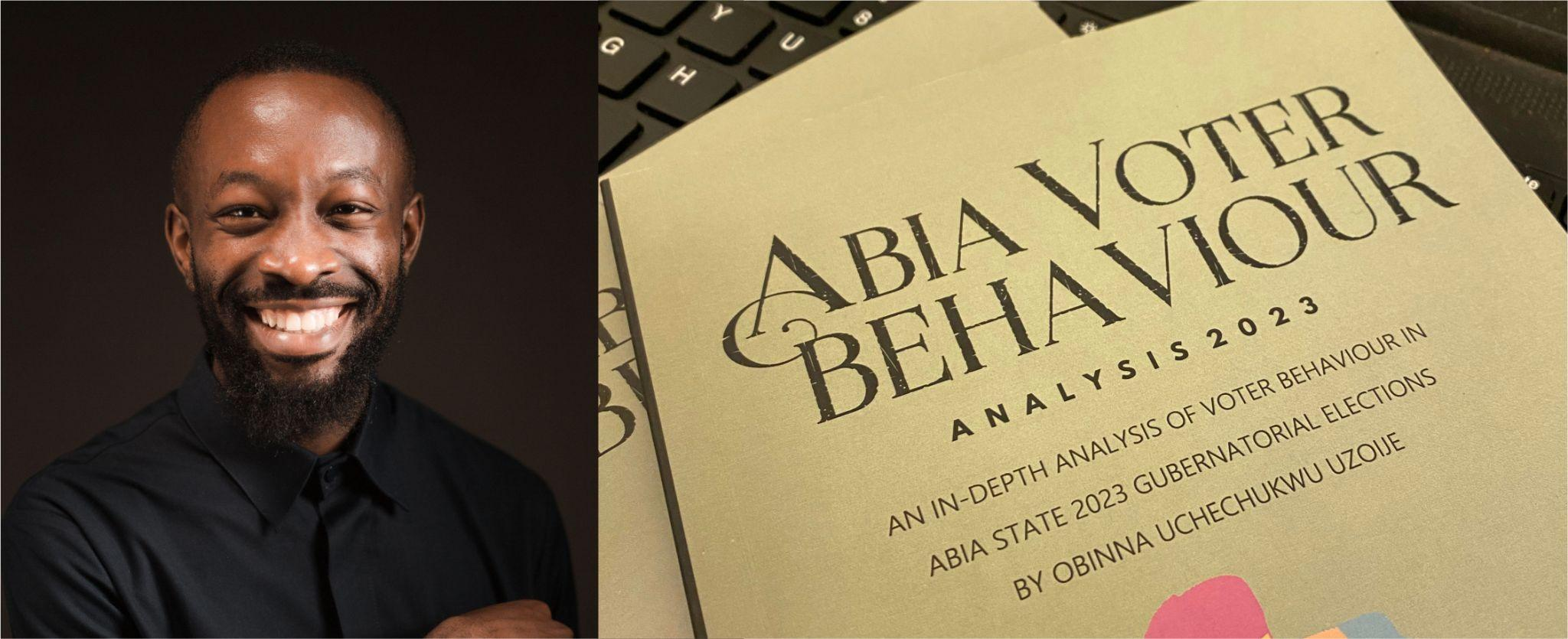
A very detailed research was carried out by Obinna Uchechukwu Uzoije on Abia voter behavior based on the 2023 gubernatorial elections. From the INEC Portal, he extracted Data from the 4062 Polling Units in the Abia State local governments for the 18 Political Parties that participated. In total, he analyzed the Abia 2023 voter behavior for about 73,116 data points and fully visualized the insights he pulled from the observations for the 17 local governments.
With this research, he built a formidable tool with Data for the 6 topmost parties that participated in the elections – APC, APP, APGA, LP, PDP, YPP that will help them make very data-driven political decisions while making both electioneering plans and leadership plans.
Firstly, he highlighted the need for everyone who participates in an election to know the magnitudes to which their involvement affects voter behavior. Questions like how big are the numbers? How small are the numbers? Which places had the highest vote apathy or which people had high political interests? He also statistically analyzed cases of disruption in local governments, violence, election upload errors etc. The research was designed with statistical precision and can be used to generate a lot of insights around the 2023 Abia Guber Elections.
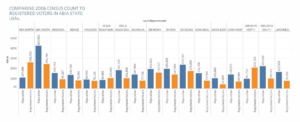

Secondly, he highlighted a dramatic growth in the Abia population especially in some local governments. In Aba North Local Government, the total population from the 2006 Population Census was about 107,488 but the number of registered voters alone in the 2023 Abia Guber Elections was 258,563. This is more than twice the number that Aba North’s Population was in 2006 and it is not even a count of population because not everyone is a registered voter but the registered voters alone outnumbered the last population count more than two times. This same scenario played out in some other local governments like Isiala Ngwa North and Umuahia North Local governments.
Thirdly, he gathered information on marginal local governments. On finding out that local governments in Abia state had an average vote of 21,025 in the 2023 Guber Elections, some local governments didn’t get up to half of this average score – local governments like Ugwunagbo had only 9% voter turnout and he expounded on the need to investigate such vote apathy on the “marginal local governments”. Many questions can come up; their access to political enlightenment, education, internet(social media) etc are questionable as these factors can deeply affect a people’s engagement in electioneering processes. We can begin to look at factors like Population Size, Voter Accessibility, Voter Engagement Efforts, Diversity and Representation, Social Influence and Civic Participation, Electoral Competitiveness etc.
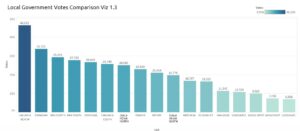
According to his study, Umuahia North, Obingwa and Aba North were the foremost local governments that showed the highest political interests but in 2006, Umunneochi had a population of over 163,000 people and 17 years later they barely recorded 11,000 votes. It shows a strong disinterestedness in politics and electioneering and there is a need to know why – he stated that when we try to know why, we have started solving the people’s problems with data.

Obinna Uchechukwu Uzoije created an 88-page research that fully analyzed election data in the 17 local governments in Abia state and pulled major insights from the numbers. He interviewed subject matter experts from different local governments in the state and documented all their reviews in his study. He highlighted the objectives, the methodology, the focus, data collection and analysis tools, data quality assurance, ethical considerations and limitations of data.
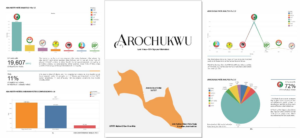
The study has maps of the state and of every local government in the state describing land size and population, it has bar charts, pie charts, treemaps and line charts. In every local government, he analyzed party votes, vote apathy, error counts and valid/invalid votes.
A major reason for this study is to prove and contribute to the fact that State Capacity is one of the major ways to promote development, maintain societal stability and meet the needs of citizens in our states. For a government or state institution to carry out its functions and responsibilities, we need to have a comprehensive understanding of our numbers and this can be achieved through skilled Data Analytics as it can help the state achieve data-driven solutions for the people.
Obinna Uchechukwu Uzoije is a highly accomplished Data Analyst affiliated with the NGO, Africa Policy Conversations. His unwavering commitment lies in promoting data-driven governance, evidence-based policymaking, and legislative initiatives. Additionally, he is the distinguished author of the widely recognized book “Child of Industry,” which fervently advocates for the imperative shift from raw material exportation to the value-added processing of these resources into finished products.