|
Getting your Trinity Audio player ready...
|
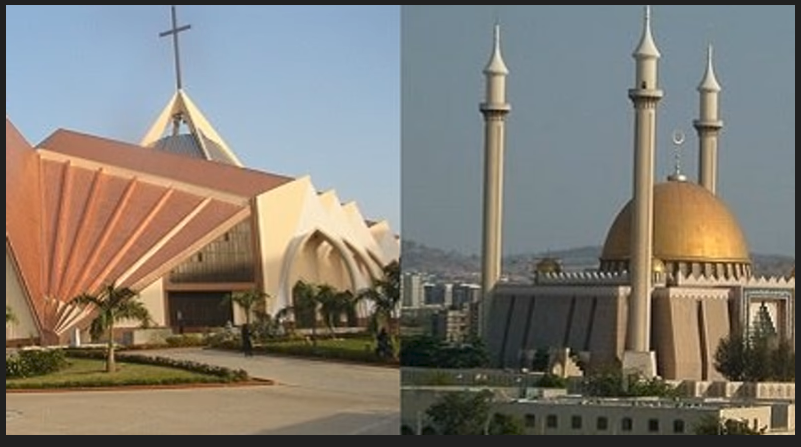
Nigeria, graced with both minarets and church steeples, constantly grapples with an existential question: With such a vibrant religious tapestry, why isn’t Nigeria among the world’s most prosperous? Could we even claim a Guinness World Record as the most prayerful nation?
“Every adversity we face is blamed on supernatural forces from our villages,” asserts Amina Lawal, a cultural analyst. “Faith is comforting, but understanding tangible challenges and taking collective responsibility is pivotal.”
Annually, Nigeria sees thousands embarking on pilgrimages to Mecca and Jerusalem. Strikingly, Nigeria now exudes a religious zeal surpassing even England and Saudi Arabia — the very countries from which we inherited Christianity and Islam. More intriguingly, Nigeria is not just a consumer but has become a major exporter of its distinct brands of Christianity and Islam.
In a fundraising contest between an educational institution and a church, the church’s coffers invariably bloat more. This illustrates a prevalent mindset, one which Fela Kuti captured in his lyrics, “suffer, suffer for world, enjoy for heaven.” Postponing aspirations to the afterlife often translates into sidelining tangible, present-day solutions.

Historian Dr. Chukwuemeka Okoye reflects, “Both Islam and Christianity advocate hard work and ethical living. Yet, our collective consciousness has veered. A passive acceptance of fate seems rife.”
Education should illuminate minds, but occasionally, it seems to bolster these religious overtones. The correlation — the higher one’s academic qualifications, the stronger one’s religious convictions — is perplexing.
During a conversation with an internationally traveled friend, he proclaimed prayers as Nigeria’s adhesive. Such a stance from a globally exposed individual underscores religion’s compelling influence here.
The concept of the ME-Economy emphasizes individual proactiveness. Greats like Mark Zuckerberg, Aliko Dangote, Bill Gates, and Tony Elumelu didn’t merely rely on faith. Their journeys were sculpted by ambition, perseverance, and strategic planning.

Our nation grapples with multifaceted challenges. Yet, there’s a tendency to chalk up setbacks to divine design rather than delving into root causes and actionable solutions. Success is less about serendipity and more about proactive preparation.
Dr. Abisola Ojo, an economist, observes that leading nations are pivoting towards innovation-driven economies. For Nigeria to ascend, fusing its rich faith with pragmatic strategies is non-negotiable.
Governmental agendas need refining. Channeling massive funds into religious events sometimes eclipses other pressing societal needs. Globally, successful nations emphasize science, policy revamps, and innovation.
Religious institutions should exemplify transparency and accountability. Ensuring faith remains unsullied by commercial interests is crucial.
Our burgeoning youth demographic is an untapped goldmine. Investing in their education, skill acquisition, and technological literacy is essential. This youth surge, amalgamated with Nigeria’s spiritual energy, could herald an era of unmatched national prosperity.
Sociologist Dr. Ifeoma Udoh believes, “Our transition should be from a nation of ‘hope’ to one of ‘action’. Our cultural heritage, enterprise, and faith can catalyze a Nigerian renaissance — but only with strategic intent.”
Comparing Nigeria to global economic powerhouses is revealing. A 2022 World Bank report juxtaposed with the Global Religiosity Index showcases fascinating contrasts. Countries like India and Brazil have faith levels akin to Nigeria, yet their economic diversity fosters growth. Conversely, less religious nations like Japan and the UK invest heavily in research, tech, and human capital development.
Nigeria’s spiritual richness is commendable, no doubt. However, the fusion of this deep-seated faith with tangible action, accountability, and innovation is the real key to unlocking Nigeria’s latent global potential.