Insecurity has been a big driver of inflation, food insecurity, and food supply challenges in Nigeria. Insecurity is increasing across the country, with Kidnapping, violent crime, and inter-communal violence happening throughout all regions of the country.
Africa’s most populous nation has experienced an increase in the global terrorism indexes. In the 2022 Global Peace Index produced by the Institute for Economics and Peace, IEP, the country ranked 143 among 163 independent nations and territories according to its level of peacefulness.
As of 2022, the terrorism index in Nigeria indicator stood at 8.07. The index measures the direct and indirect impact of terrorism on a scale from 0 (no impact) to 10 (highest impact). Nigeria is said to be one of the countries with the highest terrorism threat levels in the world.
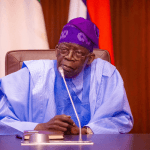
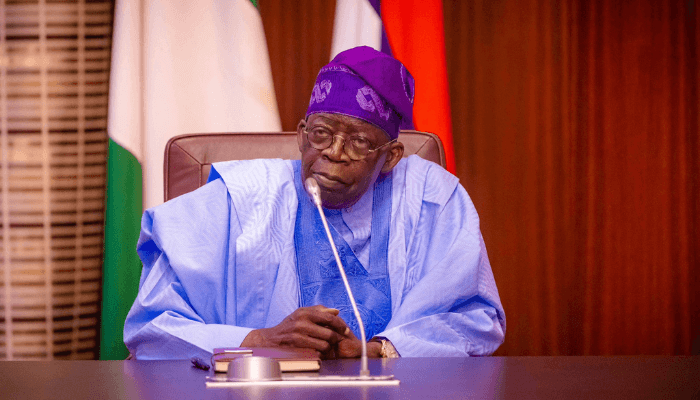
Bola Tinubu is less than one month in office having been declared winner in what was a fiercely fought campaign primarily between him and former vice-president Atiku Abubakar as well as businessman, Peter Obi.

No fewer than 109 election-related deaths were recorded across Nigeria in the build-up to the 2023 general election.
Tinubu will have to grapple with the mishmash of grave security challenges left behind by his predecessor. He would also have to deal decisively with these challenges if he is to deliver on his campaign promises of creating an enabling environment that attracts critical local and foreign investments needed to grow the economy and create jobs.
They are challenges Nigeria will have to overcome to achieve its true potential. They are also challenges that will test the new president’s mettle.
The unending Niger Delta
The Niger Delta is home to most of Nigeria’s oil and gas production and infrastructure. The region, says the Niger Delta Budget Organisation, NDBO, is characterised by widespread poverty with about 70% of the population living below the poverty line.
The pervasive poverty, the NDBO asserts, is due largely to the low the level of industrialisation. This has been made more difficult by the activities of Transnational Corporations, which have adversely affected the traditional economy of subsistence fishing and farming. In the NDR infant mortality and maternal morbidity are estimated to be 20%, which is among the highest in the world. Modern transport infrastructure is inadequate and often hampered by a poor road network and harsh conditions especially in the coastal areas. Whereas there is hardly any electricity supply in many riverine areas, telecommunication facilities are in acute short supply. Healthcare is less than desirable while the schools are ill-equipped hence they serve more as youth restive factories than institutions of learning. Waste management culture is poor and this is exacerbated by the activities of oil companies. These harsh conditions provide a fertile ground for social unrest, conflict and instability.

Diverse conflict risk factors continue to contribute to the dynamics of conflict and insecurity in the region.
When Russia invaded Ukraine in 2022, oil prices skyrocketed. Nigeria failed to benefit from the high oil prices. The precipitous decline in oil production has seen the country unable to meet its many financial obligations, thus resorting to massive external borrowing.
Oil production has been declining since 2012. Insecurity has been the major driver of this. The state owned Nigerian National Petroleum Company Limited (NNPCL) says it losses 470,000 bpd of crude oil amounting to $700 million monthly due to oil theft.
“I will tell you the major thing that affects us. Nigeria will suffer for it; the revenues are impacted, so we can only appeal to them to rein in themselves, the oil theft situation is regrettable. It’s not going on across the whole of the Niger Delta, there are trunk lines that are more impacted on, I think the Bonny trunk line ranks highest…Our major challenge as a country is our capability to respond and that is as a result of several factors, the terrain as well as some incapacity that we have,” Bala Wunti, NNPCL’s Group General Manager, National Petroleum Investment Management Services (NAPMS) asserted in September 2022.
Siphoning of crude oil from oil facilities by criminal individuals and groups impacts negatively on revenue to all stakeholders.
Read also: NIA denies reported return of Mohammed Dauda as DG
The country badly needs the money from oil and gas. Nigeria needs to increase its spending from its current very low levels, to promote economic development. The key to raising public spending lies in urgently raising more revenue. At 7% of GDP in 2021, Nigeria’s revenue to GDP ratio is among the five lowest in the world.
Since 2022, the state owned NNPCL has made zero transfers to the federation account. Oil, the country’s biggest export has been delivering no value to Nigeria and its citizens
Tinubu will need to handle the insecurity in the region as well as the attendant crude oil theft to heave up the finances of Africa’s largest economy.
IPOB and Biafra
Nigeria’s southeast region has for some time now been the epicentre of a violent war of attrition between Nigeria’s security agents and secessionist combatants. The Indigenous People of Biafra, IPOB, long proscribed by the military boasts an armed wing that has taken on Nigeria’s military.
“We have not been able to dominate their environment,” a senior military officer told BusinessDay.
“Based on the perceived inequity, injustice and violence,” Nextier SPD notes, “IPOB argues that ‘Biafra’ should secede from the rest of Nigeria. But efforts aimed at achieving the Biafra Republic have been violently resisted by the Nigerian government. Both IPOB militancy and the state repression it has engendered have led to damaging costs on lives, livelihoods and public utilities”.
Tinubu will have to delicately deal with the violence in the region that has been unnecessarily exacerbated by the arrest and prolonged detention of the garrulous leader of IPOB, Nnamdi Kanu.
There have been persistent calls for his release by political and community leaders in the region as a goodwill gesture by Nigeria’s government.
It would be impracticable to impose peace upon a people who feel marginalised. Nigeria’s new president will have to deal with the ‘Nnamdi Kanu’ conundrum to chart a credible roadmap to peace in his country’s restive southeast.
Tinubu will have to grapple with the mishmash of grave security challenges left behind by his predecessor
Boko Haram/ISWAP
Nigeria’s longest war of attrition has been fought in the Northeast against Boko Haram. In 2023, the conflict entered its fourteenth year. Thousands of lives have been lost to the murderous Islamist group since violent extremism in the Lake Chad Basin at the intersection of Cameroon, Chad, Niger, and Nigeria emerged in 2009
Although major military campaigns since 2014 succeeded in degrading the group’s territorial control, Boko Haram has proven remarkably resilient. Together with its splinter group and competitor, ISWAP, it still poses significant economic, security and social challenges to the Nigerian state.
In April 2014, Boko Haram’s kidnapping of 276 female students from the town of Chibok made worldwide headlines, drawing greater policy attention to the crisis. Since then, the group and its affiliate have engaged in more kidnappings of school children and untrammelled killing of innocent citizens and security officers.
In 2015, Boko Haram pledged allegiance to the self-proclaimed Islamic State and rebranded as the Islamic State in the West African Province (ISWAP). A splinter faction of the original Boko Haram was active until 2021, when ISWAP killed its leader, absorbed its territory, and relegated its members to remote islands in Lake Chad. ISWAP has since established control of north-eastern Nigeria and parts of Niger.
Nigeria’s partners and many stakeholders have cautioned that Boko Haram is unlikely to be defeated on the battlefield alone. They have stressed the need for a multidimensional response that tackles the drivers of insecurity in the region, including chronic weaknesses in service delivery, corrupt governance, and environmental degradation.
It remains a major headache for the country’s newly minted president.
Fulani extremism
Fulani extremist militia groups continue to carry out acts of violence in Nigeria’s northern and central regions.
Fulani herdsman are believed to be responsible for thousands of deaths in Nigeria’s Middle Belt, mostly in terror attacks committed against Christian farming communities.
The Fulani are cattle herdsmen working with Boko Haram, a radical Islamist group intent on ridding Nigeria of Christians. As Nina Shea at the Hudson Institute has reported, “During many of the attacks, herders are reported by survivors to have shouted ‘Allah u Akbar,’ ‘destroy the infidels’ and ‘wipe out the infidels.'”
Fulani attacks on Christians, Hassan John noted in an opinion piece for Newsweek magazine in 2021, “have all the trademarks of a genocide, which the United Nations defined as “an intentional effort to completely or partially destroy a group based on its nationality, ethnicity, race or religion”.
The northcentral region of Nigeria, he further noted, “has been trapped in a slow-motion genocide for over a decade now. More than 35,000 Christians have been massacred. Whole villages have been exterminated. Thirteen thousand churches and 1,500 Christian schools have been destroyed. More than two million have been displaced from their homes, and 304,000 are refugees. According to the International Red Cross, by September of last year 23,000 had gone missing”.
Many, including a former governor of Benue state have accused former President Muhammadu Buhari of dereliction of duty and enabling the murderous rampage of Fulani terrorists.
Tinubu would have to decisively end the massacre of innocent citizens by Fulani militia groups if he is to be taken seriously by Nigerians