Nigeria’s petrol subsidy payments have been a persistent issue, caused by a lack of action, dishonesty, and ineptitude in successive governments since 1999. The current administration aims to phase out the subsidies before their term ends, but fears the negative consequences of such a decision.
According to the Nigerian Extractive Industry Transparency Initiative, the government has spent a staggering 16 trillion Naira on petrol subsidies in the past 16 years, which could have been used to fix issues with local refineries.
Now, the government is faced with a difficult choice: maintain the subsidy and continue to dig an unsustainable fiscal hole, or risk potential social and economic unrest by removing it. Unfortunately, this dilemma is of the government’s own doing.
For over 25 years, the country had failed woefully to promote self-sufficiency in domestic refining, exacerbating the issue at hand. It’s time for the government to take decisive action to address this issue, such as investing in local refineries or implementing policies that encourage self-sufficiency in the energy sector. Timing is crucial in this regard and failure to act timely may lead to more difficult and costly decisions in the future.

The removal of fuel subsidies is one of the fiscal reforms urgently needed to lift Nigeria’s development outcomes, which are severely constrained by the inefficient use of resources
Gradual removal of petrol subsidy
According to the Finance Minister, during the election, presidential candidates promised to remove fuel subsidy. However, considering the current administration’s safety, it has been suggested that the gradual removal of fuel subsidy may commence in the second quarter.
The cost of N3.25 trillion on subsidy must be exited. “Consequently, the complete stop to the expenditure head, initially scheduled for July 2023, may now be moved up to April 2023.”
Mrs Zainab Ahmed, Minister of Finance, Budget and National Planning, who dropped this hint recently during an interview with a popular television station on the sidelines of the World Economic Forum in Davos, Switzerland, also said the subsidy removal appears to be the position of all contestants to the leadership of the country in their political campaigns during the 2023 general elections.
Ahmed added, “So the decision was to extend the period from June 2022 to 18 months, beginning from January 2022. So in June 2023, we should be able to exit. The good thing is that we hear a consistent message that everybody is saying this thing needs to go and that it is not serving the majority of Nigerians.”

She stated: “What will be safer is for the current administration to, maybe at the beginning of the second quarter, start removing the fuel subsidy, because it’s more expedient if you remove it gradually than to wait and move it all in one big swoop”.
According to the World Bank and the International Monetary Fund, the removal of fuel subsidies is one of the fiscal reforms urgently needed to lift Nigeria’s development outcomes, which are severely constrained by the inefficient use of resources.
Speaking in this regard, World Bank President, Mr David Malpass, said: “Nigeria’s government urgently needs to strengthen fiscal management, create a unified, stable market-based exchange rate, phase out its costly, regressive fuel subsidy and rationalize preferential trade restrictions….”
It is hard to ignore the widespread poverty and financial strain in Nigeria. According to a survey by the National Bureau of Statistics, an estimated 133 million Nigerians are living in multidimensional poverty in 2022. Furthermore, the country’s debt profile has drastically increased from N12.6 trillion in 2015 to over N46 trillion in 2023, with 96% of its revenue allocated to servicing debt. Despite this, the government has received approval from the World Bank for another N369 billion loan prior to the planned removal of fuel subsidies in June 2023. This situation warrants careful consideration and action to ensure sustainable economic growth and development for Nigeria.
Pay rise for workers April ending
The long-awaited salary increase for civil servants might finally become a reality as the Federal Government plans to begin disbursement by the end of this month. Mr President’s approval is being awaited, but once given, workers will receive a 40% rise in their current pay through a consequential allowance.
Interestingly, this raise is coming about two months before the removal of petrol subsidy in June, which was initially slated for the same period. The crux of the matter is the private sector which is the largest employers of labour in Nigeria. Who will give them an increase of 40 percent in staff salaries? The private sector and most importantly, the informal component are not doing well currently.
However, the Director of Press and Public Relations at the Ministry of Labour and Employment, Olajide Oshundun, disclosed in an exclusive interview with media outlets that the Federal Government is considering beginning payment of the 40% pay increase by the end of April this year.
He was reported as saying that the three months’ salary arrears for January, February and March would be paid at a later date. The approval of the proposal by the government committee is yet to be confirmed by Mr President. Oshundun explained that civil servants ranging from level 1 to level 17 would receive a consequential allowance salary increase of 40%.
FG suspends fuel subsidy removal
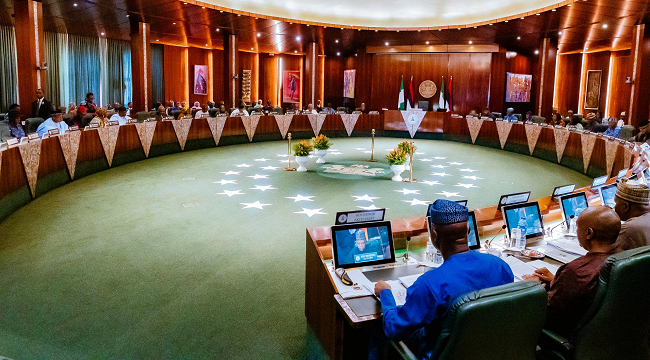
Reports show that the National Economic Council, on Thursday, March 27,2023, in Abuja, said it has agreed that petrol subsidy should “not be removed” as earlier planned for June 2023. The Minister of Finance, Budget and National Planning, Mrs. Zainab Ahmed, disclosed this to State House correspondents shortly after the valedictory Council meeting presided over by Vice President Yemi Osinbajo at the Council Chambers of the Presidential Villa, Abuja.
Read also: NEC asks FG to suspend petrol subsidy removal
Ahmed said the Council agreed on the need for continued discussions on the issue adding that the FG, together with states and representatives of the incoming administration, require more preparatory work.
She said, “Council agreed that the timing of the removal of fuel subsidy should not be now. But that we should continue with all of the preparatory works that need to be done and that this preparatory has to be done in consultation with the states and other key stakeholders including representatives of the incoming administration.
The columnist understands the concern about the current state of subsidies and the perceived lack of refinement of crude oil domestically. The government has acknowledged this issue, and the solution lies in making self-sufficiency a top priority for the nation.
While the Dangote Refinery may operate as a monopoly, it is essential for the next administration to ensure that more private refineries are established as well. Domestic investors should be encouraged through incentives to build refineries, while state-owned refineries should be revamped including all NNPCL downstream assets.
This is because of the strategic importance of oil refining to the nation’s economy. The government should provide regulatory and enabling environment for those private companies willing to establish refineries to do so.
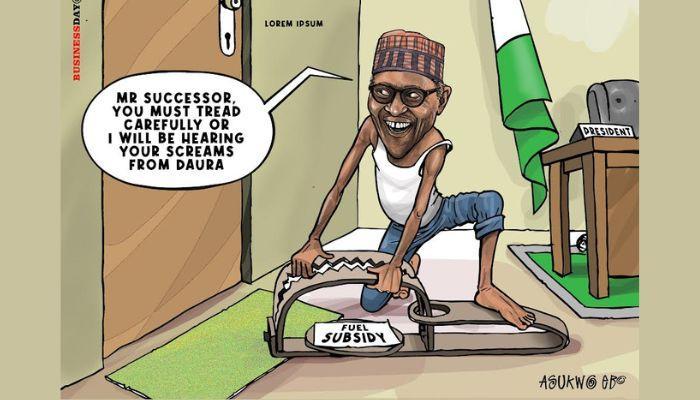
Having a monopoly of any kind can be detrimental to the nation’s well-being. However, there is a question of whether the Buhari administration should continue with the subsidy removal. There are public intellectuals who have weighed in on the matter that, it may be wise for the Buhari’s administration to leave petrol subsidy removal for his successor to handle.
A new administration will have the opportunity to approach the issue with fresh ideas and perspectives, which could result in a more effective and appropriate solution. Ultimately, the most important thing is to prioritize the nation’s best interests and work towards achieving self-sufficiency and sustainable development. Thank you.