The Raw Materials Research and Development Council (RMRDC) disclosed Wednesday that it has begun testing and certification of raw agro and mineral materials in the country in a bid to curb the persistent rejection of the country’s natural resources and improve their value for industrial use.
The council says it also tests and improves on raw materials which do not meet required standard so that they can compete both locally and internationally, and curb importation.
Fortune Alabi, assistant director and head of the pharmaceutical division, RMRDC said the lab is certified by the International Organization for Standardization. The ISO certification certifies that a management system, manufacturing process, service, or documentation procedure has all the requirements for standardization and quality assurance. ISO is an independent, non-governmental, international organization that develops standards to ensure the quality, safety, and efficiency of products, services, and systems.
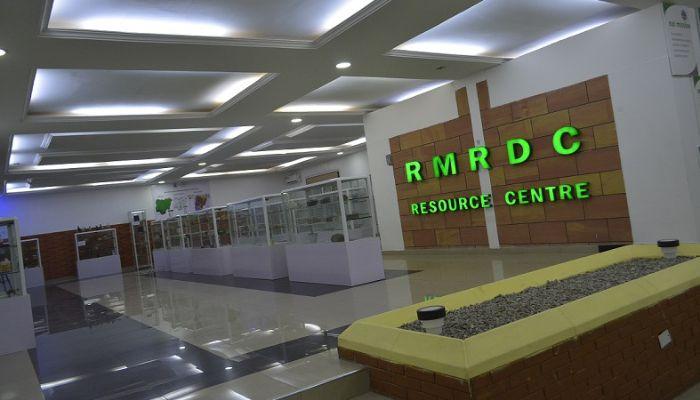
Alabi, speaking during a tour of the council’s facilities to include the Raw Materials Testing and Certification Laboratory, RMRDC Resource and Information Centre and several pilot plants of the council in Abuja, informed that the laboratory was established as part of the new, additional mandate of the council. She stated that the mandate includes the establishment of laboratories in line with its New Act 28 of 2022, to test locally sourced materials in country.

“Most times, we import our raw materials for our industries while we have them locally available; and we discovered that some manufacturers and some importers may say that the raw materials are not up to standard. We know recently that some of our raw materials that were exported were rejected because they were not up to the standard that were required. So, if you bring them here, we test them, and give you certification, so that wherever you go, they will not say it is not of standard. It has been certified by a laboratory that has the authority to do so”, she said.
The assistant director urged raw materials manufacturers, processors , users to bring their raw materials for testing to ensure it meets specifications of the user industries, and save the country frequent embarrassments from export rejects.
Also speaking, Ettu Obassi, deputy director, engineering, design and development division and technical assistant in the director-general’s office,
Noted that the quality of products would also depends on the quality of raw materials. According to him, Nigeria can generate more revenue by adding more value to its exports.
“You can short-change yourself by exporting your materials raw, what you need is value addition, that means you must know what is inside your raw material. The lab will give you a characterization of what is inside the raw material, then the raw material value rises”, he said.
In addition to the laboratory, said the deputy director informed that the council has recorded numerous achievements especially in the area of value addition of raw materials for industrial use and import reduction.

He said the council is boosting the production of industrial agro raw materials by developing improved and disease-resistant varieties ad well as the domestication of a variety of industrial raw materials. He added that the Council has achieved some success in development of phytomedcine .
The council, he said, has also achieved successes in the development , domestication and release of variety of raw materials to include: over five varieties of sweet sorghum, improved varieties of sesame, three varieties of castor, sugar beet, among others.
Obassi disclosed that the council has researched on how to process and add further value to some materials. For instance, he said, “We are using kennel shell to develop break pads. This break pads have even gone testing in the United States of America and they are better than the carcinogenic asbestos for break, when this one wears away, it doesn’t bring carcinogenic effect in the atmosphere, and that’s why we went for this. We are working with other companies to get into commercialization of this. The council has developed about 150 copies that went into local vehicle, which we are still monitoring and found out that it takes longer time for these things to wear.”
He further informed that the council is now working to grow its internally generated revenue through patents, and has already established a Business Innovation Centre for commercialization its value-added materials; while expressing concerns that not much is known about some of its breakthrough research and called for more investment.
He also decried the lack of synergy among agencies of government in the country with common objectives.
“We even kept a desk officer in the Nigerian Export Promotion Council. We met with Chief executives of these agencies and they agreed to put a desk our officers ,but three months started being hostile, and we ask our officer to come back. Synergy is everything, but liaising with government agencies is a bit complex and difficult”, he said.
Some other achievements of the council includes the establishment of pilot plants, which includes castor oil and its derivatives, glazier putty plant, fish smoking kiln, oregano-mineral fertiliser, laboratory and reagents production, development and utilisation of essential oil plants.
The establishment of catalytic model plants such as kaolin, industrial talc powder, phosphate, cocoa, which has attracted several investments.
The council is also handling several patents of Research and Development and innovation. Some of them include method for the formulation of diary and beef cattle feed form sweet sorghum stalk which ahs contributed to the reduction in the importation of animal feeds into the country; design and development of castor seed shelter which increased investments in establishment castor oil plants; design and development of small scale naphtha hydro treating unit for increased capacity of local refining of petroleum products.