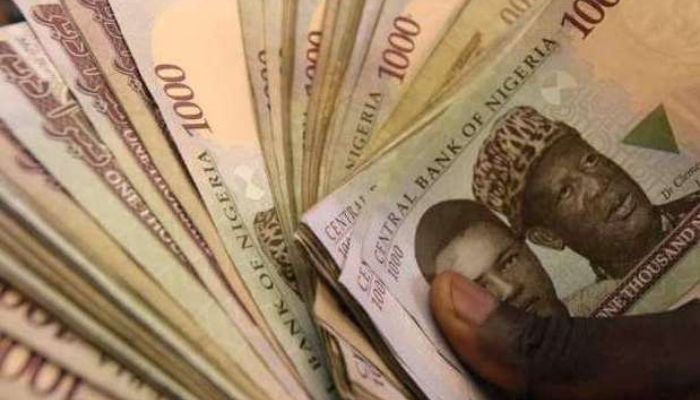
It will be interesting to see how corporate Q4 financials respond to the depreciating Naira. One thing certain to take a small hit will be the expense. Profit will stutter on this, albeit if companies don’t ‘cook’ it. It may not affect their full year earnings report though.
Firms cost estimates will be questioned and you will expect hesitations on investment decisions because uncertain price tags on projects will certainly grow. Currency depreciation seriously affects the terms of attracting investment.
Companies that took loans on dollar or have commitments denominated in foreign currency like some of the electricity companies (Discos and Gencos) will be severely bashed if they are not already bleeding from bashing.
If this scenario continues to the end of the year, then expect the Christmas and year celebrations to be tight. For companies managing now to export, it will be a struggle because export will be less profitable.

Indeed, the current Naira travail is a reflection of the economic reality of the country. The reality is underscored by the bruising the country is taking on the oil price tumble, the ever-low levels of productivity and the questionable export capacity. So what is essentially reinforcing the reality is the overheating of the one-sided economy-which is oil driven mainly.
Things got really frightening on Friday when the currency lost N4.00 to the dollar by exchanging at N181.5 representing a 2.25 percent decline within the space of five days.
READ ALSO: Nigeria’s biggest paint makers see worst nine months profit in 8 years
Analysts attribute the current fate of the domestic currency to the manifest inability of the Central Bank of Nigeria (CBN) to continue to defend the Naira in the face of dwindling revenues. The fall in revenue is traceable to falling oil prices, a strengthening dollar, weak tax administration and low percentage contribution of non-oil exports to total export revenue estimated at 5 percent.
The lack of capacity of CBN to defend the currency has manifested in the restrictions the apex bank introduced on October 28th. It banned banks from selling dollars to Bureaux de Change (BDCs).

Furthermore, on November 6th, the CBN excluded importation of six items from official foreign exchange, saying it would no longer sell official forex for their importation.
The items included electronics, finished products, information technology, generators, telecommunication equipment and invisible transactions. According to the apex bank, the items would henceforth be funded from the interbank foreign exchange market only.
Thus, the apex bank unwittingly shifted forex demand for importation of the six items from the official market to the interbank market.
The two restrictions combined triggered sharp increase in demand for forex in the interbank market, and scarcity of dollars in the parallel market. Though the CBN was selling intervention dollars to banks, banks could trade with the dollars because of the 10 kobo limit. This, according to a foreign exchange dealer created a scarcity situation in interbank and the subsequent steady depreciation of the naira.
The apex bank justified the restrictions because the price of oil declined from about $100 to $78 per barrel over a period of three months. The price of crude oil has since dropped to $75 per barrel.
Nigeria’s overdependence on imports is evident in the fact that in the last two months the Nigerian Port Authority (NPA) has announced the arrival of over 150 ships carrying goods waiting to berth at Lagos ports.
Analysts are worried that the end of quantitative easing in the United States means that we expect to see a stronger dollar in 2015.
On what could happen to the Naira in the next few weeks, Bismark Rewane, notable analyst, has given three scenarios for the CBN to consider.
Scenario A “Maintain status quo on current monetary policy stance (40percent probability)
Impact:NIBOR will remain low, external reserves depletion will continue; Naira depreciation to N175/$ at the interbank market
Scenario B
Tighten monetary policy (increase CRR on private sector to 18percent, may move public sector CRR to 100percent, leave exchange rate midpoint at N155)- 50percent probability
Impact: Temporary ease in currency pressure, slowdown in external reserves depletion, reduction in banking system liquidity and reducing net interest margin and bank profitability
Scenario C: Tighten monetary policy (increase CRR on private sector to 18percent, may move public sector CRR to 100percent, move exchange rate band)- 10percent probability
Impact: Ease in currency pressure, slowdown in external reserves depletion, reduction in banking system liquidity and reducing net interest margin and bank profitability
On the recent policy measures, guidelines on accessing CBN standing Deposit Facility and restrictions on funding of certain categories of products at the RDAS, Khan said, “With a weaker oil price already weighing on investor sentiment towards Nigeria, the risk is that the combination of these measures will drive further weakness in the Nigerian naira (NGN). While CBN willingness to draw down its FX reserves to date has precluded the need for an official NGN devaluation, the increased spread between the interbank FX rate and the official RDAS rate, raises the risk of an adjustment to the official FX band in the near term.”
WENESO OROGUN AND JOHN OMACHONU