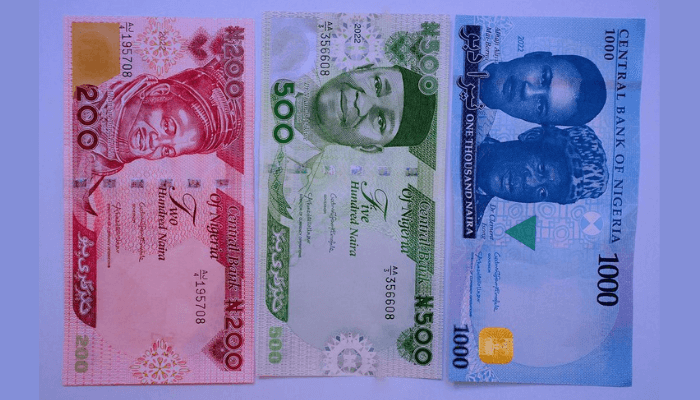
The redesign of high-value naira notes, which has sparked a cash crisis in the country, has created losers and gainers.
Nigerian banks, small businesses, politicians and kidnappers are said to be among the losers, while the Central Bank of Nigeria (CBN), Point of Sale (PoS) operators, as well as telecom and fintech companies are among the gainers.
The naira redesign programme was announced on October 25, 2022 by the CBN after receiving approval from President Muhammadu Buhari.
Lenders in Africa’s largest economy are seen losing fees and commission income from the naira redesign programme as many customers could not make withdrawals from their accounts due to the persistent naira crunch.

As the banking public suffer pains occasioned by naira scarcity, many have voiced their frustration on the banks, even as some of their offices and Automated Teller Machines have been attacked.
Last week, workers in the banking industry estimated that banks had lost over N5 billion to the attacks on their facilities in parts of the country amid the scarcity of cash.
“Aside from bank buildings burnt and Automated Teller Machines destroyed, staffers have also suffered personal losses,” said Olusoji Oluwole, president of the Association of Senior Staff of Banks, Insurance and Financial Institutions.
“Ordinarily, the naira redesign policy should improve financial inclusion as people seek to utilise various banking services to deposit their old notes and subsequently make withdrawals or e-payments,” said Taiwo Oyedele, head of tax and corporate advisory services at PwC.
He said this should in turn enhance the fortunes of banks in Nigeria if the policy was seamlessly implemented.

“Unfortunately, the impact on the banking sector may now be negative, especially in the short term as customers are unable to access cash from their deposits while some banks have suspended operations to prevent attacks by unhappy customers,” Oyedele said.
Read also: Naira crisis: Business owners count losses
Godwin Emefiele, governor of the CBN, said in January that the naira redesign had reduced ransom-taking and kidnapping.
Politicians gearing up to buy votes during the forthcoming elections are seen as losers. Last week, President Muhammadu Buhari said the naira redesign had also contributed immensely to the minimisation of the influence of money in politics. “This is a positive departure from the past and represents a bold legacy step by this administration, towards laying a strong foundation for free and fair elections.”
Uche Uwaleke, professor of Capital Market at the Nasarawa State University Keffi, said the gainers include the CBN, which is now having more control over money supply, and the telecom and fintech companies, currently making more money from surge in electronic payments and use of data.
He said losers are micro and small businesses currently experiencing low sales and income due to the cash crunch, as well as kidnappers and criminals now starved of cash.
“Politicians equally starved of cash for electioneering purposes” are also losers, Uwaleke said.
Ayodeji Ebo, managing director/chief business officer at Optimus by Afrinvest, said, “Losers are small and medium enterprises, businesses, transportation sector, among others, while gainers are PoS agents, and online platforms.”
Micro businesses across the country say they are suffering losses as a result of scarcity of cash and the rise in failed electronic banking transactions.
A petty trader at Alaba market, known as Mama Ejima, said she made only few sales at the weekend, and that most customers left after several attempts to make cash transfers failed.
Amid the double whammy of naira scarcity and electronic transaction failures, some Nigerians have turned to payment solution providers such as Opay and Palmpay.
The implementation of the policy has led to a significant reduction in currency outside the banking sector.
“We are happy that so far, the exercise has achieved a success rate of over 80 percent as about N2.7 trillion held outside the banking system has been returned. Nigerians in the rural areas, villages, the aged and vulnerable have had the opportunity to swap their old notes, leveraging the Agent Naira Swap initiative as well as the CBN Senior Staff nationwide sensitisation team exercise,” Emefiele said.
Currency outside banks plunged to N788.92 billion in January 2023 from N2.84 trillion on October 25, 2022, when the CBN announced the naira redesign programme.