



For most firms operating in Africa’s largest economy, providing back up electricity is often the biggest cost item and impediment to doing business in the country.
In the past year, diverse firms from Dangote Cement, the country’s biggest listed company, to GSK Consumer plc a drug and drinks manufacturer, have had operations impacted and costs spike, from a shortage of gas to power operations.
“For us, a lot of our biggest input cost is around energy, which affects how we run our production lines. There is no easy answer; we just have to continue to manage it,” said T.S Dayanand, managing director of GSK, in a recent interview with BusinessDay.
GSK’s 2014 nine – months results showed operating expense surged by 6.93 percent to N6.125bn, from N5.728bn in the previous year.

READ ALSO: Access Bank recognized as ‘best digital lender in Africa’
Nigeria produced only 27 billion kilowatt hours (kWh) of power in 2013, compared to 1,052 billion kWh for India, and 152 billion kWh for Indonesia, according to data from the World Bank.
India has a population that is seven times larger than Nigeria’s but produces 40 times more power.
Dangote Cement Plc 2014 first-half profits declined 11 percent, as operating costs increased on gas supply challenges, resulting in the use of heavy oil for its plants.
“We appeal to the government to do something about the problems of gas and LPFO supply. If we don’t have power and fuel, businesses cannot survive. If not resolved urgently, the situation will compound the problem of unemployment and insecurity in the country,” said Edwin Devakumar, group managing director Dangote Cement.

Oando, the indigenous Nigerian exploration and production company has a number of companies waiting to be connected to gas by it, according to Bolaji Osusanya managing director, Oando Gas Power.
“The available gas supply to Lagos from the Nigerian Gas Company (NGC) through Oando’s pipelines can only do about 75 MW,” said Osusanya.
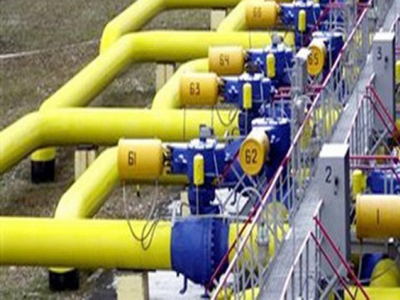
The Escravos-Lagos (EL) pipeline can move up to 1.1 billion standard cubic feet of gas a day. However, all of that supply has been exhausted by industrial demand in the Lagos and Ogun axis.
If the relatively large to medium scale firms are being hit hard on energy costs, SMEs, which are the engine of growth but have less ability to absorb such costs, are even harder hit.
The stunted growth of manufacturing in Nigeria is often traced to the lack of energy to run these enterprises.
“Emerging markets have lots of population who have to be provided jobs, and this can only be achieved by manufacturing,” said Anil Gupta, a professor of strategy, globalisation and entrepreneurship, of the Smith School of Business, University of Maryland, USA, at the recent FBN Capital investor conference.
Manufacturing made up 23 percent of Indonesia’s GDP, 12 percent for India, but only 6.9 percent of Nigeria’s economic output in 2013.
Gas is critical for Nigeria’s move to grow cluster industries, manufacturing jobs and productivity, because it is an abundant and cheap energy source in the country.
The prospects of building more gas infrastructure- pipelines, gathering plants – have however always been stymied by government’s control of the gas value chain, from pricing to infrastructure, which made investors less willing to participate in the sector.
Nigeria recorded the largest volumetric decline in natural gas production in 2013 among over 48 gas-producing countries captured in the BP Statistical Review of World Energy 2014.
The country, Africa’s top oil producer and largest holder of natural gas reserves in the continent, saw natural gas production fall by a massive 16.6 percent, to 36.1 billion cubic meters (bcm) from 43.3 bcm in 2012.
According to industry analysts, the low gas prices set by the government barely cover the cost of producing and processing gas, let alone investing in gas infrastructure where firms can control both the demand end and supply end of the value chain and obtain better prices.
There is currently a shortfall of 750,000 Mcf/d of gas supply to the power sector, due to a lack of investment to explore for gas and infrastructure to meet rising demand, according to NNPC data released in October.
Dada Thomas, managing director of Frontier Oil, said that the key to unlocking Nigeria’s gas potential is policy direction. “The Petroleum Industry Bill (PIB) is still uncertain. PIB has taken all the issues about gas and compressed it into oil in the PIB. Policy direction has to be clear and consistent,” he said.
FRANK UZUEGBUNAM & PATRICK ATUANYA



