|
Getting your Trinity Audio player ready...
|
The confusion over the deadline for naira notes swap took a turn for the worse on Wednesday after the Supreme Court adjourned to February 22, 2023 the suit filed by some governors to challenge the naira redesign programme of the Central Bank of Nigeria (CBN).
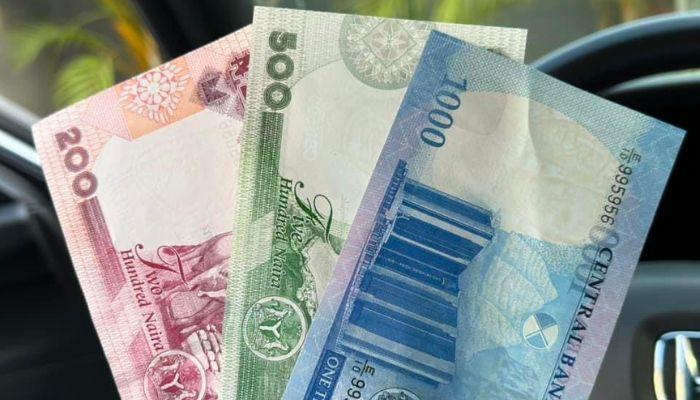
The CBN had originally fixed January 31 as the deadline for the old N200, N500 and N1,000 notes to be returned to banks and cease to be legal tender. But the deadline was extended to February 10, as outrage heightened from Nigerians over the scarcity of banknotes.
But before the February 10 deadline could elapse, Kogi, Kaduna and Zamfara states approached the Supreme Court to stop the CBN from going ahead with the deadline.
The Supreme Court had last week temporarily suspended the implementation of the February 10 deadline and also fixed February 15, 2023 to determine the suit, with individuals and businesses unsure whether to accept or refuse the old notes.

Following Wednesday’s adjournment, many Nigerians were still confused about what to do with their old notes.
There were attacks on some banks and Automated Teller Machines in parts of the country after the adjournment.
“Attacks on banks are just a misplaced tactic on how to express anger. The banks being attacked belong to individuals and not the government. While we call on the FG and CBN to punish banks hoarding, selling the new notes, we must see those burning banks as terrorists,” Eniola Daniel, a Nigerian, said on Twitter.
On Wednesday, some traders in major markets and commercial bus drivers in Lagos stopped accepting the old naira notes following the statement made by Godwin Emefiele, governor of CBN, on Tuesday.
“I collected the old notes on Monday and yesterday (Tuesday) but I am no longer collecting them. The ones I collected are stuck with me as my bank refused to collect it as a deposit,” Dele Olatunji, a keke driver at Ketu, said. “I will not follow the Supreme Court ruling any longer as the initial ruling did not stop banks from following CBN’s deadline,” he said.

Martha Okolie, a trader at Mile 12 Market, said she had expected the Supreme Court’s ruling to bring the chaos caused by cash scarcity to an end. “I heard the Supreme Court ruling and I was highly disappointed. I believe that the madness we are all experiencing will finally end by the ruling, only for it to be adjourned.”
“I have been collecting the old notes with the hope that the Supreme Court verdict will work for the good of poor Nigerians. But with the adjournment, I won’t be collecting them again,” she said. “I will only start collecting the old notes again if banks are also collecting them.”
BusinessDay gathered that some bank branches including GTBank at Adeola Odeku and Zenith at Okota started accepting deposits of old notes after the Supreme Court’s adjournment.
Read also: Naira scarcity protest hits Akure, Ondo town, Owo
When contacted, Osita Nwanisobi, director, corporate communications department at the CBN, declined to comment on the matter. “I am not a lawyer; so write what the Judge said,” he said.
Uche Uwaleke, professor of Capital Market at the Nasarawa State University Keffi, said: “The postponement will only heighten the anxiety and uncertainty currently pervading the economic environment especially against the backdrop of the fact that the CBN has maintained Feb 10 as the date the old notes cease to this legal tender.”
Muda Yusuf, chief executive officer of the Centre for the Promotion of Private Enterprise, said the CBN should obey the Supreme Court order.
“No institution should have absolute autonomy without appropriate checks and balances otherwise we may be inviting anarchy,” said Taiwo Oyedele, head of tax and corporate advisory services at PwC Nigeria.
According to him, the powers of the CBN and the functions of the monetary authorities more broadly derive from legislation; so it is not out of place if their policies are subject to the jurisdiction of the courts, not the least the Supreme Court.
“Even if the intervention by the Supreme Court is considered as an overreach, the rule of law requires that due process should be followed to overturn the ruling,” he said.