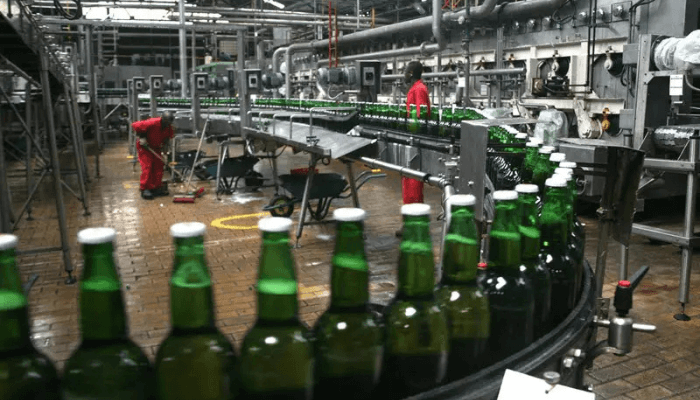
Organised trade has the capacity to reduce the 39 percent yield loss in the agricultural sector, while increasing the contribution of manufacturing to the Gross Domestic Product (GDP), through increased technology and strong brand presence.
Haresh Keswani, group managing director, Artee Group, said organised retail trade would help improve inefficiencies in the agricultural value chain as well as reduce wastage, increase revenue and effectively lower inflation rates.
According to Keswani, organised retail can boost manufacturing by helping to increase the presence of brands in all categories, while creating a spike by launching new products and concepts to test markets, a situation that will lead to setting up local manufacturing facilities.
“Manufacturing infrastructure improves as technology transfer is facilitated. It also creates an improved platform for direct interaction with the consumers,” he said, during his lecture entitled, ‘Empowering Economic Growth: An Opportunity to be a part of the new revolution – Retail Revolution,’ organised in Lagos by the Retail Council of Nigeria.

He also pointed out that organised trade could help the banking sector through increase in consumer spend, consumer finance, capital investment and project finance.
READ ALSO: APC woos more South East PDP Governors as Uzodinma confirms Umahi’s defection
In the technology sector, Keswani said the boom in retail would give an impetus to the IT industry in both hardware and software development, adding that increase in telecom and IT infrastructure facilitates a cashless economy.
Bismark Rewane, CEO, Financial Derivatives Company Limited, said there are enormous retail opportunities in Nigeria, given the country’s large population, growing middle-class and young population, among other advantages.
Rewane pointed out factors that can affect consumption as money supply, labour productivity, minimum wage and subsidies, stressing that there are equally risks that can affect retail trade.

He enumerated such risks as pressure on disposable income stemming from policy adjustments, subsidy removal, electricity tariff hike, large income disparity and automotive policy, among others.
“Wealth lies in the hands of a few,” he said, stressing that the fact that Walmart remains one institution that employs the largest people portrays the enormous retail opportunity, if fully tapped.
ODINAKA ANUDU