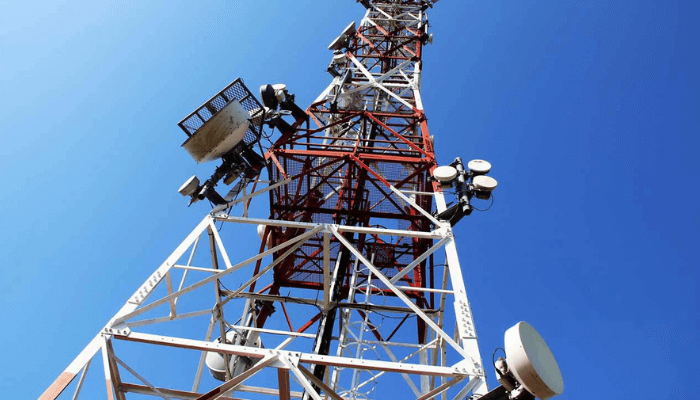
As the clock ticks towards the auction of the 2.6 gigahertz spectrum band taking place next month, the Nigerian Communications Commission (NCC) has said that the nation’s telecommunications sector will benefit significantly with the auspicious auction in the area of further deepening broadband internet penetration in the country.
This is even as the Commission explains some of the technical details of the planned auction as contained in the recently-released Information Memorandum (IM) by the regulator which defines the process for the licensing of paired Spectrum in the 2.6 GHz frequency band.
According to the telecoms regulator, the auction of the spectrum will add the necessary fillip to the extant drive by the regulator to deepen broadband internet penetration from its current six per cent to 30 per cent by 2018.
The planned auction is also in line with the mandate of the Commission as accentuated in the National Broadband Plan (NBP) 2013-2018, approved by President Goodluck Ebele Jonathan last year and the objectives of and the Nigerian National Broadband Plan 2013.

According to Tony Ojobo, director, public affairs, NCC, the process for the licensing of the 2.6 GHz frequency Spectrum band is predicated on demands by telecoms operators for additional Spectrum to enable the effective provision of Advanced Wireless Broadband services in consonance with international trends. He maintained that this is also in furtherance of the objectives of the Federal Government of Nigeria as set out in the Nigerian National Information Communications Technology (ICT) Policy 2012 and the Nigerian National Broadband Plan (NBP) 2013.
READ ALSO: Nigeria needs N500bn annually to complete 711 road contracts in three years
“Based on the positive outcome of earlier consultations with necessary stakeholders and the direction of the National Broadband Plan, the Commission has decided to undertake the 2.6 gigahertz spectrum auction to award Spectrum licenses to build and operate networks in this Spectrum band to provide Advanced Broadband Wireless Services to subscribers in Nigeria,” Ojobo said. To qualify to bid in the forthcoming auction, the IM explains that the applicants may not have to be licensed network operators (LNOs) in Nigeria, Africa’s largest economy by GDP (Gross Domestic Product). “However, any successful Bidder who does not have a Unified Access Service License (UASL) will be granted one upon payment of the specified fee. The tenure for the UASL will be 10 years, subject to renewal,” Ojobo explained.
Explaining the technical details of the spectrum further, Ojobo stated that the spectrum is offered by the Commission on a technology neutral basis, saying, however, that for roll-out of services, the Commission intends to follow the International Telecommunication Union (ITU) recommendation setting aside Spectrum in the 2.6GHz band for the provision of advanced wireless broadband services.Subsequently, he said that the Commission will offer 14 Lots of 2 X 5 megahertz FDD paired Spectrum in the 2.6 GHz band ranging from 2500 – 2570 megahertz and 2620 to 2690 megahertz (totaling 2 X 70 megahertz) for auction. This will be awarded to winning Bidders in multiples of 2 X 5 megahertz lots aggregated in contiguous arrangements.
A reserve bid price of $16 million has been fixed by the Commission on each of the 14 lots in the 2.6 gigahertz spectrum with a clause that a winner of the spectrum without Universal Access Service Liecence( UASL0 will need to obtain such a licence also. “Nigeria currently has growing levels of Internet take-up, PC penetration and broadband adoption.

The trend of Internet use in Nigeria shows an increase with the overall number of users rising from 1.4 percent of population in 2004 to about 47.8 per cent by 2014 with Broadband penetration at about 6.1 per cent in 2013. Access to PC in Nigeria was estimated at 8.1 per cent of the population in 2013.
“It is our belief, therefore, that the successful auction will add the needed impetus to our drive towards democratising broadband internet services provisioning and create a truly knowledge economy where broadband becomes an enabler of all sectors of the economy while contributing significantly to the Gross Domestic Product (GDP) of the country,” Ojobo said. The Commission said that it would adopt the Ascending Clock Auction with Exit Bids. There will be clear auction rules based on the following principles: That the licensing process will be conducted in a fair, open and transparent manner, where all parties participating in the auction are expected to behave in the same fashion. “Also, the Commission reserves the right to exclude any parties that have been deemed not to have conducted themselves in this way. In addition, the Initial Bid Deposit (BD) can be forfeited under such circumstances.
“All bidders must abide by the auction rules or face disqualification,” he added. Earlier in February, this year, the Commission, through an auction process, awarded a frequency licence in the 2.3 GHz band to Bitflux Communications Limited. This was bundled with a Wholesale Wireless Access Service Licence.
The Commission has determined that Auction is a fair, transparent and efficient means of assigning the Spectrum. The Auction of the available Lots in the entire 2 X 70 MHz block of the 2.6 GHz Spectrum band will take place in the city of Abuja in early next month at a location to be specified by the Commission. The formal licensing process started with the issuance of Public Notice No. 1/2014 on the August 15, 2014 and continues with the release of this IM, inviting interested parties to participate. The release of this IM will be followed by a period for the submission of questions to the Commission relating directly to the licensing process defined in this IM.