Afew years ago, the Club of Rome, an influential global think tank, published a report, The Capacity to Govern, under the leadership of Professor Yehezkel Dror, an erudite and highly original Israeli policy scientist. The report lamented what it described as a “brain drain” from politics; a situation in which the most gifted people are shying away from public careers, leaving the arena to second rate minds and people of doubtful character.
There is also the soporific impact of mass media and the role of big money in political elections. Civil service systems are being weakened and governments are losing the capacity to shape the future and expand the possibility frontiers of liberty, welfare and the Good Life. Inequalities are deepening while distrust of government has become the norm for mass publics in rich as well as poor countries.
In our country Nigeria, alienation of the people against the government has been the norm for decades. The benighted years of tyrannical and corrupt military governments have created a path-dependence of mass alienation and distrust of government. Many of our people are beginning to doubt if senior politicians and the military are not in cahoots with Boko Haram as they play out their American script to destroy our country. If General Yakubu Gowon fought a war to keep Nigeria one and did not borrow a dollar from anybody, why do we need a staggering $1 billion to fight a bunch of marauding desert bastards? If the Americans and the West have imposed an implicit arms embargo on our government, why can’t we go to Putin in Russia instead of carrying raw dollars in private jets to South Africa, demonstrating such bungling incompetence?
Of course, whenever government does things well, we should be prepared to acknowledge it. For example, they did a good job in saving us from the nightmare of Ebola. We should applaud these efforts. However, grosso modo, we are still far from where we ought to be, given our potentials and promise. We can take our country to the next level when we begin to implement what I term the Seven Habits of Highly Effective Governments.

READ ALSO: Nigerian Immigration commends LADOL’S indigenisation policy, transfer of technology
First, we need leaders that not only have the intellect and capacity to govern, but also possess the requisite political skills to influence and manage large-scale, positive social change. They must also possess moral virtue that wins trust as well as respect from citizens. Great national undertakings are possible only through single-minded articulation of national purpose. President John Fitzgerald Kennedy committed America to going into space, with a clear aim, purpose and targets: “We choose to go to the moon in this decade and do the other things, not because they are easy, but because they are hard, because that goal will serve to organise and measure the best of our energies and skills, because that challenge is one that we are willing to accept, one we are unwilling to postpone, and one which we intend to win.”
Secondly, planning is vital. We have to plan for the various sectors of the economy – energy, education, health, defence, housing and others. Rolling plans should be a supplement to long-term perspective plans spanning 20-25 years. The Chinese, Japanese and Asians in general tend to plan more than 20 years ahead. We have to borrow a leaf from them.
Thirdly, highly effective governments apply sound principles of public management to ensure cost-effectiveness and results-based management. Waste of public resources must be reduced to the barest minimum. It is vital that entrepreneurial principles are applied to ensure that government delivers optimal benefits in terms of the greatest good to the greatest number.
Linked to this is the imperative of administrative decentralisation. Citizens are easily alienated from big, elephantine behemoths. In our age of mass democracy, citizens need to feel that they are participants in the decisions that shape their lives and their future.

Fifthly, effective governments are anchored on talent. The secret behind the remarkable success of Japan, China, Singapore, Malaysia and Korea is down to the fact that they operate merit-based civil service systems. Early on, they took major steps in reforming their bureaucracies and ensuring that only the best talents were recruited to work in the civil service. Promotion is based on performance; keenly aware of the fact that politicians come and go, but a highly professionalised civil service has to be in place to ensure continuity and effectiveness in implementation of national programmes.
Sixthly, highly effective governments place a premium on science, technology and innovation. When Mustafa Kemal Ataturk took over the reins of power in Turkey in October 1923, keenly aware of the backwardness of his country following the collapse of the Ottoman Empire, he advocated “positive science” as the vehicle for modernisation of his country. Turkey today is a flourishing economy due largely to the foundations laid by him.
In countries as wide apart as Israel and Singapore, science, technology and innovation lie at the heart of today’s creative economies. Countries such as ours must look beyond oil and primary commodities. We must focus, instead, on deploying science as a means of bringing innovation, locking ourselves into global value chains and re-engineering prosperity for all citizens.
Seventh, highly effective governments must be able to balance their books. The ancient Roman Empire was brought down largely by fiscal imprudence, in addition to moral turpitude and imperial hubris. America’s $17.6 trillion national debt (about 103 percent of GDP) is a time-bomb waiting to explode. Several industrialised countries have a mushrooming national debt verging on 100 percent of GDP, among them France, Italy, Portugal and Spain.
Wise governments ensure that they keep debt under control. They also ensure that national budgets are expended more on investment that generates future wealth rather than on immediate consumption and paying for an unproductive bureaucracy that cripples the country. For example, Nigeria spends 70 percent of its budget on consumption and only 30 percent on capital projects. The Chinese and the Singaporeans do the opposite.
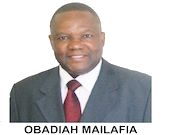
OBADIAH MAILAFIA