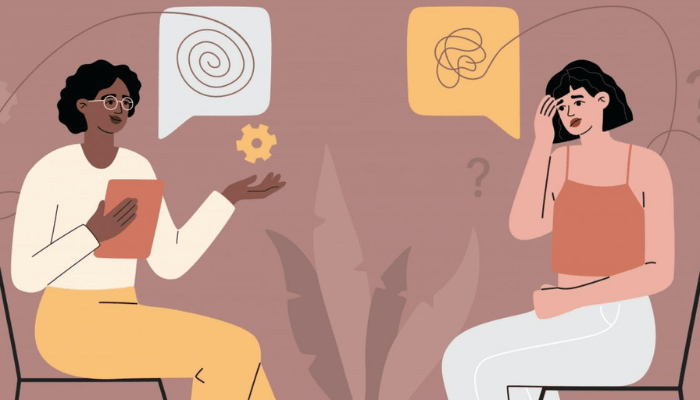
Pauline has been in two abusive marriages and each relationship left her feeling anxious, depressed, and worthless. At the same time, Pauline was dealing with severe hearing loss. She found it increasingly difficult and embarrassing to communicate with people. She began avoiding others, which led to depression. That’s when Pauline decided to take control of her life. She reached out to a mental health service and started seeing a psychologist. The experience helped her to not only accept her hearing loss, but also to find ways to cope with it — and continue enjoying life.
Now, Pauline is an advocate — for the deaf community, for survivors of domestic violence, and for herself.
There’s a popular saying that goes, “no man is an island” and what this phrase insinuates is simply that we don’t have to do life alone as human beings. Often when we have challenges, we go to our friends and family for support and while this is a fantastic thing, some challenges require psychological expertise. If you are experiencing challenges beyond your control or that of your family members or loved ones, it is advisable to reach out to a therapist for help.
WHO NEEDS THERAPY?

· People dealing with Abuse, trauma, or neglect
· People dealing with Behavioral challenges
· People dealing with Daily life challenges
· People dealing with Emotional challenges
· People dealing with Life transitions or changes

· People dealing with Mental health conditions
· People dealing with Relationship challenges
· People dealing with Stressful life events
Read also: Has your past become your destination?
HOW THERAPY CAN BE BENEFICIAL TO YOU
· It helps to improve communication and interpersonal skills
· It helps you have greater self-acceptance and self-esteem
· It equips with you with strategies to change self-defeating behaviors/habits
· It Helps you have better expression and management of emotions, including anger
· It helps you feel relief from depression, anxiety or other mental health conditions
· It helps you have increased confidence and good decision-making skills
· It equips you with strategies to manage stress effectively
· It helps you have improved problem-solving and conflict-resolution abilities
· It helps give you a greater sense of self and purpose
· It helps you recognize distorted thinking patterns
COMMON MISCONCEPTIONS ABOUT GOING TO THERAPY
· If people go for therapy, something is wrong with them. They must be broken or abnormal. Just like with physical illness, mental illness and addiction are medical problems. You wouldn’t say that someone who has cancer or the flu is broken.
· No one will understand your problem. This is a lie the mind tells us to keep us from seeking help. Contrary to what it tells you, your problem will be understood without judgement. There are many people who know and are here to listen and help. You deserve to feel healthy and whole.
· If people go for therapy they will be given drugs to that their illness and become addicted to those drugs. As with physical illnesses, some mental health disorders will require short- or long-term medication regimens. It can be an important part of treatment, but it should never make you feel like you’re not yourself or in control.
· You won’t need treatment if you just try harder. Mental health and substance abuse treatment is for people who have an illness that deserves treatment, just as much as any other illness. It can’t be cured by trying harder or ignoring the problem.
· People will think less of you if you seek help. What is important when dealing with mental illnesses is that as a client you get better, what people think of you does not matter. If you refrain from going to therapy because of people’s opinions, it will cost you your wellness.
· “Therapy is just a lot of talking; I can get the help I need from my friends” While a strong support system of friends and family is very important, there are things that we can help you with that your loved ones might not be able to. Our training and experience help us know all the tricky ways your mental illness can trip you up and how to overcome your hurdles.
· If I get treatment, I’ll have to keep going forever. Our goal is always to get you back into your “normal” functioning as quickly as possible. While some people may need long-term treatment, many individuals just need a few weeks or months to deal with their problem