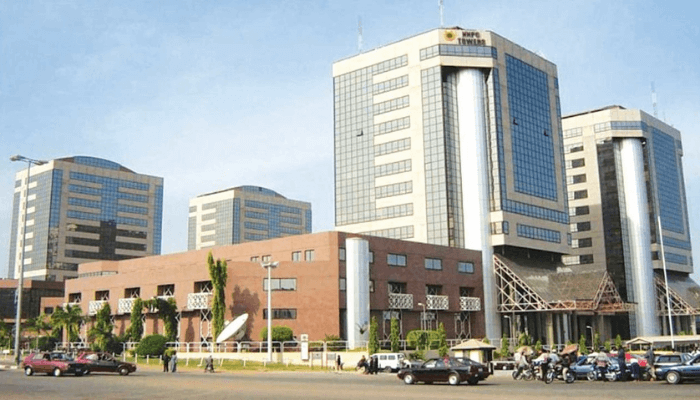
The commercialisation of the Nigerian National Petroleum Corporation had been the subject of discussions for decades, although there was hardly any framework for its implementation.
The old NNPC, even its operators will admit, had a not-so-enviable past. Not a few Nigerians will believe anything about the now defunct entity, since over the years, they had lost faith in its operations.
Although there have been attempts, especially in the last few years to make it more transparent and accountable to Nigerians, critics of the organisation affirm that those measures have not been far-reaching enough.
Indeed, under the current management led by Mallam Mele Kyari, the 44-year-old NNPC, has joined the global Extractive Industries Transparency Initiative (EITI), declared first profit in its audited report, released its Annual Financial Report to the public and has generally been more open to public scrutiny.

With the company now fully transitioned to a commercial entity, the managers of the new NNPC, now renamed NNPCL say things are even about to get better.
Taming the vulture of rising crude theft
Nigeria’s economy is heavily dominated by the oil and gas sector and while the sector generates high levels of income for the country, it makes government revenue highly dependent on oil prices.
It is stated that an average of 437,000 barrels of oil is stolen on daily basis by oil thieves in Nigeria.
Data shared by the NNPCL, disclosed that between January and July, the country lost an average of 437,000 barrels of oil a day to criminal entities and individuals who illicitly tap pipelines onshore and offshore in the Niger Delta region.
Group chief executive of NNPCL, Mele Kyari, had blamed a section of Nigerian society for complicity that has led to the loss of thousands of dollars in the oil theft, undermining the country’s oil production.

Nigeria recorded lower production in the first seven months of the year. In January the production stood at 1.4 million barrels per day but as of July, the production went lower to 1.1 million barrels per day.
Pipeline fires are commonplace in Nigeria, in part because of poor maintenance but also because of third party infractions who vandalize pipelines to siphon off petrol and sell it on the black market.
Determined to disappoint critics who had assumed that the present NNPCL is a square peg in a round hole, came boldly out with a shocking revelation, on how an illegal oil pipeline connecting directly to the high sea was recently discovered.
Kyari said the major oil export terminal that had its products diverted into the sea had been operating undetected for nine years.
The four-kilometre or 2.5-mile connection from the Forcados export terminal, which typically exports around 250,000 barrels per day (bpd) of oil, into the sea was found during a clampdown on theft in the past six weeks.
“Oil theft in the country has been going on for over 22 years but the dimension and rate it assumed in recent times is unprecedented,” Kyari told the lawmakers.
“But in rising up to the highly disturbing challenge, NNPC, has in recent time in collaboration with relevant security agencies clamped down on the economic saboteurs.
“In the course of the clampdown within the last six weeks, 395 illegal refineries have been deactivated, 274 reservoirs destroyed, 1,561 metal tanks destroyed, 49 trucks seized.
Forcados is operated by the Shell Petroleum Development Company (SPDC), a local subsidiary of Shell.
Nigeria has been losing potential revenue from some 600,000 bpd of oil, mostly as a result of shut-ins due to vandalism.
Crude oil exports fell to 972,000 bpd in August for the first time since at least 1990 as a result, starving Nigeria of crucial cash.
Activities at the affected terminal have been stopped since a leak was found from a sub-sea hose at the terminal on July 17.
Shell said last week that it expected loadings to resume in the second half of October.
Nigeria recently took a raft of measures to curtail the oil theft menace, which so far appears to have defied all solutions.
A few of the measures include the renewed deployment of security personnel in the Niger Delta and the real-time monitoring of activities around the pipelines by the NNPCL.
In addition, NNPCL, has introduced the whistle-blower strategy as well as the handing over of a N4 billion monthly surveillance contract to ex-militant Government Ekpemupolo, popularly known as Tompolo.
The federal government has variously blamed massive oil theft, vandalism of major assets, dilapidated infrastructure as well as declining upstream investment for its inability to drill more of the commodity.
Last Tuesday, during a briefing on its audited financial report for 2021, Kyari had said the all-important Trans Niger Pipeline (TNP) which had been down for months would come online in the “next few days”.
Kyari further said that Nigeria was in a ‘calamitous’ situation over oil theft, and pipeline vandalism with its attendant low production.
He explained that the NNPC had been carrying out aerial surveillance of the affected areas and discovered “the economic saboteurs carrying out their activities unchallenged and unperturbed.”
Through the abandoned AGIP facility, the oil thieves have been ferrying condensed crude oil to the sea for loading into thieving ships at midnight for onward movement abroad.
The Forcados Terminal located in Ogulagha, Burutu Local Government Area, is said to have a nameplate capacity to export 400,000 barrels per day.
It receives crude oil from the Forcados Oil Pipeline System, which is the second largest pipeline network in the oil-producing region, after the Bonny Oil Pipeline System in the Eastern Niger Delta.
Forging Alliance
The Nigerian National Petroleum Company Limited considering the enormity of the crime and its sophistication has entered into alliance with the Petroleum Training Institute, PTI, to install anti-theft integrated monitoring systems on pipelines to monitor the facilities against crude oil theft.
Speaking in Abuja at the Petroleum Training Institute’s 50th Anniversary, the Principal/Chief Executive, PTI, Henry Adimula, said that institute had developed an oil anti-theft integrated monitoring system to effectively monitor pipelines.
Adimula, who said this was one of the recent innovations of the PTI, stated, “We’ve produced an oil anti-theft integrated monitoring system for pipeline monitoring, and an air quality monitoring system.
“We have Al’s and have developed a corrosion robot for early detection of localised corrosion and prevent loss of integrity of the facilities, among others.”
Reacting to this while delivering his address at the event, the Group Chief Executive Officer, NNPC, Mele Kyari, said the oil company was pleased to hear what the institute had done in terms of pipeline monitoring.
He then told the PTI that NNPC would work with the institute to deploy the technology to further boost the monitoring of NNPC’s pipelines with a view to addressing crude oil theft in Nigeria.
Kyari said, “We need to produce oil and gas. We are trying to address the massive oil theft. We will overcome it, but clearly it is something we also need to work together to resolve.
“That is why I’m happy to hear the PTI coming up with solutions that will be able to monitor pipelines.”
He said the NNPC was collaborating with security agencies of the Federal Government to arrest and deter people from having access to Nigeria’s crude.
Read also: Fuel queues resurface in Lagos as marketers blame NNPC for supply gap
Addressing importation of white products
One of the key focuses of the new NNPC Ltd is how to end petroleum products importation.
To achieve the milestone Kyari has disclosed that the company owns 20 per cent equity in the Dangote refinery.
He said that the importation of petroleum products into the country will be stopped by mid-2023 under the new arrangement.
According to him, the combined output of Nigeria’s refineries being revamped and Dangote refinery would be enough to stop importation.
“Even if all the refineries are working today, you will still have a net deficit of Premium Motor Spirit (PMS) to import into this country.
“This is what it means because our population has grown; demand has grown; the middle class has grown.
“I am sure everybody here owns one or two cars; and as such, the volume of petroleum products we require in this country has grown exponentially.”
Kyari stated that this was because there was clearly an exponential growth in our need for PMS. He that aside from owning 20 per cent equity in Dangote Refinery, NNPC Ltd had the right of first refusal to supply crude oil to that plant.
“But, we saw this energy transition challenge coming; we knew that time will come when you will look for people who will buy your crude oil, you will not find.
“And that means we have locked down the ability to sell crude oil for 33,000 barrels minimum by right for the next 20 years.
“By right also, we have access to 20 per cent of the production from that plant,” Kyari said.
He expressed optimism that Dangote Refinery would become operational by the middle of 2023.
According to him, the refinery has a production capacity of 650, 000 barrels per day, with different technology.
Kyari added: `Which means that it can crack the crude in a manner that you can have more gasoline than a typical refinery; that means the refinery has the ability to produce up to 50 million litres of PMS.
“So, the combination of that and our own ability to bring back our refinery will completely eliminate any importation of petroleum products into this country.
“This is very practical; this is possible; as a matter of fact, what we have done with our own refineries and the Dangote Refinery with many other small initiatives we have put in place—small, modular, condensate refineries that we are building.
”If that happens, we are very optimistic it will happen; you will see that this country will now be a net exporter.’’
He said he was looking forward to Nigeria becoming a hub of export of petroleum products, not just to the West African region, but to the rest of the world.
He said he was upbeat as the flow of supply would change by the middle of 2023.
“So, you will not have need for the importation of petroleum products into this country by the middle of next year,’’ he said