Contrary to claims by the Central Bank of Nigeria (CBN) that the weakening of the value of the naira was caused by the non-remittance of funds into foreign reverse by the Nigerian National Petroleum Company Ltd, fresh facts have shown that the NNPC remitted a total of N2.7 billion into its accounts with the CBN from January to June 2022.
The CBN had, in reaction to the nose-diving of the value of naira, said the non-remittance of dollars by the NNPC precipitated the forex crisis.
In a report entitled: “The forex question in Nigeria: fact sheet,” the CBN said there had been “zero-dollar remittance to the country’s foreign reserve by the NNPC.”
Checks have, however, revealed that the NNPC Ltd remitted $2.7 billion into CBN in the first six months of this year.

Records showed that out of the $2.7 billion the NNPC remitted into its CBN accounts, $645million was for dividends paid by the Nigerian Liquefied Natural Gas Company Ltd, while $1.786bn was from the NNPC operational activities.
A breakdown of the NNPC remittances showed that funds into the NNPC accounts came thus: $18,770,418.97 (January 2022), $194, 563, 276. 49 (February 2022) and $373, 232,875.20 (March 2022).
Other NNPC remittances were $247,884,295.52 (April 2022), $591, 565, 425. 41 (May 2022) and $880, 906, 761.81 (June 2022).
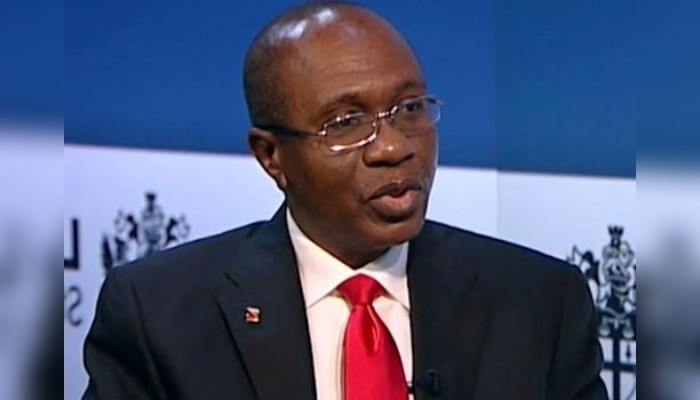
Godwin Emefiele, the CBN governor, has been in the eye of the storm following the weakening of the naira.
Last Wednesday, the Senate invited Emefiele to explain the weakening of the value of the naira and to proffer the way forward.

Following a motion sponsored by Olubunmi Adetunmbi, the Senate, apart from summoning Emefiele, also mandated its committee on banking, insurance and other financial institutions to look into the intervention funds the CBN earmarked to support some sectors of the economy.
Read also: Why CBN’s rate hike may fail to tame inflation
In his motion seeking Emefiele’s summoning, Adetumbi said the CBN’s earlier ban of forex sales to BDC operators caused a spike in exchange rate.
He stated that a few people benefit from the import-export window meant to serve the forex needs of business enterprises.
According to him, even the Personal Travel Allowance (PTA) and Business Travel Allowance (BTA) were not accessible as less than 20 percent of the total forex demand by travellers and businesses is being met by the CBN.
The CBN has been blaming the rapid depreciation of the value of the naira to so many factors without taking any blame.
In 2018, Emefiele blamed forex crisis on the importation of items he said should have been manufactured in Nigeria, leading to the ban of forex allocation for 41 items.
In 2021, Emefiele shifted the blame to Bureau De Change (BDC) operators, who he accused of illegal forex trading. He pointed fingers at “Aboki FX,” saying its activities were responsible for the naira depreciation, thereby cutting allocation to BDC.
This year, the CBN has blamed the forex crisis on money laundering and activities of those allegedly funding terrorism as well as politicians.