|
Getting your Trinity Audio player ready...
|
There is a quote from German playwright Bertolt Brecht that is regularly cited in Nigerian political activism spaces. It goes thus: “The worst illiterate is the political illiterate. He hears nothing, sees nothing, takes no part in political life. He doesn’t seem to know that the cost of living, the price of beans, of flour, of rent, of medicines all depend on political decisions. He even prides himself on his political ignorance, sticks out his chest and says he hates politics. He doesn’t know, the imbecile, that from his political non-participation comes the prostitute, the abandoned child, the robber and, worst of all, corrupt officials.”
Typically, when this quote comes up in these conversations, it is used as a sort of literary cane to flog soberness into the perceived mass of mentally undisciplined, social-media-happy, feckless youth that make up as much as 70 percent of Nigeria’s population. “Make sure you collect your PVC” is usually one of the statements that follows the invocation of Brecht. “If you don’t take part in the political process, you are allowing other people to dictate your outcome for you.” “Don’t just complain about bad leaders – choose good leaders instead.”
Read also:State of the nation: Impunity got us here (2)
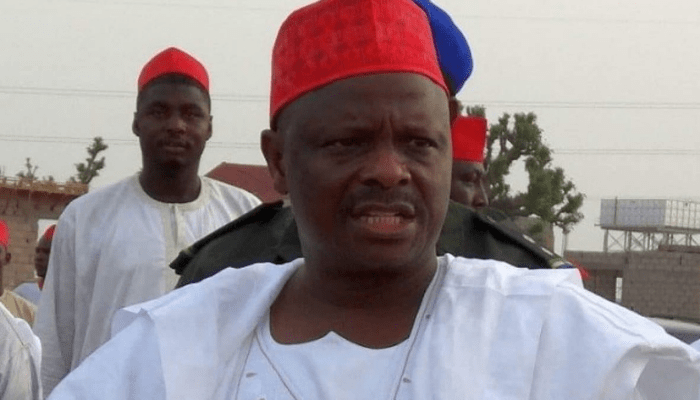
While all these statements are certainly true and they definitely count as sound advice, a key point that is missing in the conversations is something that was inadvertently flagged up by the recent controversial comments by NNPP presidential flagbearer Rabiu Kwankwaso. While inaugurating the Gombe State NNPP secretariat, Kwankwaso responded to questions about the purported negotiations between his party and Peter Obi’s Labour Party concerning a potential merger. His response to the question of possibly becoming Obi’s VP candidate was a contemptuous smackdown, not just of the idea, but of the very notion of “stepping down” for someone from the group he referred to as “the Igbos.” His reason? Igbos, while being good at business, were apparently bad at politics and “needed to learn.”

A Freudian Slip
Anyone who has engaged with Nigeria long enough can no longer be surprised by the implied ethnic slur delivered in the form of a backhanded compliment. The current president, after all, explicitly incited his supporters to embark on a deadly ethnic and religious pogrom following his election loss in 2011, and it made no dent on his electoral outcome just 4 years later. In a country like Nigeria, the fact of Rabiu Kwankwaso having a low opinion of an entire ethnic group is hardly something out of the ordinary. Tribalism is as Nigerian as jollof rice. That is to say, it is an entirely imported concept that we have claimed as our own and will fight to the death to protect.
No, the real issue flagged up by his comment was that he apparently believed that there was a distinction between that ethnic group’s economic success and its political abilities. In the world of Rabiu Kwankwaso – previously the governor of Nigeria’s allegedly most populated state – business acumen and economic success are somehow distinct and separate from political ability. What Mr. Kwankwaso implied with his comment was that the very word “politics,” when used in Nigeria, refers to one thing and one thing only – elections. Somehow the very dictionary definition of the word “politics” has been entirely conflated with that of “election” in Nigeria’s political culture, which comes with grave implications.
For reference, let us clearly define what both terms mean. According to the Merriam-Webster dictionary, “politics” refers to any of the following: “The total complex of relations between people living in society;” “The art or science of government;” and “The art or science concerned with winning and holding control over a government.” The same dictionary defines “election” as “the right, power, or privilege of making a choice,” and “an act or process of electing.” Clearly, the definition of “politics” can cover that of “election,” but the same is not true vice-versa. Ergo “politics” is much, much bigger than the process of electing leadership to control the levers of government. Which brings us to the next key point.
Who Is Winning At Nigerian Politics?
Using the aforementioned definition of politics as “the total complex of relations between people living in a society,” which of the broadly-defined ethnic groups in Rabiu Kwankwaso’s Nigeria is actually “good at politics?” As always, I believe the only way to answer such a potentially emotive question is to let the data do the talking. And there is a lot of data to do the talking in this case. Data such as Nigeria’s sub-national Human Development Index (HDI) breakdown from the Global Data Lab.
According to this data, Nigeria’s 10 highest-ranked states on the HDI rankings are Lagos, Ogun, Anambra, Delta, Imo, Bayelsa, Rivers, Abia, Enugu and Oyo. The next 10 are Edo, Ekiti, Cross River, Osun, Ondo, Akwa Ibom, Benue, Nasarawa, Ebonyi and Kwara. Notice any pattern here? The bottom 14 states are as follows: Kaduna, Borno, Taraba, Kano, Adamawa, Niger, Katsina, Bauchi, Zamfara, Jigawa, Gombe, Yobe, Kebbi and Sokoto. Have you noticed a definite pattern here?

What this data clearly states in black-and-white is that the ethnic constituency that Rabiu Kwankwaso considers to be politically adept is by far the worst-off in all of Nigeria, while “the Igbos” hold 4 of the top 10 spots on Nigeria’s subnational HDI rankings. Referencing that above definition of politics as “the total complex of relations between people living in a society,” is then empirically accurate to say that “the Igbos” are not “good at politics?” The numbers state very clearly that not only are “the Igbos” in fact good at politics, but that they are worlds apart from the constituency that Kwankwaso believes to be blessed with political sagacity. Or in other words, Kwankwaso and others who think like him are living in a false reality.
The “political illiterate” referenced in the introduction does not refer only to the disaffected non-voting citizen who does not register for a PVC or come out to vote on election day because they consider it beneath them. The political illiterate also refers to those who reduce the entirety of political engagement to the quadrennial process of electoral horse-trading. The goal of politics is not to win elections – it is to extract gains for the relevant group of people. If the HDI ranking of Rabiu Kwankwaso’s primary constituency in Kano state ranks 7 places below that of the lowest ranked southeastern state, then how pray tell, is that constituency – or Kwankwaso himself – “good at politics?” Is the goal of politics to manage an entire system of governance so as to achieve maximally beneficial results, or is it just to be declared winner by INEC every 4 years?
These are the questions, dear Nigerian political pseudo-literates.
These are the questions.