“The tragedy is that while President Buhari could take advantage of the hunger for his approval to mold the party into something different from the norm, he has no eye on the future of politics and political parties in Nigeria.
The gap in the APC and the crisis in the PDP provide opportunities for others within and outside the parties to come up with strategies to develop real parties, not vehicles for winning elections. But the truth is that the existing model is easy and it explains why all parties operate the same way.
The common operating model has produced stupendous individual results. As far as its owners and beneficiaries are concerned, it is not broken.”
These words were written in 2017.

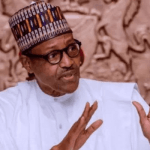
President Muhammadu Buhari was packaged for decades as a man of integrity, yet there is little substance to buttress this narrative. It is still difficult to reconcile the dedication to contesting elections with the current level of engagement with the country and its challenges.
It is a mystery what the tears he shed in 2011 were about: frustration at thwarted ambition or anguish for a country being led down a path destruction which he was dying to turn around. We might never know – we can go only by what is evident, which is that there is no sense that the president thinks he has a legacy worth protecting or nurturing. If he did, we might see signs of reflection about his successor and the future of democracy in Nigeria.
Imposition is tricky – it can seem decisive, all knowing wise, it can also be intolerant, overbearing and undemocratic but there is a middle ground: recruiting the right talent into political leadership and parties, grooming and creating processes that reward party values and the achievement of national goals.
No one leaves leadership to chance. This is why some of the most successful corporations invest in successor planning. The idea is not to impose – as is typically the way of party overlords – but through persuasion, engagement with party members, improvement of internal party democracy and subtle promotion of identified person(s) over the years, knowing that his tenure ends in 2023.
By the time Singapore’s Lee Kwan Yew was ending his 25 years as Prime Minister, there were at least two possible successors: Tony Tan and Goh Chok Tong – and he left it up to the People’s Action Party to choose, safe in the knowledge that either would continue to build on the foundation set for the country and the party.

No, it is not because Singapore is small and Nigeria is big that successor planning cannot work, that is akin to saying big planes can’t fly.
Part of our problem is our political ethos and the culture around what being in government is: power without responsibility.
This is why, in some countries, successor planning is about personal survival; those in government have done so badly by the people, ill-used the country to the point they fear that once their immunity has expired, they will be made to pay for their misdeeds.
Some refuse to leave, they sit tight through constitutional coups or compromise elections to ensure that, as insurance, only a loyal lackey takes over. Sadly, fealty is never guaranteed.
President Buhari was in three parties before he won in 2015 with the APC and there is little, from anecdotes of his time with All Nigeria Peoples Party and Congress for Progressive Change, to indicate that he has seen his engagement with these parties as anything other than vehicles for his personal ambition.
The type of deference that he commands could have been put to some use shaping those parties, particularly the one he won on but instead, what we witnessed with the APC primaries is a fitting metaphor for his tenure: a mess.
Aside from overseeing a time of blatant buying of elective office through the primaries and the embarrassing controversy about a consensus candidate that never was, those who planned the primaries had an extra up their sleeve.
The announcement by the convention committee that delegation heads would accompany delegates that required assistance to ensure the correct name was written means there were delegates who were not literate and that the votes were not secret.
It is a shame, in a country with the talent that we have at home and across the globe, that illiterate delegates select those we line up to vote for on election day.
The president who gave his last democracy day speech few days ago believes in nothing, or to be generous, is a cynic who does not believe in democracy. How can he? To challenge the results of elections on three occasions surely, one presumes he believed the elections were stolen.
Aside from adding ‘consensus’ to the 2022 Electoral Act – not even his personal experience with elections was enough to generate an executive bill on Electoral Act amendments throughout his tenure. His words rang hollow on June 12, 2022.
A genuine interest in building a democratic country would ensure not only fierce protection of human rights but respect for checks and balances on executive power.
Read also: Why Nigeria can’t end subsidy regime now – Buhari
We would have noticed parties’ reforms such as building structures for fundraising that did not rely on governors and godfathers, recruiting new members, and disciplining party members – instead we saw a doubling down of all the worst traits of our political parties.
On the upside, maybe it is a good thing that the current president has no sense of legacy and spared us any ‘continuity’ but it is a colossal waste to have our lives mismanaged for eight years by a man with no rousing thoughts about our collective future.
2023 provides an opportunity to vote better if we want better but most importantly, what is clear from the last round of primaries is that more of us are going to have to invest in building parties; because the current parties cannot give what they do not have.
Ayisha Osori, the author of ‘Love Does Not Win Elections’, will be writing for the Nigeria Decides 2023 series every fortnight on Wednesdays.