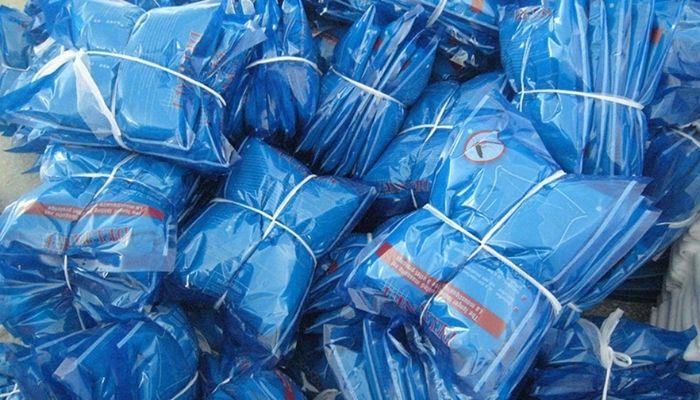
Akwa Ibom has marked this year’s World Malaria Day which has as its theme “Advance Equity, Build Resilience, End Malaria” with the announcement that it has concluded plans to distribute 3.7 million Insecticide Treated Nets (ITNs) to every household in the state.
It stated that in conjunction with stakeholders, it has adopted “evidence based malaria interventions in all the public health facilities such as:(a) Rapid Diagnostic Test (mRDT) Kits for Diagnosis of Malaria and Artemisinin-based Combination Therapy (ACT) drugs for the treatment of uncomplicated Malaria in the state.
Others said include Injectable Artesunate for management of severe malaria, Sulphadoxine–Pyrimethamine (SP) drugs for Intermittent Preventive Treatment (IPTp) of Malaria during pregnancy and Insecticide Treated Nets (ITNs) for pregnant women and children who have completed their immunization.
Augustine Umoh, commissioner for health who made this known in a broadcast to mark this year’s World Malaria Day said the nets were made possible with support from the Roll Back Malaria partners “adding that the act of reaching every hold in the state with the nets “will translate to touching and improving the lives of every resident in Akwa Ibom.”

Read also: U.S. contributed $768 million to Nigeria’s fight against malaria since 2011 — USAID
He lauded governor Udom Emmanuel for “continuing to show high level of commitment toward the elimination of malaria by providing a secure and conducive environment for program implementation, provision of warehouses for the storage of ITNs, recruitment and training of various health care providers, remodelling, renovation, construction and equipping of health facilities amongst other things in the state.”
He also lauded the malaria partners who, in the face of other emerging diseases of global importance, have shown tremendous efforts in the fight against Malaria and urged “every “resident of Akwa Ibom State to support key government initiatives towards eliminating malaria by ensuring their participation in the upcoming ITN campaign and adopting the various preventive measures .’’
In his presentation, Bassey Ansa, coordinator of Breakthrough Action in Akwa Akwa Ibom State which is supported by the United States Agency for International Development (USAID) and involved in social and behavioural change communication highlighted the major steps in fever care management showing the need for prompt care-seeking in all cases of fever, testing before treatment and adhering to recommended drugs after testing saying that not all fever cases could be malaria.
He expressed concern over the 33.2 percent malaria prevalence rate among children in the state but expressed delight that 97.7 percent of malaria cases have been tested in the state before treatment.

He used the opportunity to launch a broadcast strategy showing how the media could contribute towards the elimination of malaria in the state while also lauding USAID for the support in the implementation of its programmes.