This is the second part of a two-part editorial on water. In the earlier edition, we focused on how Nigeria can tap effectively into the ground water resource that is available in the country.
In much of what follows, we will focus on water as a strategic resource whose indispensability is such that it should be made available to all and sundry in the social formation, which goes by the name of Nigeria. The situation is deemed to be more urgent in view of the fact that, time is running out as far as the attainment of this goal is concerned.
On this score, it is important to appreciate that in less than a decade, eight years to be precise, access to drinking water, access to clean, and potable as well as quality water in Nigeria remains a mirage. This is despite the fact that access to water has been considered a human right by the United Nations since July 2010.
However, technological advancement has created a sense that no problem is too big for our collective innovation potential if we invest appropriately in research and development
Government’s lack-lustre approach to solving the water problem in Nigeria must stop. Failure to treat water as a strategic, valuable, and limited resource will accelerate water insecurity, even for historically water-secure population, and may threaten the economic and political security of Nigeria.

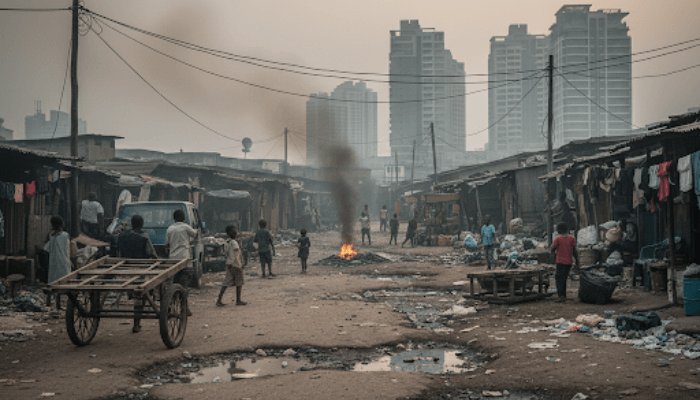
Popularly seen as a source of life, development, economy and education, unfortunately water has become a cause of poverty, disease and death with dismal reports that about 2.6 million people in Nigeria, including 361,000 children under the age of five, die each year of diseases relating to water and an unsanitary environment. That amounts to five deaths every minute!
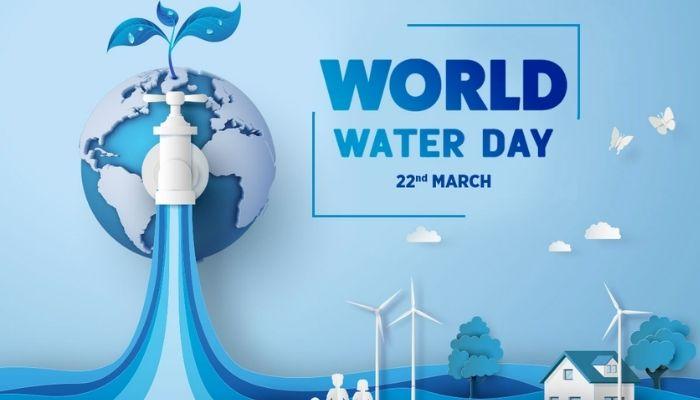
Suffice it to say that the critical place water occupies in human lives cannot be quantified and that was why the United Nations declared March 22 every year as World Water Day.
Schematically, as a resource, water is an asset; as a flood, it is a threat; as it becomes scarce, it causes drought. Man can survive for five weeks without food but maximum of five days without water.
It is the most important raw materials for mankind called “Liquid Gold.” It is mainly because of this magical substance only that earth’s temperature is maintained reasonably uniform at an average of 16oC.
Man needs about 150 to 300 litres of water every day for domestic purposes such as drinking, cooking, washing utensils, bathing, flushing toilet, air-cooling and gardening.

Interestingly, water touches every aspect of our lives: food, health, environment, industry, and leisure. However, increasing competition for water resources between people and the natural environment as well as between cities and rural areas is affecting its availability.
In Nigeria, UNICEF reported that close to 70 million people lacked access to clean water, while 110 million lacked access to sanitation. The impact of this shortage is dire as 124,000 children under the age of five die because of diarrhoea that is mainly caused by unsafe water, bad sanitation and bad hygiene.
Moreover, it decreases school enrolment and disproportionately affects girls who bear the responsibility of fetching water for family and community needs. Finding the solution for Nigeria’s water quality is, therefore, a pressing issue that requires all responsible parties to participate.
Although current and previous administrations in Nigeria took steps to improve the problem through the development of various policies and strategies; the continuous deterioration in water quality and access portrayed by about 45 percent drop of pipe-borne water supply since 1990, reveals the difficulty of translating the solution to Nigeria’s water quality issues into action.
Nigeria’s Water Act states that the Federal Government funds 30 percent, local government funds 10 percent, while state government covers 60 percent of the funding of water projects along with the full responsibility of operations.
But the Act itself is neither feasible nor effective policy in meeting water and sanitation demands leading to moves by stakeholders for an amendment of the legislation and gradual privatisation of this sector.
Although the Federal Government cannot be said to have done much to improve water supply, more blame goes to the 36 states and the Federal Capital Territory for failure to hold up to their end of the bargain.
Fact is: many state government officials neglect pressing water demands that require long periods of gestation and focus on short-term projects to show results during re-election.
Competition for water among its many users including food and agriculture production, the environment, energy, industry, and individual consumers is going to intensify. Increased competition over highly stressed, shared water sources, combined with weak governance and increased weather variability, are part of the reasons for the current farmers-herders conflicts in many parts of the country.
Read also: Nigeria and World Water Day (1)
Across the country, thousands of people, especially children, die each year from water-borne diseases and about 95 percent of deadly diseases in human body is associated with the consumption of liquid content, while over 25 million Nigerians are diagonised to die from highly chemicalised products.
Recognising that water is critical to sustainable development, there is an urgent need for increased awareness among leaders so that adequate strategies can be made for development under conditions of severe water scarcity and that there is absolute need for teamwork between federal, state and local governments with support from multilateral bonds, UN agencies, professional associations, the private sector and development partners (NGOs)
Furthermore, there is the need for strong policy, legal and regulatory frameworks, more effective implementing organisations and appropriate instruments. This can be achieved principally through strengthening the capacity of relevant institutions and ministries/agencies to be more pro-active in monitoring and compliance.
More importantly, as water scarcity intensifies, we must remember that without water, there is no food, and without food, there is no security. However, technological advancement has created a sense that no problem is too big for our collective innovation potential if we invest appropriately in research and development. But we must neither ignore nor diminish the need for collective action to solve structural and often systemic problems associated with this essential resource.
As UN Secretary-General, Antonio Guterres said in his message for the World Water Day 2022, “Water can be a source of conflict but also of cooperation. It is essential that we work together to provide better stewardship of all water sources, including the world’s supply of groundwater.
We need to improve our exploration, monitoring and analysis of groundwater resources to protect and better manage them and help achieve the Sustainable Development Goals.”All said and done therefore, the various authorities need to brace up as regards the provision of water to everybody. Yes, everybody! For as the inimitable, Afro Beat exponent, Fela has said: Water no get enemy!