The rise in Nigeria’s inflation rate in the first quarter of 2022 was mainly shaped by the impact of the Russia-Ukraine crisis, and there may be yet more pain to come for households and businesses in the country.
Driven by soaring energy and food prices, February’s price growth (inflation) outstripped the expectations of analysts as it came in at 15.70 percent against the 15.60 percent witnessed in January.
While the Central Bank of Nigeria has stuck to its guns so far by keeping interest rates unchanged, despite the pressure from accelerating inflation and rising global interest rates, there are growing signs of a possible hike at some point this year.
With the benefit of hindsight, BusinessDay highlights five themes that shaped inflation in the first quarter.

Diesel and petrol prices more than doubled
From a January average of N288($.70) per litre, diesel now sells for over N700 ($1.69) per litre in Nigeria, thus causing widespread anxiety for businesses that rely on the product to power generators that make up for historically unstable power supply.
Petrol prices, on the other hand, soared more than a 100 percent as the scarcity sent the prices soaring from the officiate price range of N162-N165 per litre to about N400 per litre in some filling stations and N450-N500 per litre at black market outlets.
The rise in the price of diesel has been linked to the rise in the price of crude oil in the international market, buoyed by the Russia-Ukraine crisis, and the fall in the value of the naira.
Most businesses, including large ones as well as micro, small and medium enterprises, use generators because of the perennial power supply problem in the country. For example, some Lagos-based radio stations that used to broadcast for 24 hours have had to reduce the number of hours they operate. Manufacturers have also lamented the impact of the cost of diesel on their business.
Experts have raised concerns on the effect that these would have on the economy.

As a result of the increase in the prices of petroleum products, especially diesel, the Manufacturers Association of Nigeria said Nigerians should expect a higher inflation rate and a surge in the prices of goods and services.
Domestic airline fares jumped over 100%
Before now, the economy class fares hovered between N23,300 and N31,000, although rates rose to as much as N60,000 during the last festive season.
However, late last month, most domestic airlines pegged their minimum fare at N50,000.
The airline operators under the aegis of Airline Operators of Nigeria (AON), in a statement issued last month, listed some of the operational challenges causing flight delays and cancellations including unavailability of aviation fuel (Jet A1), the ever-rising cost of aviation fuel and unavailability of foreign exchange for spare parts and maintenance.
The statement indicated that passengers were no longer going to receive discounts, even if they booked weeks ahead as it used to happen.
This development elicited reactions from Nigerians as they complained about the insecurity bedevilling the roads and the rail lines as well as the harsh conditions accompanying these other modes of transport.
They further complained that the increment did not put into consideration the income capacity of the average man.
Read also: Reinforcing coin usage unlikely to counter price Inflation- Experts
Afeez Ogundare, an Abuja civil servant, expressed his displeasure with the development, saying the abrupt nature of the announcement was a disservice to the general populace.
He said, “I think it’s a little inconsiderate to drop a piece of big news like that on Nigerians without any prior notice. It seemed as though the aviation authorities do not have any form of consideration for their customers; all they are about is their pockets and that is not healthy for long-run business relationships.
“The ripple effect from this decision would result in increased insecurity on our roads and rails once these terrorists become aware that we have been backed to a corner.”
The huge increase in airfares was, however, a development that was expected following the recent hike in the price of aviation fuel and the slide in the foreign exchange rate as a result of the current crisis between Russia and Ukraine.
Increased electricity tariff
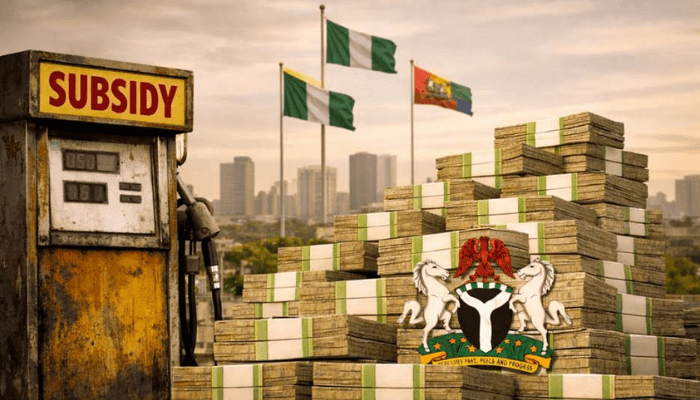
While most Nigerians were not aware of this development, the Nigerian Electricity Regulatory Commission (NERC) declared in March that subsidy on power amounting to about N600bn during some period had been stopped by the Federal Government.
The commission also revealed that electricity tariffs were raised in February this year, and was quick to, however, state that the tariffs payable by some customers in the franchise area of one of the distribution companies was reduced.
This came as power generation companies condemned the Nigerian Bulk Electricity Trading Plc (NBET), saying that NBET was failing in its obligations in terms of payment for power generated by the generation companies.
Last August, NERC had directed the distribution companies (DisCos) to commence the collection of service-based tariffs from the following month. This was targeted at increasing the cost of electricity by over 50 percent, in order to enable the government to end subsidy in the electricity sector. But shortly after the statement went public, a top government official said the statement was issued in error and there was a stoppage on the directive.
Although the DisCos have not officially announced a hike in their tariffs, customers have complained that the energy distributors had devised a way of reducing the units of electricity for the same amount.
Yet, stakeholders in the sector maintained that the increase in some quarters may have confirmed the suspicion that the service-based tariff may be implemented in phases without drawing the attention of the end-users to it.
The government, however, has denied any recent increase in electricity tariff as the moratorium on its investment is to serve as a buffer against any increase on the side of the consumers.
Stakeholders have argued that allowing market operators to determine the course of action simply means that Nigerians are to pay the full commercial price for power as determined by the generation and distribution companies.
Soaring bread prices
True to their threat, bread producers have consistently jerked up the prices of bread and other confectionaries across the country since last year.
This is coming for the second time since last year. The first price review was done last year in the wake of the COVID-19 pandemic, which disrupted economic activities.
This year, a 50 percent increase or more is expected on the back of the ripple effects of the Russia-Ukraine war.
The Premium Bread-Makers Association of Nigeria, indicated last week that the harsh business environment, which had forced several bakers to shut down operations, would automatically trigger an increase in the price of the commodity this month. They described the present situation as worrisome and imminently crippling for operators in the bread-making businesses segment.
Though the development has been attributed to incessant increases in prices of baking materials, which have made it difficult for the bakers to break even, there are fears that the new development will further aggravate the hardship in the country, especially for lovers of bread.
The price of a big-sized bread has increased to N600 from N300.00. The increase cuts across all categories of sizes.
Core inflation rose to its highest level in four years
The ripple effects of the war in Ukraine reflected in the last inflation figures as core inflation also rose to its highest level in over four years at 14.01 percent.
The ‘all items less farm produce’ or core inflation, which excludes the prices of volatile agricultural produce, stood at 14.01 percent in February 2022, up by 0.14 percent when compared to the 13.87 percent recorded in January.
This is the highest core inflation rate recorded since April 2017, largely attributed to the significant increase in price of petroleum products.
According to the report, the highest increases were recorded in the prices of gas, liquid fuel, wine, tobacco, spirit, narcotics, and solid fuels, among others.
The scary detail about these statistics is that the last time Nigeria witnessed a core inflation increase of this magnitude was the year Nigeria was battling recession and was also the year Nigeria witnessed its highest inflation rate in the last decade.
“Our prayer is that Nigeria does not witness a repeat of what was experienced that year,” said Emeka Ucheaga, CEO of EUA Intelligence.