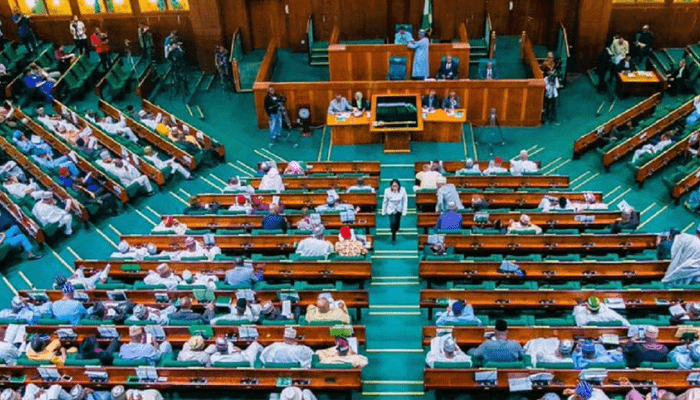
The House of Representatives on Wednesday passed through second reading, a Bill to regulate peace keeping operations by members of the Nigerian Armed Forces, the Nigerian Police, the Nigeria Security and Civil Defence Corps and other security organizations.
The Bill also seeks to provide a clear guide on the compensation regime for security personnel that are involved in peacekeeping operations and suffered from some form of bodily or physical and mental or emotional injury.
Sponsored by Oluwole Oke (PDP, Osun), the proposed legislation stipulates that all costs to be incurred in a peacekeeping mission must be first appropriated by the National Assembly and costs that will be reimbursed by the United Nations or similar body can later be reimbursed.
Leading debate on the general principles of the Bill, Oke said since its Independence, Nigeria has been a frontline State and major contributor to United Nations (UN) and non-UN peacekeeping initiatives and in 1960, deployed the first set of Individual Police Officers in Africa.

The lawmaker said Nigeria has spent over US$ 8 billion in peacekeeping missions it provided within the Economic Community of West Africa States (ECOWAS) in countries such as Cote d’Ivoire, Guinea-Bissau, Liberia, Mali and Sierra Leone.
Read also: Reps put Nigerian Railway on status enquiry over fuel shortages, others
“The legendary feats of our gallant Armed Forces remain evident in countries like Liberia and Sierra Leone where we poured human and material resources to bring peace to those troubled States at that time. In 2004, Nigerian troops were deployed to Darfur as a part of the African Union Mission in Sudan, Nigeria also provided 1,200 troops and 200 Police Officers to Mali in 2004.
“It is however surprising that despite the fact that we have been a major contributor to UN and non-UN peacekeeping missions, Nigeria does not have a regulatory framework that guides the deployment and withdrawal of Nigerian troops and security personnel from conflict zones. Interestingly, Nigerian law does not contain a single provision on this subject matter.
“Even though Section 305 of the Constitution of the Federal Republic of Nigeria (as altered) 1999 (Constitution), vests clear powers in the President to declare a state of emergency in the Federation or part thereof, this power is restricted to the boundaries of Nigeria. Hence, where there is the need to deploy troops and security personnel outside the shores of Nigeria, the Constitution does not make any specific provision for this and the practice has been that the President simply gives his approval for involvement in peacekeeping mission(s).

“The practice in other jurisdictions is different because there is a clear legal framework in place that clearly outlines the steps that should be taken when such a decision is to be taken and clearly spells out the rules that guide its operations.
“Many other jurisdictions have similar laws and it is important that this important foreign policy tool at our disposal is properly regulated and the required legal framework exists and is comparable with the practice in other countries,” he argued.
Oke emphasised that when passed into law, the Bill will strengthen the Nigerian experience in future peacekeeping operations and will define the boundaries and set out the regulatory framework for that purpose.