|
Getting your Trinity Audio player ready...
|
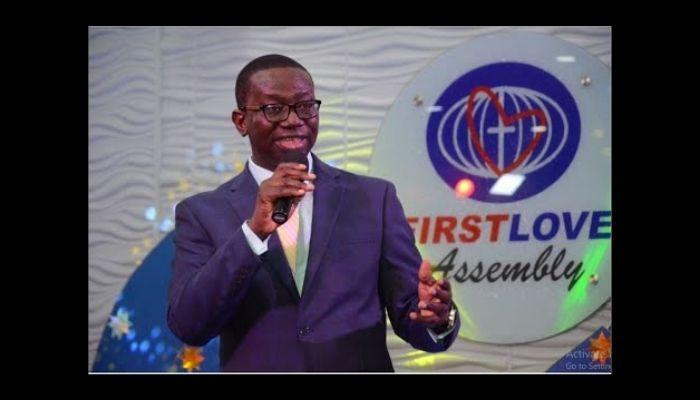
Simeon Afolabi, the serving overseer of First Love Assembly, recently marked his 60th birthday anniversary, where he took time out to speak on the Church and some national issues. Excerpts by SEYI JOHN SALAU:
Can you clarify the place of money in ministry in regard to success and materials in the church today?
Money is important in ministry. As far back as my days in the Baptist Church, they used to say money is the bicycle on which the gospel rides. I have been in the ministry now and I believe it is true. What I don’t believe is that you have to be manipulative in making people bring money.
Let people know the value of stewardship that all that we have belong to God, anything we do for him is out of what He has given to us but don’t give a promise that you cannot keep by saying if you give N100,000 today you will have N1m today; once you get to that realm you become manipulative.

Tell the people the church has a need, God knows how to stir people’s mind to do it. When it comes to money, two to five minutes I have left the subject. I believe if it is God’s work, He will get the job done.
But how do you get yourself out of it; many church leaders would say because you are not there yet, that is why you have this perspective. How did you wriggle yourself out of this?
Can I say that sometime the mercy of God just comes on you and deliver you out of some things? Being called a teacher, my objective is to bring my life and ministry as close as possible to the Bible. I like to place my life by what I read in the Bible. If I see something and I probe and I discover it’s not in the scripture, I don’t want to be part of it.
You may not be as popular and definitely not as rich. One thing about people is that people are gullible, if you are able to prove your case, you can make a slave out of people. I can buy a new dress and wear it to church and make money. Just tell people to sow seed to enjoy favour. My goal in ministry is not to make money and be a rich pastor.
What are your spiritual influences and what were your early days in ministry like?

My early years I was in Lagos, then I went to Owerri; I went to Abuja, not much has changed about me and my perspectives. With all due respect, I respect the ministry I served under, I respect the discipline, and I respect the leadership because I learnt so much there.
Till today when I am facing issues, the business approach is there, record keeping, diligence, so I respect the ministry. That is why you can never hear me speak negatively about the ministry but the line of departure is that can we establish some practices from the pages of the Bible?
Apart from saying the Lord gave me this as a revelation. When we talk about personal revelation, let us understand the church is about 2,000 years old; there is hardly any personal revelation God will give to you that cannot be traced in church history.
The moment I can come to you and I say I have this revelation from God and because I got it from God then you cannot subject it to Biblical discussion, there is already a problem, and this is one of the things that are killing Christianity. In Acts 15, after the issue of circumcision rose up they said the elders came together to consider the matter.
Today, there is no more council that considers matters, the man tells you this is it and that is it, if you don’t take it, leave it. He can say you were not there when God called me. This is the reason we have all the heresies we have today; we have a lot of human inventions.
One of our services, I showed a picture where one pastor asked people to come with cutlasses, how does that translates to spiritual battle? I saw everybody moving like mad people, how does that confronts the devil?
You seem to act as a bridge between the old and younger generation. What do you want the younger people to learn and are you fulfilled?
I am a fulfilled person, absolutely. When I talk about fulfillment, not in terms of material acquisition or fat bank account that is not where fulfillment is. It is amazing for instance we were sharing in the office, it’s amazing to see children you were carrying on your shoulders, spiritually, physically, now doing fantastically well in various places.
To me that is fulfillment. In the work of the ministry someone says the book you wrote blessed me, the devotional blessed me. These things bring fulfillment. One thing I have for young people is patience. One thing I learn at 60 is that the principle of compound interest works.
At a time in your life things begin to compound, good or bad. If you labour in the scripture, things will begin to compound, the children physically, spiritually raised will begin to talk to the enemy at the gate. The relationships you have built begin to pay back.
I will encourage the younger generation on patience. Anything that is worthwhile takes a while, people are in a hurry to make name, to build successful ministry, these things take time; the Bible says he who is hasty to be successful will not be innocent, they will put hands into things. So, successful life takes a lot of patience. We want to get in one day what our forbearers got in 40 years: we will run into trouble.
What is your take on evangelism and welfare in the church; how do you marry the two?
I think from scriptures these things are interwoven. Paul’s writing to the Galatians, he said they should remember the poor. Welfare and evangelism have always been interwoven. Remember the church in the first century didn’t have to build auditorium, they didn’t have to pay for electricity but all their money went into welfare to meet the needs of the people.
Today, the greater part of the money is going into running cost; buy land, pay for electricity etc., and little is left for welfare. Welfare is a cardinal thing in the ministry of Jesus Christ and we need to get back there. Some churches are doing it now and they are doing it more than others.
I know a particular ministry in Port Harcourt that is built on welfare; the entire ministry is built on welfare; hospitals, schools and others. Of course, some of the money will go into overhead. I believe welfare is very cardinal; you can’t separate it from evangelism.
On the state of the nation, what is your opinion on Christian participation in politics?
Christian participation at this point is a task that must be done. As part of the incomplete upbringing we had, there are lots of things we got wrong. If I wasn’t a pastor I probably have been a journalist or a lawyer, these fields fascinate me. Reason I didn’t read law in those days was that they said all lawyers are liars. Because I want to be a Christian, I avoided law.
The same thing they said about politics, they said you cannot be a Christian and in politics, so we left politics in the hands of the cultists, unbelievers and when they make policies, the policies are binding and we start complaining. Christians need to know that it takes power to change policies.
You can cry till tomorrow. From politics you have power and with power you make policies. The only way those policies Christians are not comfortable with can be corrected is when we have power; it is because our political literacy is nil, that is why every aspect of the country is crying for change.
Every aspect of the nation is crying, education, entertainment, health, everything needs an overhaul, and we need to overhaul the system, something is wrong with our nation and we need to correct it. I was preaching and I said there are three problems with our nation, I said flamboyance.
Read also: ‘When Christians are in government they will positively affect the life of the church’
We don’t believe in simple life, it’s not new; it’s been here with us. Number two problem with Nigeria and Nigerians is flattery. They hail you and the day you leave power, they move to the next person. They can sing your praise into your grave and when you die they would say stupid man, we know he would not last.
The third problem I said is fast tracking, they don’t want to go through the protocol, they jump protocol, jump foundational way of doing things and it doesn’t last and someday we are back to where we should have started from. So, every aspect of the country needs change.
I believe they used to say the day the mad man knows he was sick is the day he is getting healed. The day we can agree we have problem as a nation, I think we can begin to amend from that day trusting God for leaders that can take us out and we begin to amend things.
Now tell us, how did First Love Assembly come into being?
First Love Assembly started in November 1998. It didn’t start as First Love Assembly, it started as Revival People’s Church. We started as Revival People’s Church and it changed in 2007. It was when we moved to a new location, we changed physical location then we changed name also.
The reason for change of name was spiritual and a product of exigency. When we were bearing Revival People’s Church, some people didn’t have the right sequence in the name. Some people will call it Revival Peoples Church; some will say People’s Revival Church, that time too we had many churches with revival connotation.
So you couldn’t tell what is what, so I was busy looking for revivals and name so easy to call and identify with. As they say the last straw that broke the camel’s back was in 2006. I went to Calabar. I was invited by the wife of the then governor, Onari Duke.
There was a group of women who attended a meeting of a female group, and they have their programme. I was the guest speaker. So, a woman was anchoring; she was introducing the guest speaker and said Pastor Simeon Afolabi, the pastor of Revival People’s Party and that day I said we have to change it.
I guess because she was in the environment of politicians and the only thing that can come up was political party’s name. So, we had to change the name. The idea that was behind the change was revival.