As the Telecoms industry matures, competition has enforced the need for differentiation amongst Nigerian Mobile Network Operators (MNOs) and this, will ultimately lead to an improved value proposition and as a result; a dynamic shift from cost reduction efforts to efficiency enhancements.
There is an increasing trend in the adoption of several forms of outsourcing by Nigerian MNOs and the International Data Corporation (IDC) actually believes the evolution in business models employed by mobile operators in Nigeria is actually a step in the right direction.
“In the long term, we expect this trend to lead to a notable improvement in the quality of service (QoS) on the networks provided by these MNOs,” said Oluwole Babatope a telecommunications and networking research analyst with IDC West Africa.
Earlier this year, we saw MTN Nigeria and Ericsson sign a major five-year managed services agreement that had Ericsson assume full responsibility of the management, optimization and field maintenance of MTN’s network infrastructure in Lagos, Abuja, Enugu, Port Harcourt and Asaba.

Head of Managed Services at Ericsson, Jean-Claude Geha, said: “This agreement with MTN, Nigeria’s largest telecom operator, marks a milestone for Ericsson in Nigeria and in the region. In Managed Services, we bring our global expertise and experience to benefit our customers and ultimately their subscribers’ experience of the network.”
Competition amongst MNOs in Nigeria is no longer news. The exponential growth of the industry has led to the increased maturity and sophistication of individual MNOs and has also ushered in an intense level of competition amongst the industry players. Operators are now competing within an industry value chain that is significantly different from what it was just a few years ago. In other words competition is forcing down tariffs, legacy voice revenues are declining steadily and the average revenue per user is falling.
In an attempt to combat these dwindling profit margins, reduce operational cost as well as generate additional revenue streams, MNOs in the country have turned to boosting the provision of data services. Such efforts however, require additional capital and operational expenditure requirements and such costs are already impacting negatively on profit margins. As a result, MNOs have turned to various outsourcing models in collaboration with third-party infrastructure providers; a move that would increase focus on their core business which in turn improves QoS and eventually customer experience.
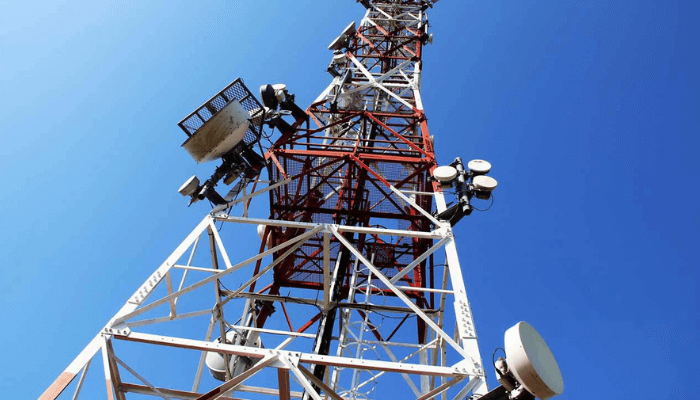
The CEO, of ETISALAT Nigeria, in a recent interview said selling 2,136 of its sites/towers to IHS Holding Ltd was actually part of a broader strategy to drive improvements in the quality of its network performance.
From just 400,000 lines in 2001, Nigeria’s mobile market has grown to over 120 million users today, with tele-density hitting over 92 percent today. But poor QoS remains the bane of the Nigerian telecommunications industry, with all four MNOs falling foul of the regulator at various times over the years.

On quality of service, Executive Vice Chairman of the Nigerian Communication Commission (NCC), Eugene Juwah, in an interview said “We would like to have done better but we’ve always been striving to do better”.
The quest to maintain profitability is not distinctive to Nigerian operators, but there are distinct forces at play within the Nigerian market that are making profitability ever more daunting for MNOs in the country. The likes of ETISALAT, AIRTEL and MTN have all in one form or the other signed some form of outsourcing contract with a telecom equipment vendor or telecom infrastructure provider; outsourcing non-core services to reduce operational costs.