At the recent Budget hearing in the National Assembly, the faltering performance of Abubakar Aliyu, the Minister of Power showed that he was not prepared for the detailed scrutiny of 2022, N301.258 billion budget which his Ministry presented to the legislative arm of government.
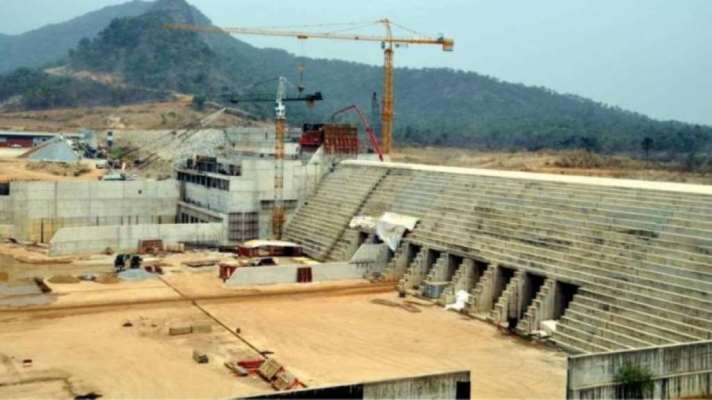
The Senate Committee on Power had demanded an explanation for the N42 billion which the Ministry of Power proposed for the Zungeru Power Plant project. The project was designated as ‘new’ in the 2022 budget proposal; whereas some N25 billion had already been budgeted for the same project which had already gulped N25 billion in 2021.
Legitimate query was therefore raised about why an ongoing project should be tagged, new? Does the term ‘new’ refer to a new loan for the project or a new Zungeru project which has been increased to N43 billion in the ministry’s 2022 budget?” In a video that has since gone viral, minister Aliyu was seen scrambling to respond to the question. But he could not muster a reasonable explanation except to say the tag ‘new’ was a typographical error and that he needed to clarify it with the department of power to ascertain the status of the project.
Read Also: Nigeria inches sufficient power supply as 700MW Zungeru hydropower plant nears completion

However such scrutiny is not very common in the National Assembly {NASS} but we believe it needs to be and should be the norm for every ministry and department that presents a budget every year. It is therefore heart-warming that the National Assembly lived up to its statutory billing, this time around.
If the country is going to be saddled with more debt burden, the least the lawmakers should do, is to thoroughly scrutinise every line item presented by the various ministries
In many other cases, ministers who appear before budget committees in the NASS merelyget a pat on the back and their budgets marked approved without thorough perusing of the contents. The result is a bloated budget with many line items carried over from the previous years. For instance, it is disheartening that the Ministry of Agriculture earmarked N630 million and N1.3 billion respectively for the construction of public toilets in public schools and markets, and the provision of potable water in rural communities, without specific locations, among others.
The same ministry also plans to spend N745.9 million, N3.36 billion, and N1.91 billion on the installation of solar-powered street lights in rural communities, construction of feeder roads in rural communities in the six geopolitical zones, and support for infrastructure, projects, and coordination services, respectively, again without clear details on location and project description.
Meanwhile, an analysis of the 2022 budget by Dataphyte showed that 38 percent of the items will be financed by loans. This is worrying given that President MuhammaduBuhari has since 2015 ballooned the country’s borrowings to the tune of about N23.34 trillion.

If the country is going to be saddled with more debt burden, the least the lawmakers should do, is to thoroughly scrutinise every line item presented by the various ministries. This would help identify frivolous and unnecessary expenditures such as the $200 million loan with which another Ministry plans to buy mosquito nets in 2022 for 13 so-called vulnerable states.
This is why we commend The Centre for Social Justice (CSJ). The body has identified frivolous items of about N227 billion in the 2022 budget. Some of them include billions of nairaset aside for routine maintenance of State House facilities, which interestingly is done every fiscal year. Like in previous budgets, the statutory transfers do not come with details.
Scrutiny engenders transparency and accountability which are often lacking in ministry departments and agencies. It is clearly a recipe for economic retardation. This is why the national assembly must not relent in its oversight functions with regard to the 2022budget. This is about the only way in which economic stability and rejuvenation can be achieved for this beleaguered Nation
The ongoing rape of the national treasury must be halted.